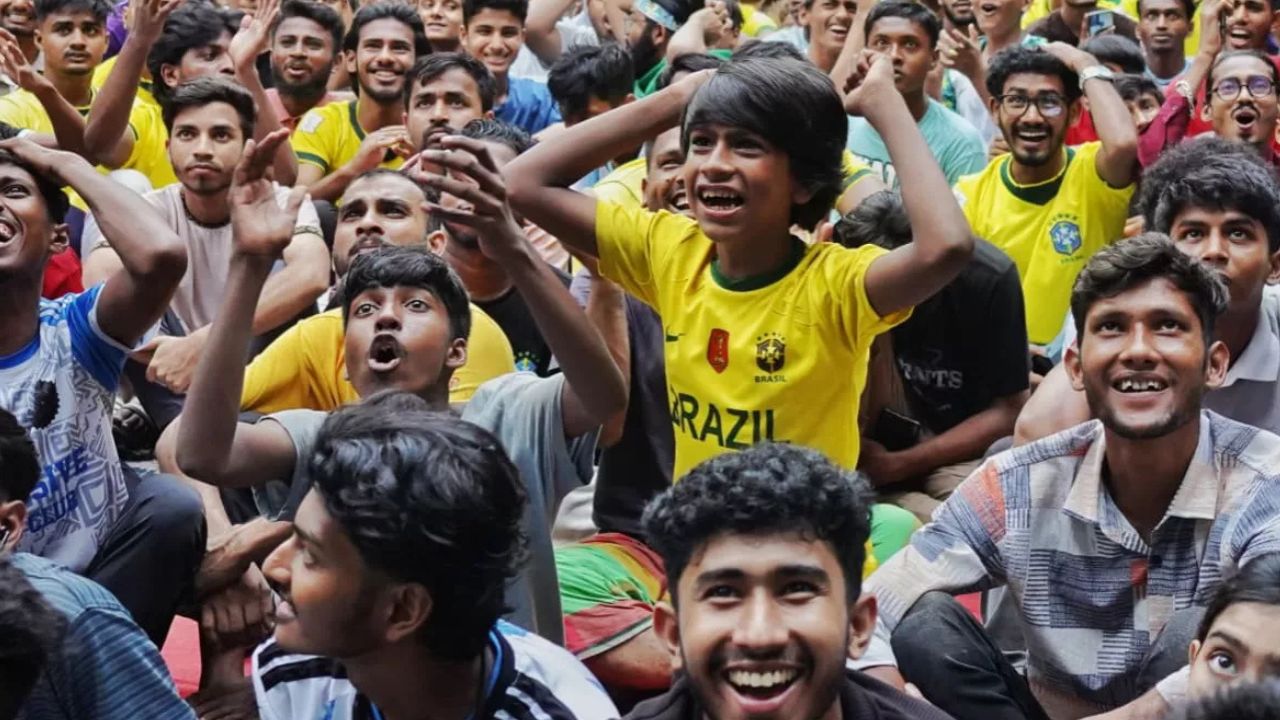

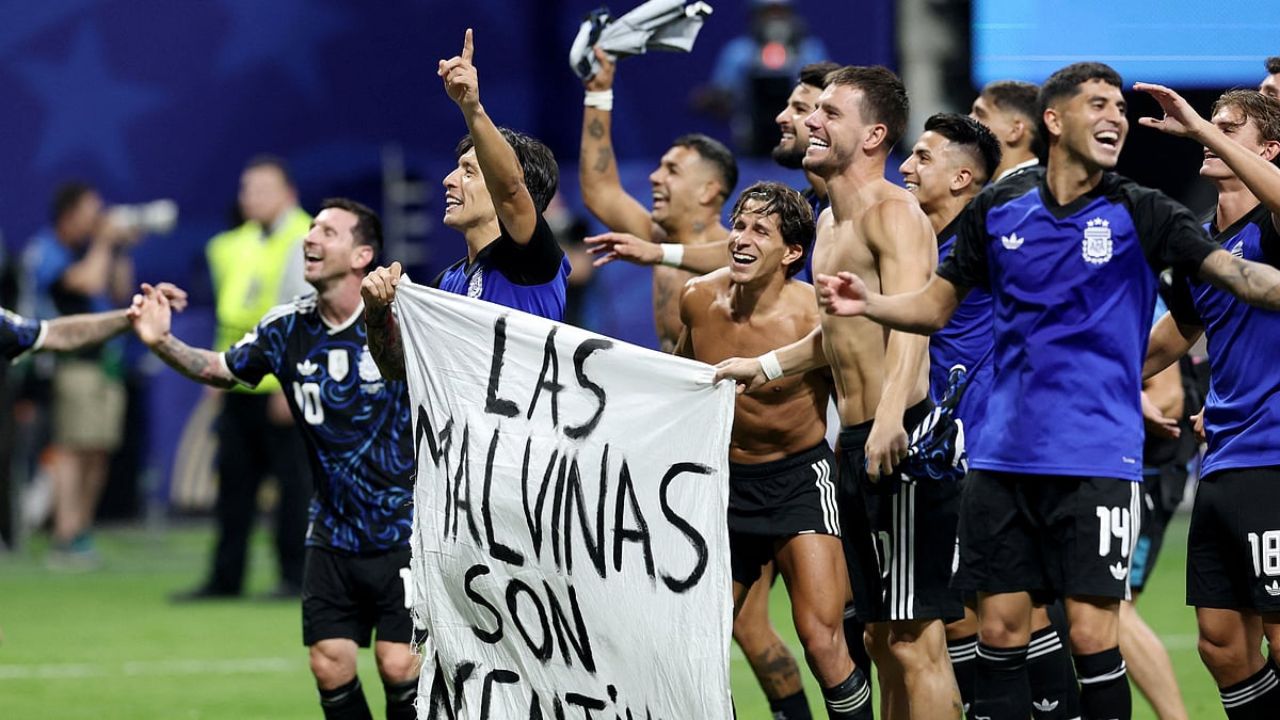
Bangladeshi football fans are known the world over for their passion. Every four years, when the FIFA World Cup rolls around, that passion explodes into something closer to a national festival – and supporters of Brazil and Argentina, in particular, have made headlines for the sheer intensity of their devotion.
The signs are everywhere: rallies and street celebrations, packed auditoriums turned into makeshift stadiums for thousands of screaming fans, houses and vehicles painted in team colours, heads shaved in solidarity and even vows to delay marriage until a favourite team lifts the trophy. Social media, meanwhile, turns into a running battlefield of banter and rivalry.
But in recent years, that banter has not always stayed friendly. What used to be confined to heated arguments over tea has, in a growing number of cases, spilled into bullying, heckling, physical confrontations between rival fans, and online shaming – incidents that now regularly make the news. For many outside observers, the question is simple: why does loyalty to a national team thousands of miles away provoke such extreme reactions at home?
TIMES of Bangladesh put that question to two experts, a psychologist and a sociologist, who offered very different lenses on the same phenomenon.
Dr Mahjabeen Haque, professor in the Department of Educational and Counselling Psychology, says supporting a team is, in itself, completely normal. The danger lies in what happens once that support stops being an individual choice and becomes a crowd dynamic.

“Supporters will cheer, rejoice, and feel happy. But we must always remember that this is just a game. Everything has a limit or boundary, and it is essential to ensure that nothing crosses that boundary. Even a rational person, when surrounded by a large crowd, can get carried away if someone starts breaking the boundaries. Risks they would never take alone or in a small group suddenly surface in a crowd – a phenomenon we call mob behaviour. What starts as normal support turns into unruly mob action.”
For Dr Mahjabeen Haque, the roots of that mob behaviour run deeper than football itself. She points to a broader cultural tolerance for violence that has nothing to do with the sport.
“In our country, there is a strong attraction toward breaking rules, and a very high tendency toward violence and beating people. When a thief is caught, everyone gangs up to beat him. There is even common practice in our society of beating children, domestic helpers, or rickshaw pullers. No one has to face any real consequences for it.”
She also believes the country has not “progressed mentally” as a society – and, more surprisingly, points to a physiological factor she has been researching: widespread Vitamin D deficiency.
“Another issue I am currently working on is Vitamin D deficiency. In our country, a Vitamin D test is quite expensive. It costs around Tk5,000. Due to our climate and lifestyle, the majority of people suffer from Vitamin D deficiency. There is a proven link between Vitamin D deficiency and impulsive behaviour. When the body lacks sufficient Vitamin D, the effectiveness of happy hormones like dopamine and serotonin decreases.
“As a result, people tend to act impulsively without thinking about the consequences. This is scientifically proven, with numerous journal publications on the topic. Although specific research in our country’s context may not exist, it has been established globally.”
Associate Professor Muhammad Mahbub Kaiser, of the Department of Sociology at the University of Dhaka, takes a markedly different view. He cautions against reading too much into a handful of ugly incidents – and is firm that they should not be politicised.
“The recent incidents of excitement and violence among Brazil and Argentina supporters are ‘isolated’ and should not be brought under excessive political interpretation.”
Rather than pathologising the fandom, Kaiser frames the World Cup frenzy as a predictable, even healthy, social release valve.
“The FIFA World Cup naturally creates widespread emotion and frenzy in Bangladesh because it is the world’s most popular sport, and every four years it provides an opportunity for a major social celebration.”
He links the intensity of the celebrations to everyday pressures rather than any deeper dysfunction.
“Due to the high levels of daily stress and limitations in the country’s social reality, people become more involved in joyful participation centred around the game.”
On campuses specifically, often the site of the most visible jersey-wearing rivalries, Kaiser insists that peaceful coexistence is the norm, not the exception, while still condemning the cases where things go wrong.
“Although students wear jerseys of different teams and display emotional behaviour while watching matches, coexistence and cordiality generally prevail.” Regarding the few isolated incidents, he strongly condemned them, adding: “Bullying, coercive behaviour, or violence is in no way acceptable.”
Between Dr Haque’s account of mob psychology, a culture that normalises violence, and even a possible medical contributor, and Dr Kaiser’s more measured framing of isolated incidents within an otherwise harmless social tradition, there is little disagreement on one point: outright bullying, coercion, or violence over a football match has no justification.