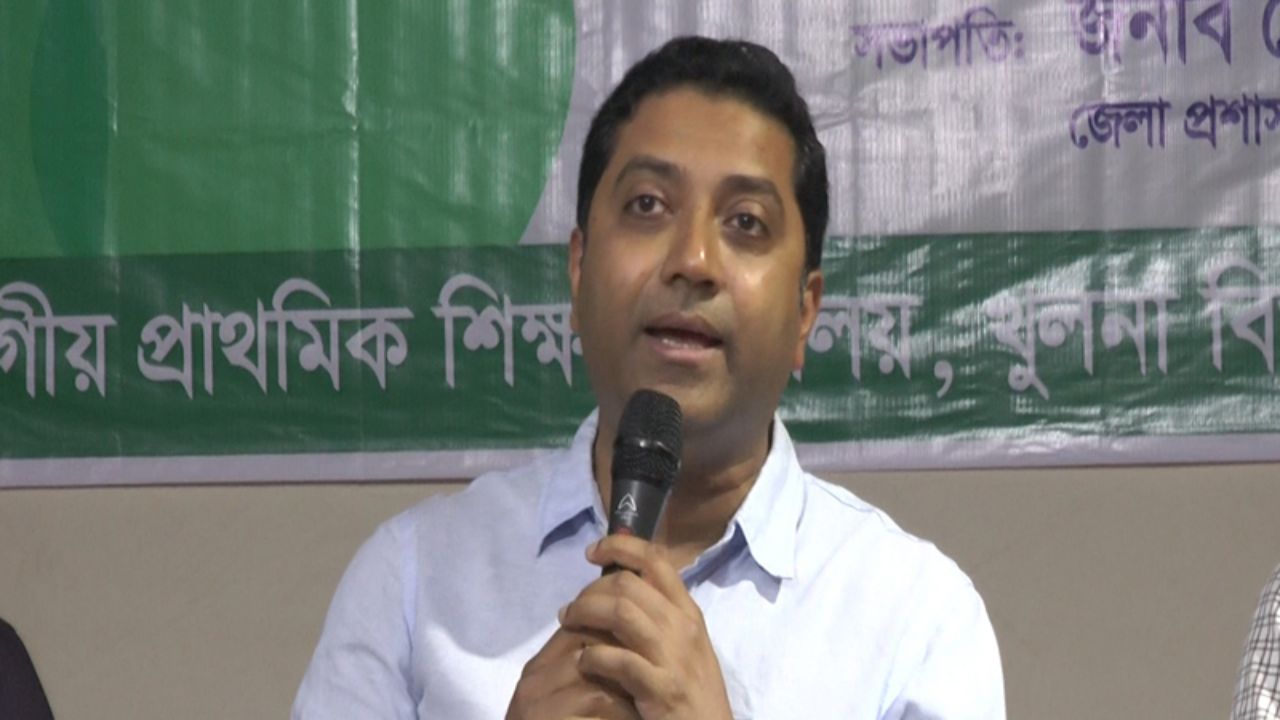
BNP Acting Chairman Tarique Rahman has announced that his party will form a high-level commission to nationalise jobs of teachers if voted into power.
“We’ll also form an “education reform commission” to overhaul the existing curriculum and bring comprehensive reforms to the country’s education system,” he said while virtually addressing a grand rally of teachers at Suhrawardy Udyan in Dhaka on Tuesday.
He emphasised that teachers play a crucial role in shaping the nation’s future and deserve recognition and job security. The proposed initiatives, he said, are part of BNP’s broader commitment to ensuring quality education and fair treatment for educators across Bangladesh.

Tarique urged teachers to extend their support to BNP in the upcoming national election so that the party can form a government to build a knowledge and merit-based state and implement its plans for national and political reforms.
“To implement all the plans taken by BNP for the development of the state, politics and governance, spontaneous support from the people is essential. Support from the teachers, the most conscious section of society, is also needed,” he said.


The Shikkhok-Karmachari Oikya Jote, a platform of BNP-leaning teachers and employees, organised the rally at Suhrawardy Udyan in the capital to mark World Teachers’ Day.
The rally was held to press for various demands, including a non-discriminatory education system, increasing the retirement age to 65, bringing non-MPO institutions under the MPO scheme, and nationalising the jobs of teachers and employees of private institutions.
Tarique said BNP is aware of the various demands of teachers, including nationalisation of their jobs, bringing more educational institutions under the MPO scheme, and ensuring better welfare for non-government teachers.
If BNP gets the chance to govern the country again through people’s votes, it will form a high-level commission to positively consider measures such as increasing financial security for teachers, regularising jobs, or even nationalisation, depending on the capacity of the state, he noted.