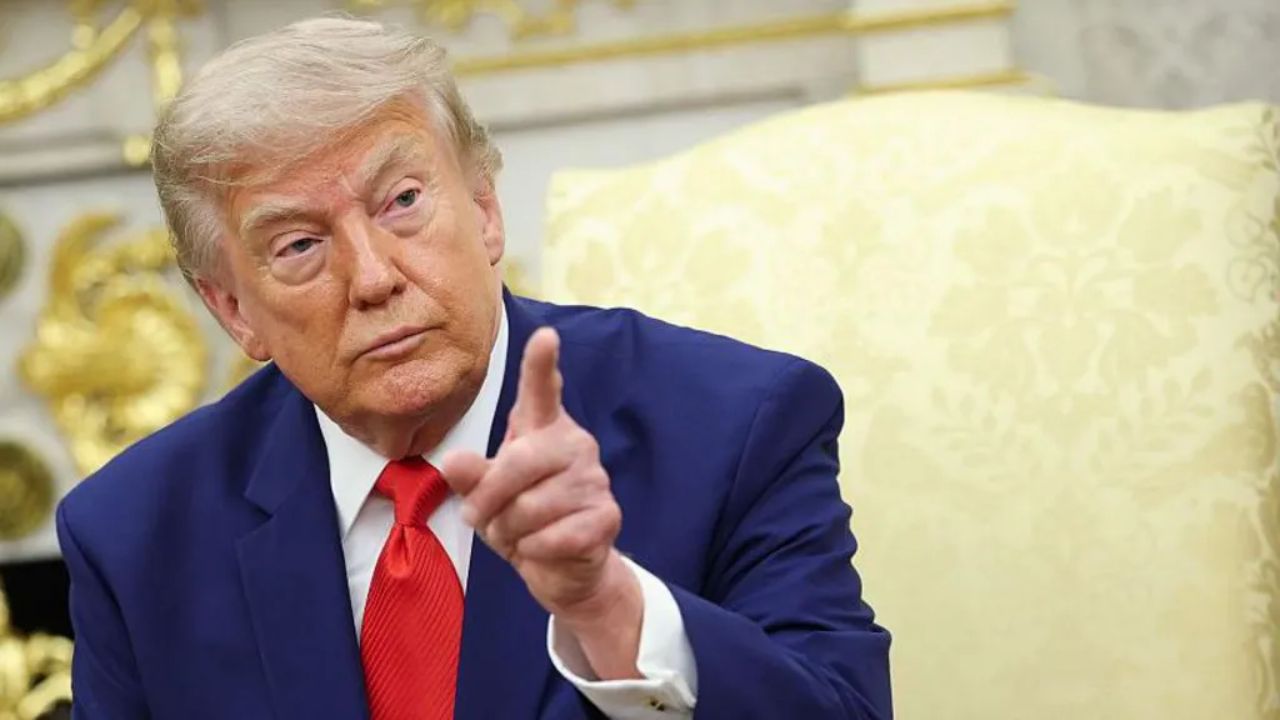

US President Donald Trump said negotiations aimed at winding down the five-month war in Iran would begin on Monday, after he stepped back from what he described as plans for “massive” new strikes against Tehran, says AP.
The talks are expected to focus on ending the conflict and restoring stalled cargo traffic through the Strait of Hormuz, a crucial shipping route that carried about one-fifth of the world’s traded oil and natural gas before the war. Iran, however, said it was not currently negotiating with the United States.
Trump has played a similar hand several times during the conflict, first warning Tehran that US forces are close to attacking power plants, seizing parts of its oil industry or delivering overwhelming military strikes, before retreating at the last moment and saying diplomacy should be given more time.
The hardball approach, developed during Trump’s years in New York real estate and later used in politics, seeks to force movement in negotiations through pressure, uncertainty and chaos.
But the strategy is facing a difficult test against Iran’s ruling theocracy, which believes it has a greater tolerance for strategic pain than US.
Trump has publicly celebrated the US military’s destruction of layers of Iran’s leadership and severe damage to its air force and navy.
Iran, however, appears to be betting that it can outlast him as the United States faces shrinking munitions stockpiles and the challenge of continuing a war that is unpopular with American voters ahead of November’s midterm elections.

The latest episode began on Friday, when Trump, surrounded by members of his Cabinet, said he was “losing faith” in negotiations and warned that US forces “will be hitting them very hard”.
Hours later, White House press secretary Karoline Leavitt intensified speculation in Washington and abroad by saying: “Iran will continue to pay until they come to the table in, what President Trump deems, a meaningful way.”
By late Saturday, however, Trump said on social media that there were signs of progress towards an agreement and announced that planned large-scale attacks would not go ahead for the time being.
Trump said on Sunday that appeals from Gulf allies Qatar, Saudi Arabia and the United Arab Emirates, along with requests from unnamed Iranian officials, had played a decisive role in his change of course.




He said US forces had prepared what he called “the biggest attack since World War II”, but he had decided to allow diplomacy more time after speaking with Gulf leaders.
“It would have been disastrous for them. And they didn’t want us to do it,” Trump said of Iran while speaking to reporters as he travelled back to Washington after spending the weekend at his New Jersey golf club.
“And frankly, Saudi Arabia didn’t want it either. They thought that a deal is imminent.”
Trump also announced that negotiations would begin on Monday afternoon.
“Now what we’re doing is we’re talking to them in the form of a negotiation. It begins tomorrow afternoon,” he said.
He gave no further details and did not identify who would participate in the talks.
Trump may still decide that a major escalation is necessary.
Critics say his repeated hesitation could also reflect an unspoken acknowledgement within the administration that US military power alone may not be enough to force Iran to surrender or bring a swift end to a war Trump had previously presented as a short campaign.
Trump has repeatedly issued severe military threats during the war before backing away and claiming that the threats had created diplomatic progress.
In the latest episode, Trump suggested that Saudi Crown Prince Mohammed bin Salman had played a particularly important role in persuading him not to escalate.
Trump spoke by telephone with the kingdom’s de facto leader on Saturday before announcing the suspension of strikes he later claimed would have amounted to one of the largest US military operations since the Second World War.
The crown prince warned that further escalation could severely damage the global economy if Tehran responded to new US attacks by targeting American allies in the Gulf, according to a person briefed on the conversation.
The person was not authorised to speak publicly and requested anonymity.
Saudi officials have told the Trump administration that the kingdom is well placed to protect itself from further Iranian strikes.
They have said Qatar and the United Arab Emirates, both major energy producers, also possess strong defensive capabilities.
However, Kuwait could be more exposed to attacks by Iranian-backed militias operating in Iraq, the person said.