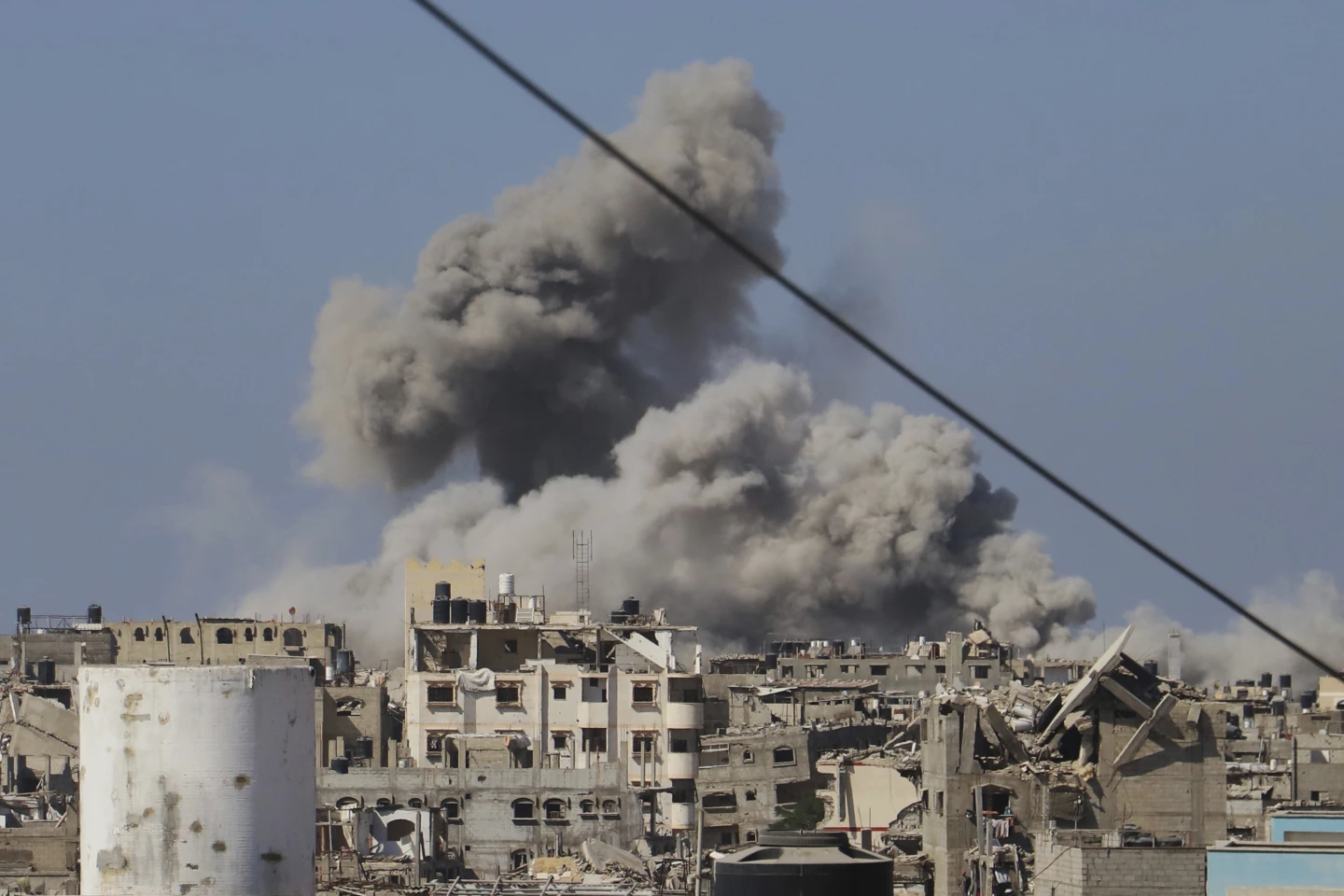



Israel and Hamas have agreed to the first phase of US President Donald Trump’s Gaza ceasefire plan, marking what could be a turning point in the two-year-old war that has devastated the enclave and unsettled the wider Middle East.
The deal, brokered through indirect talks in Egypt, covers a ceasefire and hostage-prisoner exchange under Trump’s 20-point framework for Gaza peace. It was announced late Wednesday, a day after the second anniversary of the Hamas cross-border assault that triggered Israel’s offensive, reports Reuters.
If implemented, it would be the closest either side has come to halting a conflict that has drawn in Iran, Yemen and Lebanon, deepened Israel’s isolation and redrawn regional alliances.
Trump said on Truth Social that “ALL of the Hostages will be released very soon, and Israel will withdraw their Troops to an agreed upon line as the first steps toward a Strong, Durable, and Everlasting Peace.”
Israeli Prime Minister Benjamin Netanyahu said, “With God’s help we will bring them all home,” adding that his cabinet would meet Thursday to ratify the accord. Hamas confirmed an agreement “to end the war,” saying it includes an Israeli withdrawal and hostage-prisoner exchange, but urged Trump and guarantor states to ensure full compliance.

Hostage release expected within days
A Hamas official said the 48 surviving hostages would be released within 72 hours of cabinet approval, while the remains of around 28 others would take longer to recover. An Israeli spokesperson said the process could begin Saturday.
Trump and Netanyahu spoke by phone, congratulating each other on an “historic achievement.” The Israeli leader invited the US president to address parliament in Jerusalem.
Trump, who dispatched his son-in-law Jared Kushner and envoy Steve Witkoff to the Sharm el-Sheikh talks, said he may travel to Egypt this weekend. “All Parties will be treated fairly! This is a GREAT Day for the Arab and Muslim World, Israel, all surrounding Nations, and the United States of America,” he wrote, thanking mediators from Qatar, Egypt and Turkey.



Critical details unresolved
Despite optimism, key issues remain unsettled—among them a timetable for Israeli withdrawal, post-war Gaza administration, and Hamas’s future role. Two sources familiar with the negotiations said Hamas demands a clear timeline linking troop withdrawal to hostage releases and insists on guarantees of a complete pullout.
Gaza’s Health Ministry says more than 67,000 people have been killed since Israel’s campaign began after the October 7, 2023 attacks that killed 1,200 Israelis and saw 251 hostages taken.
At Trump’s urging, Israel has scaled down airstrikes, though Gaza officials reported eight deaths in the past 24 hours—far lower than previous weeks when daily casualties were in the hundreds.
Regional and international response
UN Secretary-General Antonio Guterres urged all parties to honour the agreement and ensure immediate humanitarian access. “The suffering must end,” he said.
Hamas has submitted its list of Palestinian prisoners it seeks in exchange for hostages, reportedly including Fatah leader Marwan al-Barghouti and Popular Front chief Ahmed Saadat—figures long considered untouchable in past ceasefires.
Arab governments backing the plan say the process must ultimately lead to a Palestinian state. Trump’s second-phase proposal envisions an international post-war administration led by himself and former British Prime Minister Tony Blair, an idea Hamas rejects, calling instead for a technocratic Palestinian government under the Palestinian Authority and backed by Arab and Muslim nations.
Netanyahu has vowed never to accept full Palestinian statehood, and all parties have ruled out Hamas governing Gaza again.
Rights experts and a UN inquiry continue to accuse Israel of genocide in Gaza—charges Israel rejects as it insists its actions constitute self-defence.
Whether this fragile agreement holds or unravels will determine not only the future of Gaza but also Trump’s claim to a long-sought Middle East peace legacy.