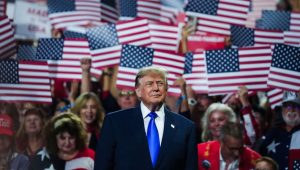
Faced with a major global economic crisis caused by the blockade of the Strait of Hormuz, muted support from European allies, and mounting opposition at home, US President Donald Trump is urgently seeking an end to the war with Iran.
But he is not free to devise a solution and implement it as he wishes. He must contend with the onerous demands of an increasingly belligerent Iran, which has been bolstered by the impressive display of its offensive and defensive capabilities since the conflict began weeks ago.
In addition, Trump must manage a stubbornly aggressive and petulant Israel, which is not only insistent on its maximalist demands but enjoys the backing of the American power elite. The two sides cannot be reconciled, as they are playing a zero-sum game in which the winner takes all.
Despite these constraints, Trump scrambled to address the mounting global economic issue. He first lifted sanctions on Russian oil and then on Iranian oil. Some argue, however, that while these steps may provide relief worldwide on energy prices, they will also channel revenue directly into Iranian and Russian war chests.
Trump’s claims about a deal
Trump claimed on Monday that his team, including Steve Witkof and Jared Kushner, had “very good and productive conversations” with Iran, and that talks would continue throughout the week.
“We have had very, very strong talks. We’ll see where they lead. We have major points of agreement. They went, I would say, perfectly. I would say that if they carry through with that, it’ll end that problem, that conflict,” he told reporters.

The aim of the talks, he added, was to ensure that Iran “has no nuclear bomb, no nuclear weapon, not even close to it.”
Who are the Iranian interlocutors?
While revealing that Witkof and Kushner were speaking on behalf of the US, Trump did not disclose who they were dealing with in Iran.
He ruled out talks with the new Supreme Leader, Mojtaba Khamenei, but added, “We’re dealing with the man who, I believe, is the most respected and the leader.” Two names mentioned are President Masoud Pezeshkian and Speaker Mohammad Bagher Ghalibaf, both associated with the powerful Revolutionary Guards.
Iran denies talks
The Iranian Foreign Ministry rejected Trump’s claims, saying, “The US president’s statements are within the framework of efforts to reduce energy prices and gain time to implement his military plans.” The Ministry, however, acknowledged that regional countries have initiatives to de-escalate tensions.


Iran’s known conditions for talks include the cessation of US and Israeli attacks before negotiations begin, a US commitment never to attack Iran again, compensation for war-related damages and loss of life, and the dismantling of US bases in the Gulf.
As part of his efforts to secure a deal, Trump instructed the US military to postpone strikes against Iranian energy infrastructure for five days, pending the success of ongoing discussions.
Earlier, he had issued a 48-hour warning to Tehran to reopen the Strait of Hormuz or face strikes on power plants. Trump’s announcements sent markets up and energy prices down.
Israel’s stance unclear
Israeli Prime Minister Benjamin Netanyahu has also been inconsistent. He said he had spoken to Trump and appeared ready for a deal.
“President Trump believes there is an opportunity to leverage the tremendous achievements we have reached alongside the US military to realise the goals of the war through an agreement, an agreement that will safeguard our vital interests,” Netanyahu said.
He did not specify the nature of the deal but made it clear that Israel would continue striking Iran and Lebanon.
Israeli officials believe Iranian leaders may be amenable to a deal, and any agreement is expected to align with Israel’s core objectives, particularly curbing Iran’s nuclear programme and uranium enrichment, while regime change is a lower priority.
At the same time, Israeli sources warned that Iran might not honour any agreement. Trump suggested that the Strait of Hormuz could eventually be “jointly controlled” by the US and Iran, but neither Iran nor Israel would likely accept this. Both countries are pursuing a zero-sum strategy.
Reports suggest Iran might agree to halt its ballistic missile programme for five years, reduce uranium enrichment, allow IAEA inspections, and cease funding proxy groups including Hezbollah, Hamas, and Iraqi militias. But Iran, defending its sovereignty and existence, is unlikely to accept such terms.
Uranium stockpile
Reopening the Strait of Hormuz is a key global goal, but the fate of Iran’s nuclear programme and its estimated 440 kg of highly enriched uranium is critical for Iran, the US, and Israel.
The uranium is believed to be buried deep underground and cannot be removed without a costly land invasion—a prospect Trump has considered but his advisors may be cautioning against.
Leaders push for truce and talks
Several leaders in West Asia and Europe are working for a negotiated settlement. Omani Foreign Minister Badr Albusaidi tweeted that his government is arranging safe passage in the Strait of Hormuz.
British Prime Minister Keir Starmer said, “We are working with others to see how we can develop that to a point of de-escalation. It’s very important that we get to that,” responding to warnings that Brent crude prices could exceed the 2008 record of US$147 per barrel within ten weeks if oil does not resume flowing.
Indian Prime Minister Narendra Modi stressed India’s efforts for peace: “The crisis to anyone’s life in this war is not in the interest of humanity. India’s effort is to encourage all parties to pursue a peaceful resolution swiftly.”
Meanwhile, Qatari Foreign Minister Sheikh Mohammed bin Abdulrahman bin Jassim Al-Thani received calls from Turkey’s Foreign Minister Hakan Fidan, and Kuwait’s Defence Minister Sheikh Abdullah Ali Abdullah Al-Salem Al-Sabah, discussing peaceful solutions.
Similar calls were made with Saudi Arabia, UAE, Egypt, and Indonesia. Sheikh Mohammed also spoke with European Union High Representative for Foreign Affairs and Security Policy Kaja Kallas. All leaders condemned Iranian missile and drone attacks on civilian infrastructure.