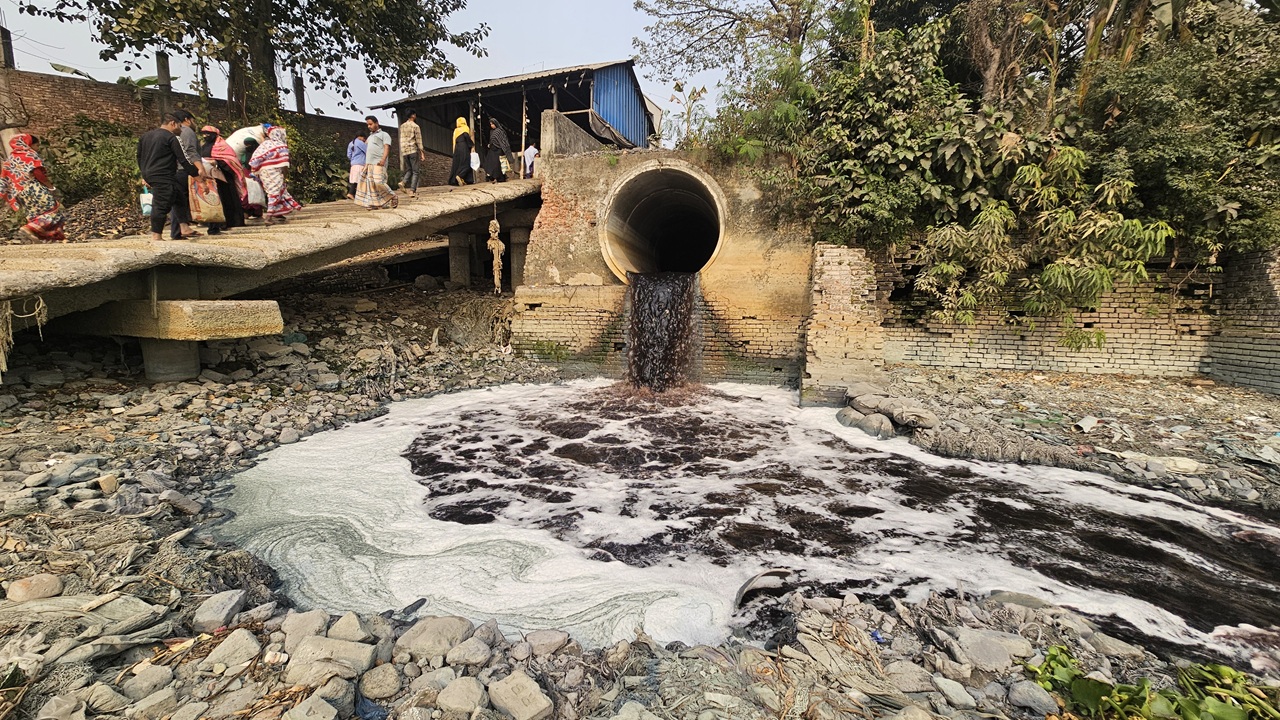

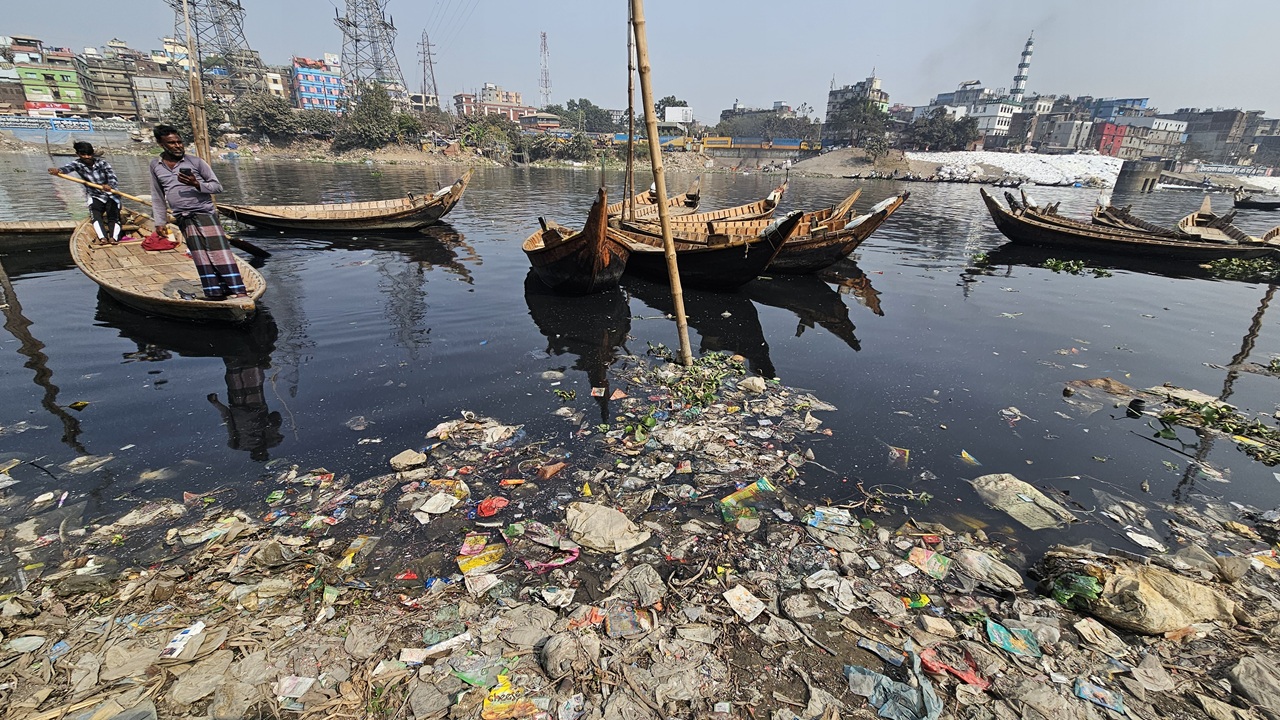
The Buriganga does not die in one place. It dies slowly, stretch by stretch. From Keraniganj to Fatullah, the river is treated less like water and more like a dumping ground. What flows into it is not accidental but a routine.
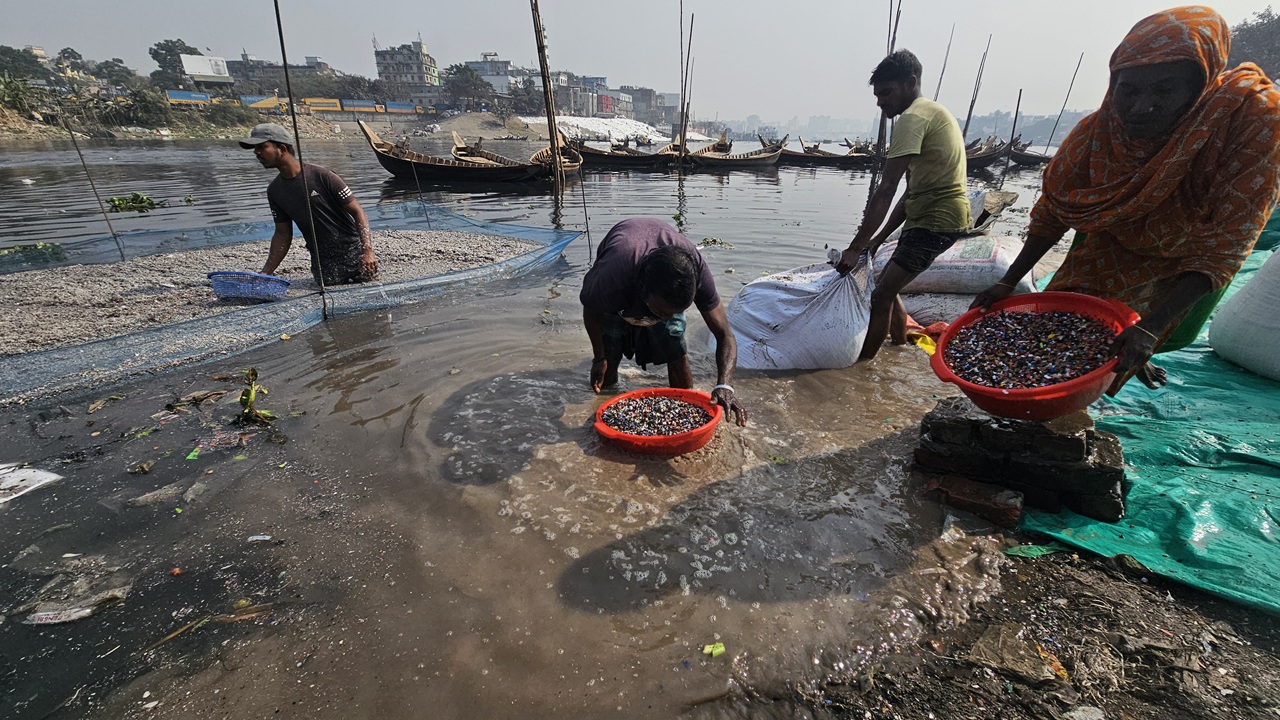
In Keraniganj, plastic leads the assault- polythene bags, food wrappers, disposable containers. They clog the surface and sink to the bottom, but plastic does not dissolve. It breaks down into microplastics, which enter the bodies of aquatic species. Then quietly to human bodies through many means.
Near Shampur and Fatullah, the waste turns darker. Industrial discharge, garment dye, and chemical residue from washing clothes all harm the water. Restaurants dump oily waste, leftover food, and detergent water. The river changes colour here, sometimes black, sometimes grey, but always toxic.
Detergents contain phosphates, which create excessive algae growth. Oxygen levels fall, and fish suffocate. Chemicals from garments can contain heavy metals such as chromium, lead, and cadmium. These elements poison aquatic life; fish develop deformities, and many species disappear altogether.

Industrial waste raises water temperature and acidity. Aquatic plants die first, then insects. The food chain collapses.
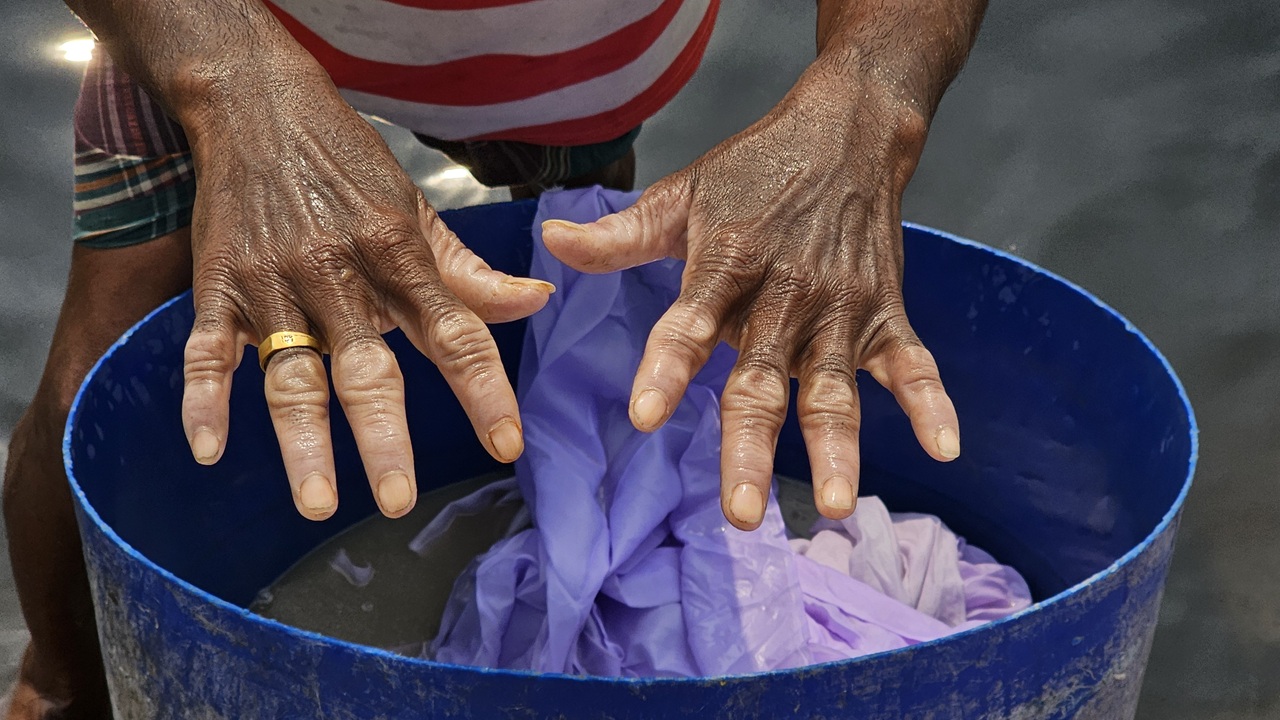
What remains is a river that smells of rot and chemicals. People still live beside it. Communities use the river for bathing and washing. Skin diseases are common. Rashes. Infections. Respiratory problems from constant exposure to toxic air rising from the water.




Contaminated fish enters local markets. Heavy metals accumulate in the human body. They damage the kidneys, affect the liver and increase cancer risk. Children are the most vulnerable, as their immune systems are weaker.
The law is not silent. Bangladesh’s Environment Conservation Act clearly prohibits dumping untreated waste into water bodies. The Water Act reinforces the river’s right to protection. Industries are legally required to run effluent treatment plants. Waste must be treated before discharge.
On paper, the Buriganga is protected, but enforcement is weak.
Inspections happen sometimes, and fines are imposed. But many factories resume dumping once officials leave. Illegal connections remain hidden beneath the surface. Political influence shields repeat offenders. Temporary drives replace long-term monitoring.
Government responses often arrive late or stop halfway. River-cleaning projects make headlines. Short-term dredging begins while waste keeps coming. Without stopping pollution at the source, cleaning becomes cosmetic.
The river does not need sympathy. It needs action, like stopping plastic dumping in Keraniganj, monitoring garment discharge in Shampur, shutting illegal outlets in Fatullah, and making ETP use non-negotiable.
This river once carried life like trade, culture and history. Now it carries our neglect, and unless accountability replaces indifference, the Buriganga will keep dying.