One of the most striking astronomical events of 2026 will take place on Tuesday (3 March). NASA has announced that tonight is a full moon, coinciding with a lunar eclipse.
On this full moon night, the sky will feature a “Blood Worm Moon,” a special blood moon. If you miss it, you will have to wait until 31 December 2028, for the next total lunar eclipse.
The moon will be most visible in the skies over North America, especially along the western coast on Tuesday evening.
The lunar eclipse 2026 will be fully visible in East Asia and Australia during the evening, across the Pacific region throughout the night, and in North and Central America as well as western South America toward dawn. However, it will not be visible in Europe or Africa.

Traditionally, the March full moon is called the “Worm Moon,” marking the time when the soil warms and earthworms or insect larvae emerge. Some also link it to beetles coming out after winter. This seasonal name has been combined with the “Blood Moon” to form “Blood Worm Moon.”
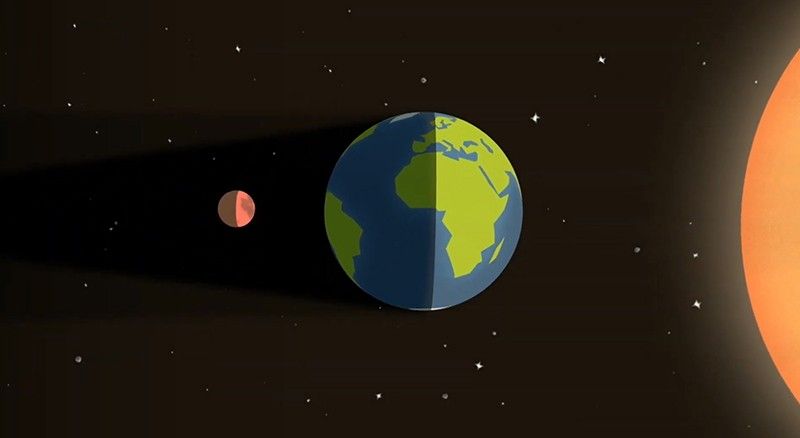
A “Blood Moon” occurs when a total lunar eclipse coincides with a full moon. As the Earth passes between the sun and the moon, its shadow falls across the lunar surface, giving the moon a deep red or coppery glow.
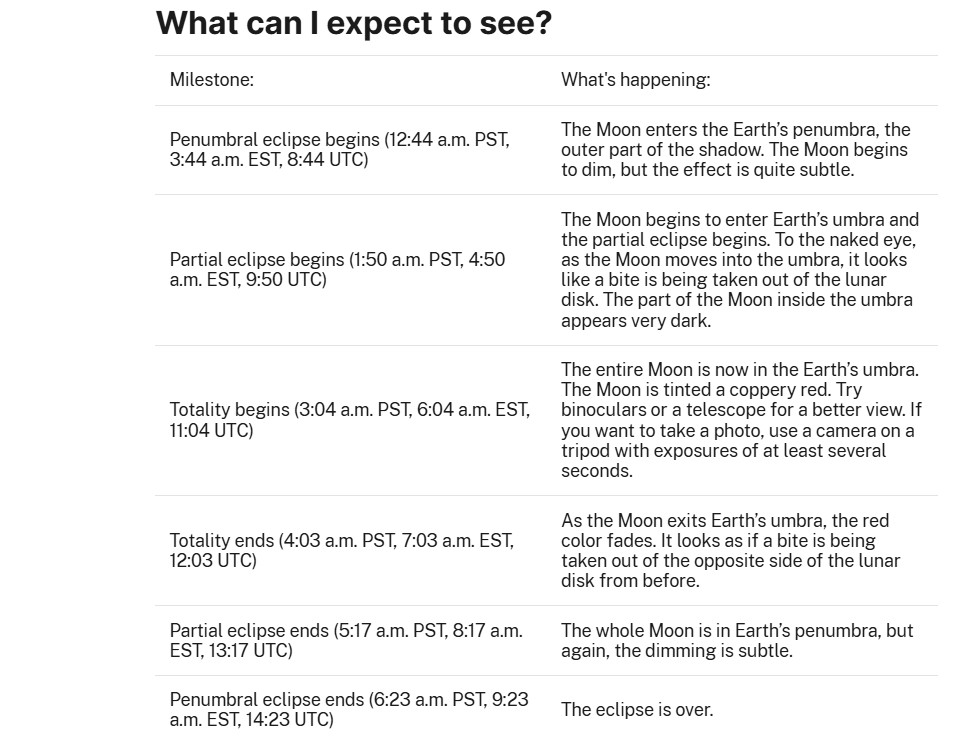
This total lunar eclipse will last for about an hour, according to Coordinated Universal Time (UTC). The UTC says it will be visible from 11:04 to 12:03. In Bangladesh, that corresponds to 5:04pm to 6:03pm, with the eclipse beginning about an hour and a half earlier. The entire event will conclude at 8:23pm local time.




Lunar eclipses can be safely viewed with the naked eye, unlike solar eclipses which require special glasses. Binoculars or telescopes can reveal subtle variations in the red hue more clearly. For photographers, this is an excellent opportunity with clear skies, a DSLR camera and slightly higher ISO settings can capture striking images.
You might wonder why lunar eclipses don’t happen every full moon. The reason is that the moon’s orbit is slightly tilted compared to Earth’s orbit, so Earth’s shadow usually misses the moon. Only when the sun, Earth, and moon align perfectly in a straight line does a lunar eclipse occur. Tuesday (3 March) is one of those rare alignments.
How Does a Lunar Eclipse Happen?
A lunar eclipse occurs when Earth moves directly between the Sun and the Moon, casting its shadow across the lunar surface. This alignment, which only happens during a full Moon, causes the Moon to glow a deep reddish orange.
How to Watch the Eclipse
No special equipment is needed — just a clear view of the Moon. For the best experience, head to a dark spot away from city lights. Binoculars or a telescope can make the sight even more dramatic.
On March 3, the total eclipse will be visible in the evening across eastern Asia and Australia, throughout the night in the Pacific, and in the early morning in North and Central America as well as western South America. Central Asia and much of South America will see a partial eclipse, while Europe and Africa will miss out entirely.
Why Is It Called a Blood Moon?
During a total lunar eclipse, the Moon takes on a reddish or copper hue. This happens because Earth blocks most sunlight, and the light that does reach the Moon is filtered through Earth’s atmosphere — essentially projecting the glow of countless sunrises and sunsets onto the lunar surface.
What Else to Look For
With the Moon dimmed by Earth’s shadow, constellations will appear more clearly than on a typical full Moon night. During the eclipse, the Moon will sit in the constellation Leo, beneath the lion’s hind paws.
A few nights later, on March 8, skywatchers can catch a conjunction of Venus and Saturn. From Earth’s perspective, the two planets will appear close together in the sky, though they remain far apart in space.