
No individual prize at a World Cup carries quite the mystique of the Golden Boot, and the 2026 edition is shaping up to be the closest, most star-studded chase for it the tournament has ever seen. With five of the last six Ballon d’Or winners and a handful of Europe’s elite strikers all bunched near the top of the charts, the race has swung back and forth almost daily — and Lionel Messi’s outing against Cape Verde only tightened it further.
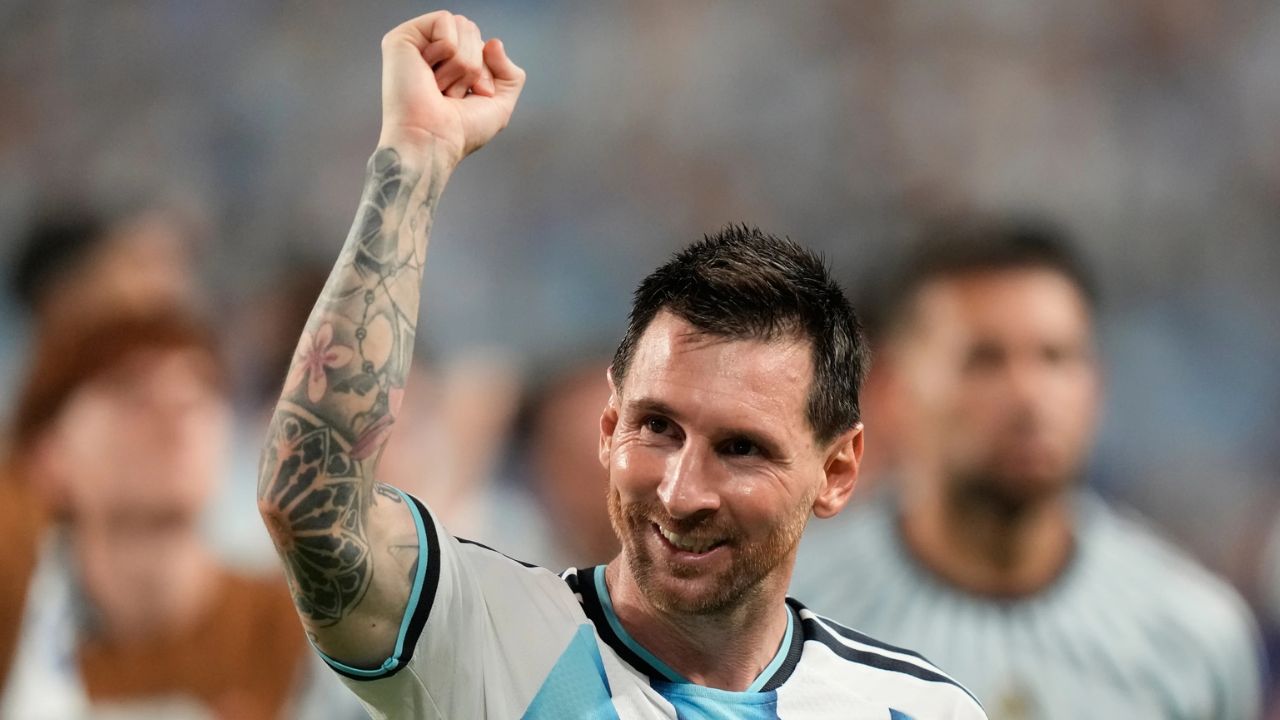
Messi’s 29th-minute strike against Cape Verde was his 20th World Cup goal, pushing him two clear of Kylian Mbappé on the all-time World Cup scoring list and extending a personal streak that now stretches to eight straight World Cup matches with a goal, dating back to Argentina’s title run in Qatar four years ago. It also moved him to seven goals for the tournament, edging him back ahead of Mbappé in the Golden Boot standings — a lead that had already changed hands more than once in the space of a few days.
The goal wasn’t without cost. Messi appeared at his post-match press conference with a visible bump above his right eye after a collision with a Cape Verde defender’s knee. “It hurts a little but I’m good,” he said.

What makes this year’s race genuinely historic is how many contenders remain within a goal or two of each other deep into the knockout rounds. Messi’s seven goals give him a slim edge, but Mbappé has been level with him as recently as this week and continues to add assists that matter under FIFA’s tiebreaker rules, which award the Golden Boot first by assists and then by fewest minutes played if scorers finish tied.
Harry Kane and Erling Haaland have both reached five goals, with Kane in particular producing a habit of late, match-turning strikes. Ousmane Dembélé has surged into the picture as well, having scored a first-half hat-trick for France to sit just behind the leading pair, while Mikel Oyarzabal and Vinícius Júnior remain within a couple of goals of the top with knockout football still ahead of them. Ismaila Sarr, who briefly featured in the conversation, is out of the running now that Senegal has been eliminated.


History is on the line in more ways than one. No player has ever won the Golden Boot twice — not Mbappé, who took it in 2022, not Kane, who won it in 2018, and not James Rodríguez, top scorer in 2014 — and both Mbappé and Kane are chasing a second crown this time around. Messi, remarkably, has never won it at all: he finished one goal behind Mbappé in 2022 and tied for third in 2014. For a player already regarded as the greatest of all time, the Golden Boot remains one of the only major honors still missing.
For now, Argentina’s captain sits atop the standings, but he is under no illusions about how fragile that position is. Cape Verde, playing in their first-ever World Cup, pushed the defending champions to extra time despite being enormous underdogs — some sportsbooks had priced Argentina at minus-3500 to win outright.
“As this team has demonstrated many times, and as I’ve said many times, they compete,” Messi said afterward. “And we competed to the end.” Cape Verde goalkeeper Vozinha, who had been almost unbeatable for long stretches, offered his own tribute to the effort and said “Our team did everything we could to win the game.”
Argentina coach Lionel Scaloni summed up the lesson of the night, one that applies just as well to the Golden Boot race itself, where half a dozen of the sport’s best finishers are separated by the finest of margins. “I hope you now realize,” Scaloni said, “there is no easy opponent.”