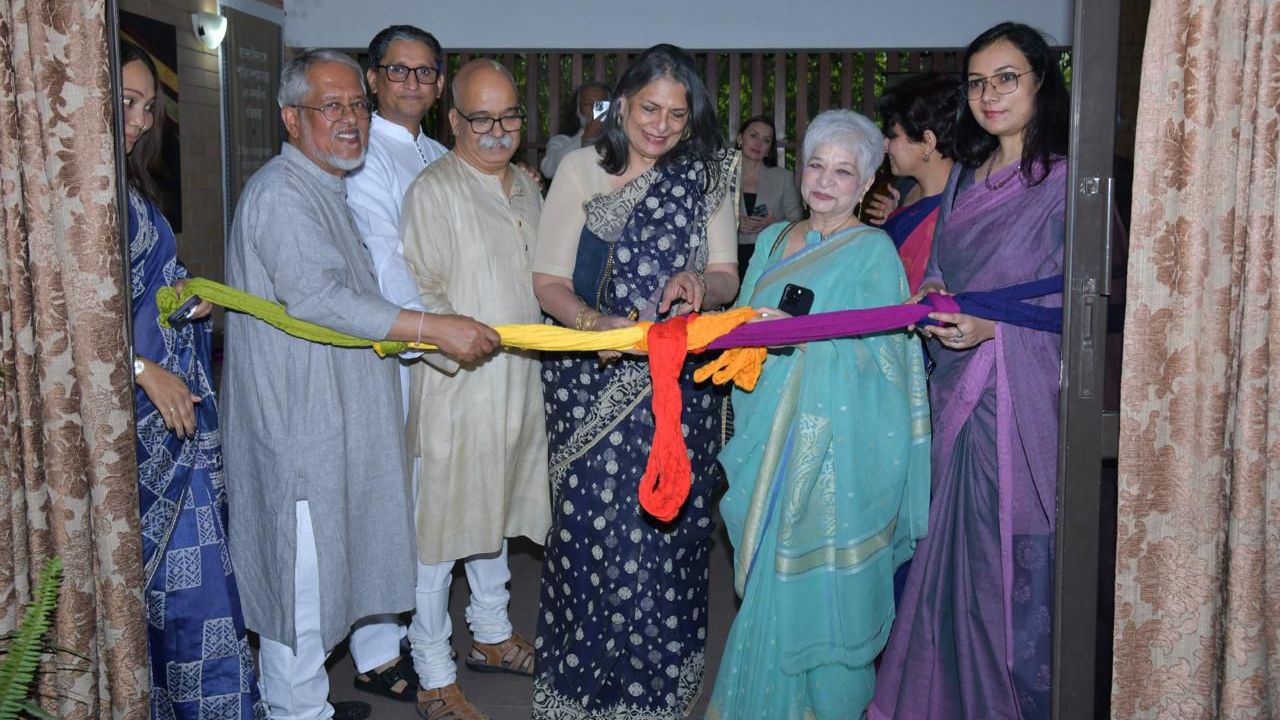



A quiet yet powerful celebration of heritage unfolded in New Delhi as Bangladesh’s iconic Tangail saree took centre stage at a rare, stand-alone exposition hosted by the Bangladesh High Commission. The event drew an impressive gathering of Indian cultural figures, designers and connoisseurs, transforming a diplomatic space into a vibrant showcase of craftsmanship, history and shared traditions.
Among the distinguished visitors were Padma Sri Sunita Kohli, Padma Sri Laila Tyabji and Jaya Jaitly, whose presence underscored the growing appreciation of Bangladesh’s handloom legacy in India. Visitors flocked to the venue not merely to view textiles, but to witness the living tradition of weaving—brought to life by Bangladeshi artisans who carried with them heirloom sarees dating back as far as 80 years.
The exhibition was inspired by the global recognition of Tangail weaving after UNESCO inscribed the “art of Tangail saree weaving in Bangladesh” on its list of Intangible Cultural Heritage of Humanity in December last year. That milestone sparked the idea of organising the first dedicated showcase of Bangladeshi handloom sarees in India—an initiative aimed at celebrating both cultural pride and cross-border connections.

At the heart of the exhibition were the works of the Basak family, widely regarded as pioneers of Tangail weaving. Representing the ninth generation, Khokon Basak brought with him four rare sarees from his family’s private collection, each between 65 and 80 years old. These pieces, preserved over decades, stood as timeless examples of the finesse and durability that define Tangail craftsmanship.
Beyond their visual beauty, the sarees told stories – of generations of weavers, of evolving patterns, and of the intimate relationship between nature and craft. Basak explained that while much of the yarn used in Tangail weaving is sourced from India, the unique climatic conditions of Tangail – particularly its proximity to the Jamuna River—lend the threads a distinctive softness, colour depth and texture. “A saree woven in Tangail or Shahjadpur cannot easily be replicated elsewhere,” he noted, pointing to the subtle interplay of air, moisture and skill.


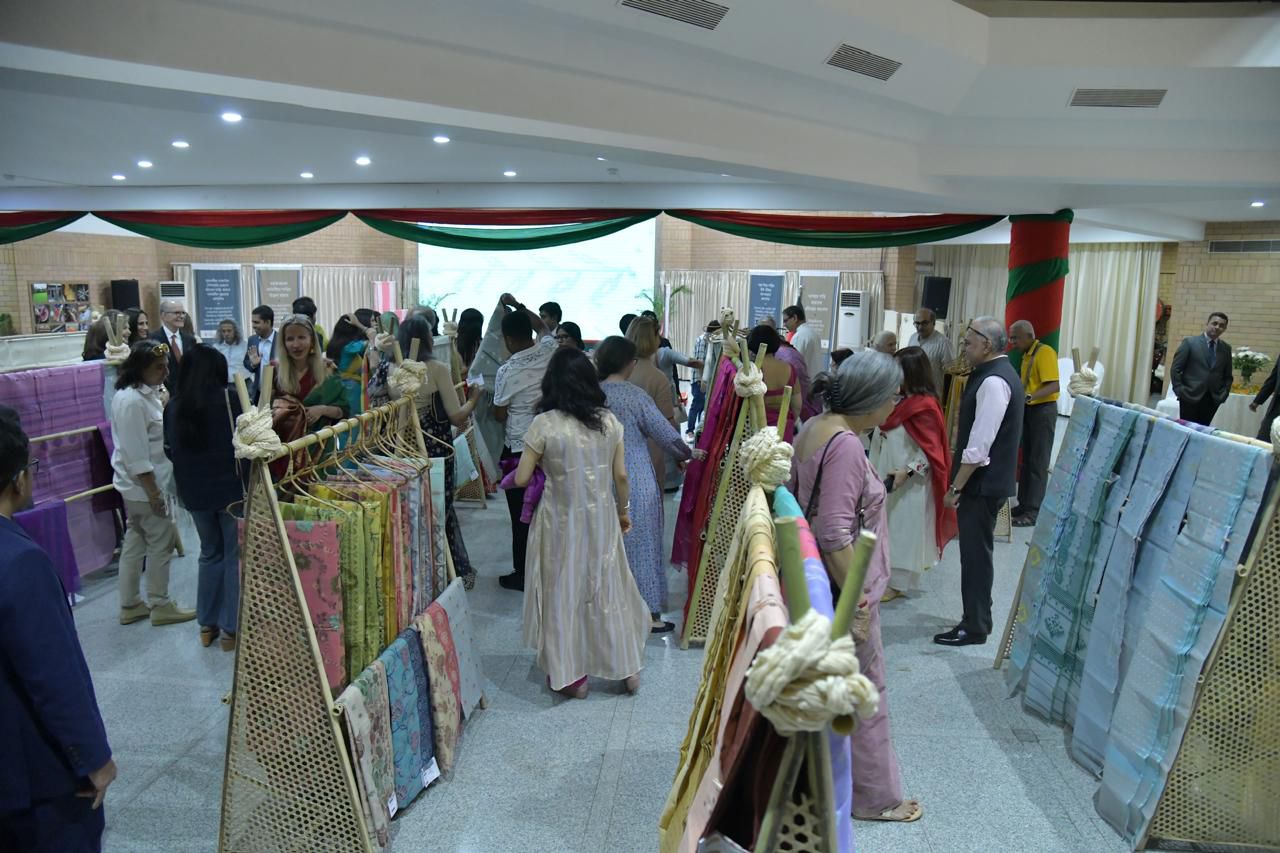
The exhibition featured hundreds of sarees, primarily from Tangail and Pabna—two of Bangladesh’s most renowned weaving hubs. Alongside a few Jamdani pieces, the collection reflected a rich spectrum of motifs, colours and techniques, each embodying the lived experiences of artisans. The threads, as many observed, seemed to carry the emotional imprints of their makers—their labour, creativity and resilience.
What set the event apart was its deliberate departure from a commercial format. Rather than functioning as a marketplace, the exposition was designed as a platform for dialogue—bringing together designers, policymakers and cultural advocates to explore future avenues of collaboration. It was an invitation to rethink handloom not merely as a product, but as a shared cultural and economic opportunity.
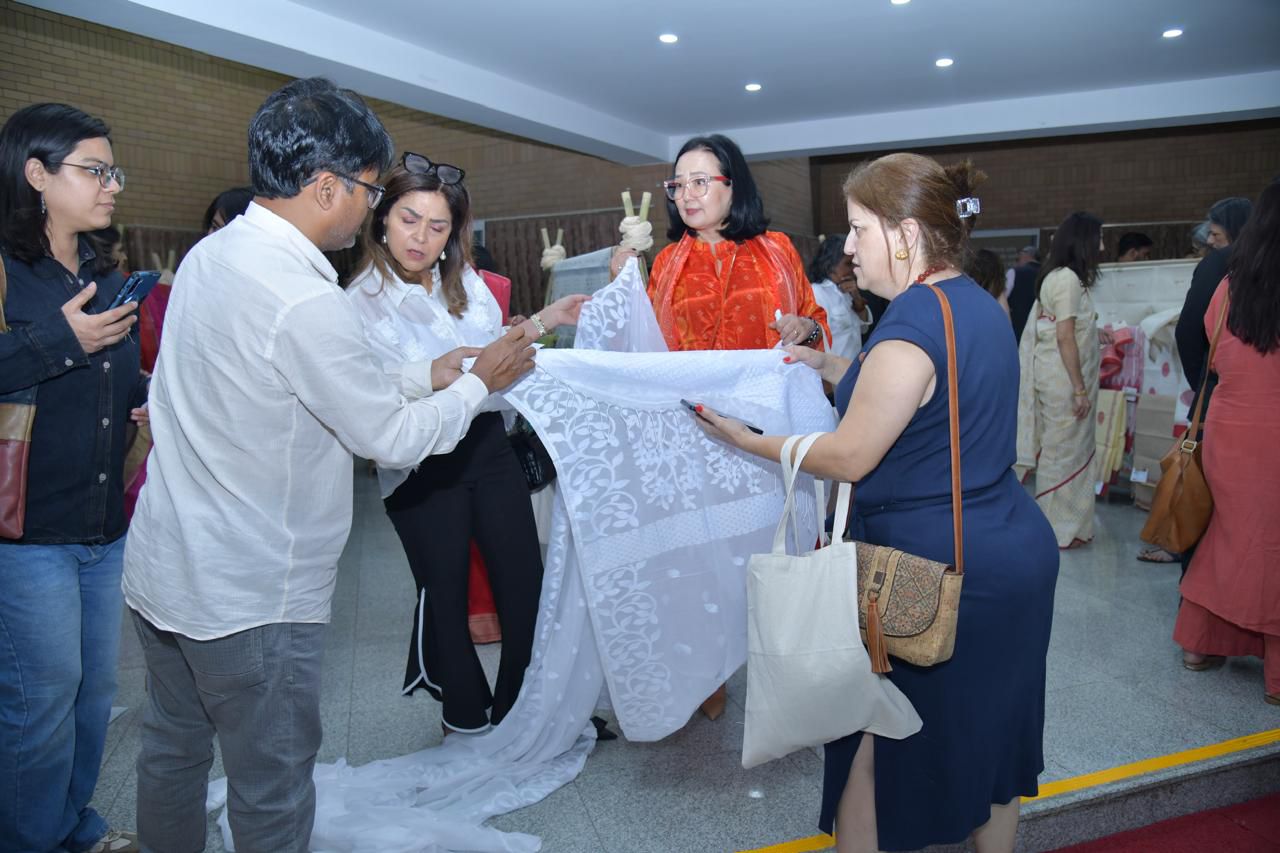
This sentiment resonated strongly among attendees. Some described the sarees as works of art rather than commodities, while others spoke of the untapped potential of a regional creative economy rooted in traditional crafts. Jaya Jaitly, founder of Delhi Haat, proposed hosting Bangladeshi weavers at the popular cultural hub in the future, allowing visitors to witness live weaving demonstrations—an idea that could further deepen cultural exchange.
Bangladesh High Commissioner to India, Riaz Hamidullah, emphasised that the initiative was driven by a vision of collaboration rather than commerce. “I wanted to create an environment for deeper conversations on future collaboration,” he said, expressing satisfaction at the overwhelming response.
He noted that the event had generated significant interest, with many attendees urging similar exhibitions in other parts of India. “This is not a sales event,” he added. “The encouragement we have received is truly inspiring.”
Adding to the significance of the occasion, former Congress president Sonia Gandhi conveyed her greetings and appreciation for the initiative, recognising it as a meaningful step toward strengthening cultural ties between the two countries.
In an era of fast fashion and mass production, the Tangail saree exhibition served as a poignant reminder of the enduring value of handmade traditions. More than a display of textiles, it was a celebration of identity, history and shared heritage—woven together, thread by thread, across borders.