


Ahsan H. Tutul
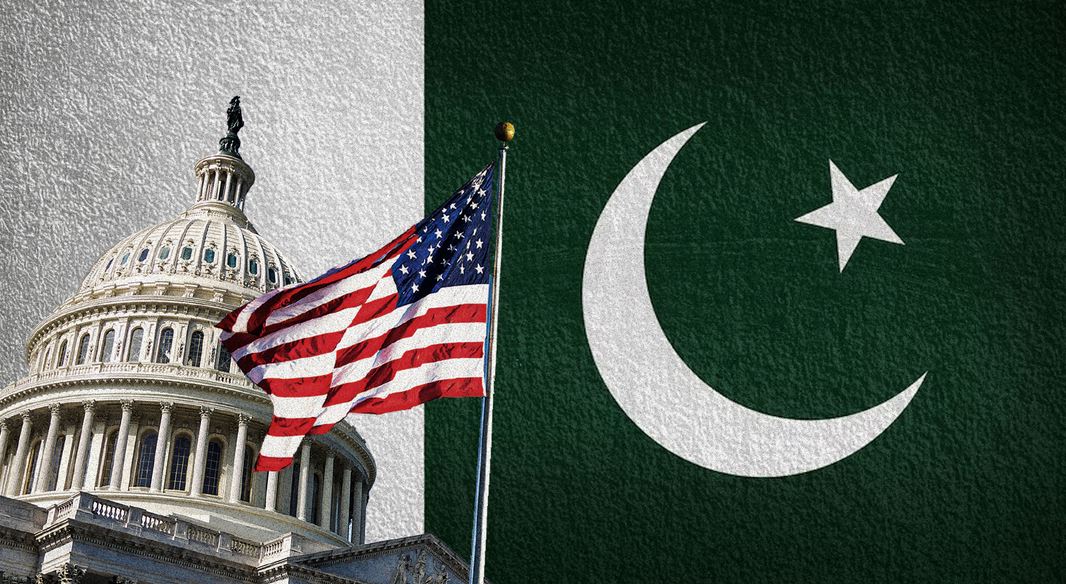
President Trump’s sudden change in tone toward Pakistan marks a notable departure from his earlier labels of the country as a “terrorist haven” and a source of “lies and deceit.” His latest meeting with Pakistan’s Prime Minister Shahbaz Sharif and Army Chief Asim Munir at the White House included praise for them as “great leaders.” What prompted this shift? Essentially, it was driven by national interests, which, especially regarding security issues, are complex; they can be both transformative and perilous. Therefore, the renewed warmth between the U.S. and Pakistan warrants careful analysis, as it might impact South Asia’s security.
Amid ongoing tariff tensions, Pakistan sought to strengthen its relationship with the U.S.; as a result, it publicly lauded President Trump for halting India’s Operation Sindoor during the India-Pakistan conflict following the Pehalgam attacks in India. Pakistan even nominated him for a Nobel Peace Prize because of this. These events occurred as the Indian government took actions that angered President Trump. Consequently, he was pleased with Pakistani leaders, and the relationship between the two countries warmed quickly.
Conversely, Indian Prime Minister Narendra Modi did not accept President Trump’s claim that the war ended through his mediation. India also chose not to support his nomination for the Nobel Prize. Subsequently, Prime Minister Modi, once a close ally, now appears isolated from the U.S. Moreover, the U.S. then imposed a hefty 50% tariff on India compared to 19% on Pakistan, sending a clear message that it has options and opportunities to partner with Pakistan, thereby increasing leverage in South Asian affairs.

From a security standpoint, improving ties with Pakistan could bring major benefits to the U.S. For example, Pakistan’s proposal to develop a port in Pasni, near Gwadar and the Iranian border, offers a strategic advantage; the Pasni port on the Arabian Sea could serve as a tactical U.S. base for missions into Iran, enhancing regional influence. The port area could also provide the U.S. with access to valuable rare earth mineral deposits worth trillions of dollars, helping to reduce dependence on China for these resources.
For Pakistan, one of the urgent security threats is the rise in attacks on its military by Balochistan liberation groups. The hijacking of the Jaffar Express—resulting in over 400 passengers being kidnapped and 26 hostages being killed on March 11, 2025—highlights the immediate need to tackle insurgencies and the government’s challenges. The presence of the U.S. in the Pasni region could allow Pakistan to carry out more military operations against Baloch separatists.
However, the regional powers, India and China, will have many reasons to be concerned about these developments. First, India: Over the past thirty years, the relationship between India and the U.S. has gradually flourished. From the economy to the military, technology, and people-to-people contacts, all areas have experienced substantial growth. India is also the leading partner in South Asia, collaborating with the U.S. to counter China within the Indo-Pacific security framework. Yet, President Trump decided to sideline India for the time being.




Although India and the U.S. have maintained a cordial relationship until recently, India has still consistently pursued its own independent foreign policy. This stance has often been a sensitive issue. The U.S. typically describes its relationship as an ‘either-or’ kind of bilateral bond, rather than an independent one, as India does. The U.S. attitude more closely resembles a “you’re either with us or against us” approach.
Therefore, India currently clashes with the U.S. for several reasons; the most frustrating issue is that India has been buying oil from Russia at a discounted price, effectively ignoring U.S. sanctions on the Russian energy sector. The U.S. believes India’s oil imports help Russia keep its economy afloat, allowing it to continue the war in Ukraine. Two other major concerns are India’s cooperation with Iran on trade and its use of the Chabahar port. Finally, in defiance of U.S. interests, Prime Minister Modi met with the Russian and Chinese presidents during the Shanghai Cooperation Organization (SCO) Summit 2025 in September to consolidate ties, which did not sit well with President Trump.
Second, China: a close U.S.-Pakistan relationship raises concerns for China. As a loyal ally, China consistently supports Pakistani security. For example, Chinese-made missiles helped Pakistan shoot down six Indian fighter jets during Operation Sindoor. The China-Pakistan Economic Corridor (CPEC) is Pakistan’s economic lifeline. Therefore, if a port is built in Pasni, China will need to adjust its relations with Pakistan; at the very least, China will find it challenging to use Gwadar port for its security purposes, even if disguised. Consequently, China could try to boost its bilateral relations and encourage India to develop a strong trading and strategic partnership, thereby hedging against U.S.-Pakistan cooperation. Any friendly connections between China and India pose a nightmare scenario for Pakistan, emphasizing the delicate and fragile balance of power in the region.
While it may seem beneficial for Pakistan to maintain friendly ties with the U.S., it still raises an inconvenient question: Can the U.S. be trusted as a dependable ally? Precedents reveal actions that foster mistrust; take the U.S. invasion of Afghanistan as an example. The purpose of invading Afghanistan was to oust the Taliban, fight terrorists, rebuild the country, and support women. After twenty years, with thousands of soldiers lost and billions spent, the U.S. wound up negotiating with the Taliban and eventually withdrew. The outcome: Afghanistan reverted to its previous state—Taliban in control, minimal rebuilding, and women still oppressed. There is a valuable lesson to learn from these events.
Pakistan also has its own story to tell. After 9/11, President Bush asked Pakistan to help the U.S. in its “War on Terror” or risk being seen as harboring terrorists and supporting the Taliban. The then-Pakistani President Musharraf immediately severed ties with the Taliban and authorized U.S. drone strikes from Pakistan into Afghanistan. However, their relationship worsened over time. Pakistan eventually demanded that the U.S. stop drone strikes from its territories and withdraw its presence, which caused the U.S. to suspend operations and end the mission. Since then, the relationship between the U.S. and Pakistan has stayed tense.
Against this background, Pakistan should be cautious not to jeopardize its strong relationship with China for short-term gains from the U.S. Meanwhile, India should keep an open communication with the U.S., unaffected by the temporary fallout with President Trump. South Asia has faced instability over recent decades due to the efforts of China, India, Pakistan, and the U.S. to pursue their national interests in the region. Smaller countries in this area have much to worry about, as any conflict among these nuclear-armed nations could lead to a ‘spillover’ of economic and security issues beyond their control. Therefore, they should stay alert and actively engage with regional powers to protect their own interests as well.
The stability of South Asia depends on respectful coexistence among its nuclear neighbors. The U.S. and Pakistan should be mindful of the concerns of both India and China, as well as the region’s power dynamics. Records show that even a single spark here can set off a major conflict. Such is the volatility of South Asia. As Henry Kissinger said, “It may be dangerous to be America’s enemy, but to be America’s friend is fatal.” Pakistan should heed this wise admonition as it works to build a strong partnership with the U.S. Otherwise, history could not only rhyme but also repeat itself in South Asia.
The writer is a doctoral researcher in International Relations at the Universiti Sains Malaysia