As world leaders gather in Belem, Brazil, for the COP30 climate summit in November 2025, scientists and campaigners are once again drawing attention to some of the world’s most severe climate casualties. Among the starkest is the Aral Sea. Once the world’s fourth-largest inland water body has been reduced to a fraction of its former size. It leaves behind a landscape marked by ecological collapse, public health concerns and worsening local climate extremes.
Historically, the Aral Sea was the third-largest lake on the planet, spanning roughly 68,000 square kilometres and bordered by Kazakhstan to the north and Uzbekistan to the south. Two major rivers – the Amu Darya and the Syr Darya fed the vast water body, sustaining rich biodiversity and thriving fishing communities along its shores.
The sea’s decline, however, did not begin with global warming. Its collapse can be traced to extensive water diversion during the Soviet era. As part of Joseph Stalin’s “Great Plan for the Transformation of Nature,” massive irrigation projects were introduced in the 1960s to boost cotton production and supply growing towns and industries.


Dozens of canals were hastily constructed to divert water from both rivers, reducing the Aral Sea’s inflow by four to five times compared to natural levels. Many of these canals were poorly engineered, causing substantial leakage and evaporation.





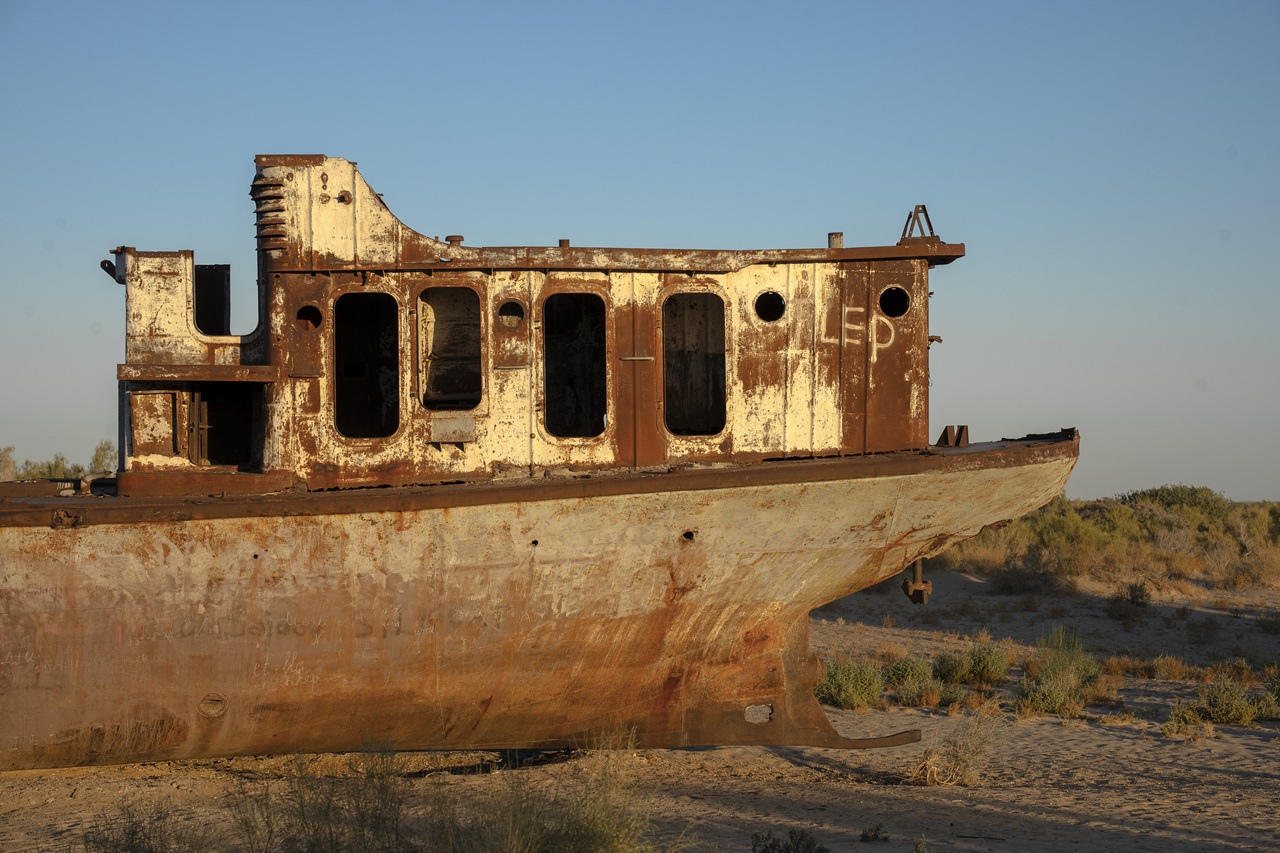
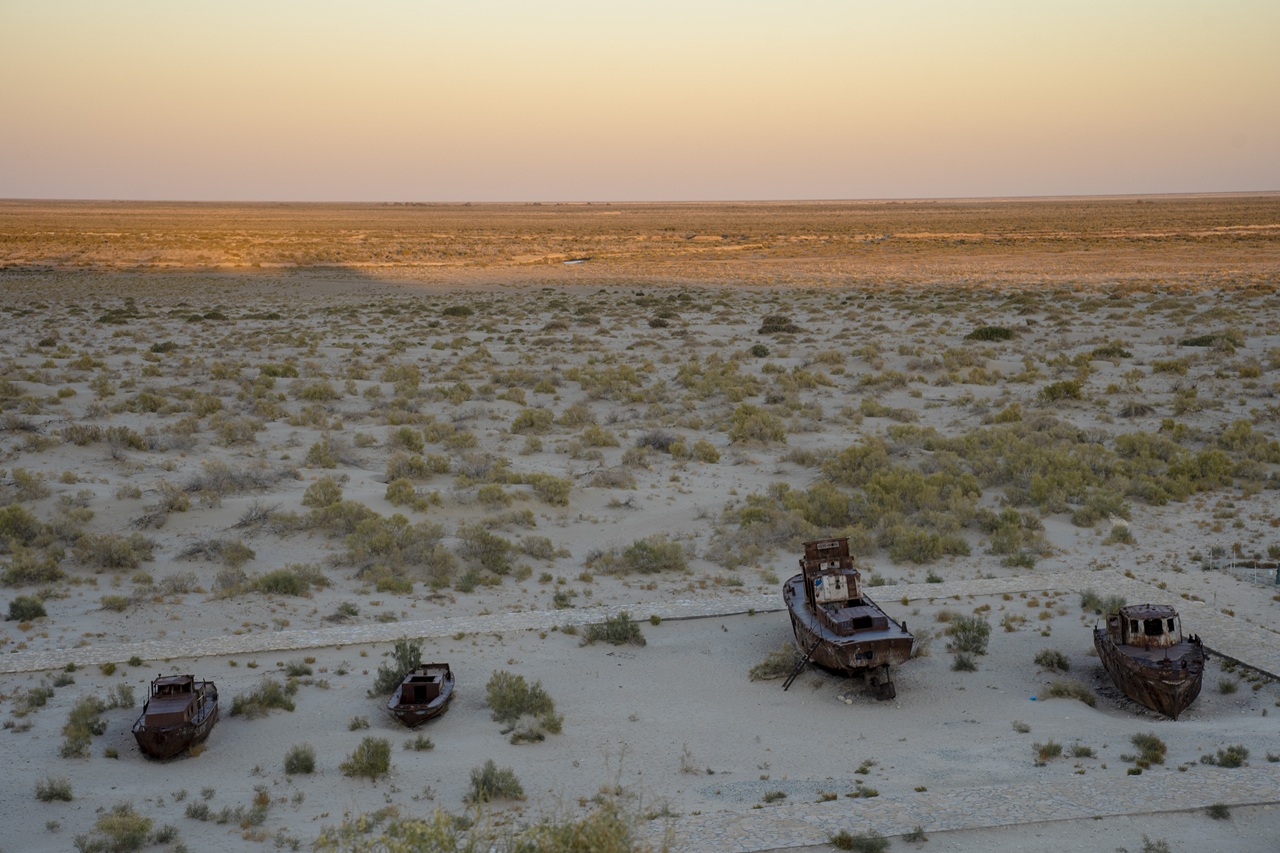
By 2004, the sea had shrunk to nearly 25 per cent of its original size. Salinity levels increased fivefold, rendering the water inhospitable for marine life. What was once a vibrant water body supporting a flourishing fishing industry has now become a barren desert. Abandoned vessels lie scattered across the former seabed, turning once-busy ports into graveyards of rusting ships.
The town of Moynaq in Uzbekistan, once a major fishing hub employing an estimated 30,000 people, stands as one of the most visible symbols of this collapse. Once located on the shoreline, Moynaq now sits 30 to 50 kilometres from the nearest water. The town’s economy, stripped of its lifeline, has withered, leaving behind empty houses, stranded boats and a community struggling to survive.
The Aral Sea remains a cautionary tale of how political decisions, ecological mismanagement and climate pressures can converge to erase an entire ecosystem within a generation.