



Each individual has a homeland in his heart. Address and citizenship change our names, but not the map inscribed on our hearts. The most remarkable journey of life is not from one country to another – it is from the person we are to the person we are created to be. This is an old saying in the Mahabharata, where Yudhishthira says that the happiest man is the one who is not indebted and does not wander away from home. His reply brings to us a reminder that happiness is not solely based on wealth but on belonging. They go across the sea for education, opportunity, safety or dreams, and they can never take its dirt with them. They have their memories, language, scents and emotions.
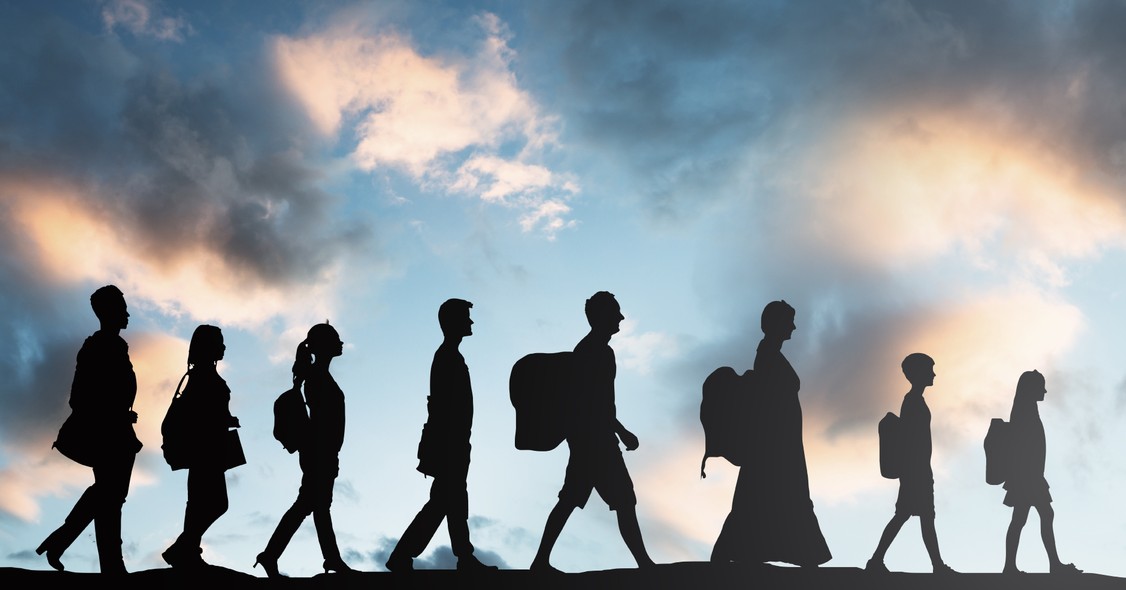
Travel, migration and exile have been central to every great civilisation throughout history. Individuals have had to flee their homes for war, in search of knowledge, to safeguard their beliefs, and/or to make a living. This timeless principle was immortalised in the words, “Mother and motherland are greater than heaven itself. But whatever their success, people’s ultimate respite is with the land of their birth.”
Great leaders and thinkers in history also had this urge. Karl Marx Das Kapital was written during his time of exile in Britain. After leaving Argentina, Guevara became the symbol of revolution throughout Latin America. Napoleon’s exile, separation, and sacrifice moulded their political trajectories in their last years. Their homes were distant, and they were all away from home at various ages, but their home-lands were never far from their hearts. One can leave his country; the motherland never can. Migration is thus not just a geographical process, but also an identification process. Communication scholars say migrants bring a lot more than their luggage. They carry their traditions, language, culture, festivals, memories and history with them. Distance can move us from place to place, but it cannot remove us from our identities.

Political scientist Benedict Anderson said, ‘imagined communities’ are created by a sense of shared language, memory, and collective imagination as well as by borders. It’s a no-brainer why so many people leave: because happiness is at home. It is more often than not a necessity than a choice. Some are seeking education, others flee war and persecution, and many simply flee to ensure food, medical care and a better life for their families. Hope is the starting point of each migration story, but so is the silent pain of bidding goodbye.
For this reason, Bangladeshis in London, Doha, Toronto and Melbourne still read Bangladeshi news, and still raise the national flag and name their children in Bengali. Their emotional ties are to their homeland, though they are living in another country because of geography. When children are born abroad and learn their mother tongue, when the Bengali New Year or International Mother Language Day is celebrated abroad, these events are not only cultural but also a declaration of identity. Distance can move us from place to place, but it cannot remove us from our identities.




The World Migration Report 2024 by the International Organsiation of Migration (IOM) shows that almost 281 million individuals reside in countries other than their own. Remittances are considered to be one of the most resilient economic pillars of a number of developing countries by the World Bank. These incomes help to pay for children’s schooling, pay for elderly parents, purchase houses for families, and provide food for millions of households in Bangladesh. But the price of migration is not one that can be calculated in monetary terms. The statistics can give us numbers of people who are missing, but not the number of mothers who are crying quietly because their child’s room is empty on Eid day. Financial information tells them in billions of dollars, but it does not tell them why migrant workers play audio recordings of rain in their villages at night or demand that their kids speak Bengali before any other language. Rather than being seen as a source of remittances and skilled workers, migrants should never be understood as such. They are representatives of their country. They take the dignity, resilience, honesty and identity of Bangladesh with them in their world-class labs and on construction sites in the glare of the sun. One exports knowledge, another exports labour, but both are equally proud of their country.
Distance is often the best teacher of love. When one ventures off the homeland, one discovers that a language can have a scent, a homeland can have a heartbeat, and memories can grow stronger with the passage of time. As people travel further from their homeland, so does their homeland sink deeper into their souls. The majority of the expatriates have the same dream, but it’s a quiet one: to return one day. Although it is not their dream to come true, they wish to impart to their children and other new generations the heritage of their native country in terms of its stories, language, traditions, and values. However, it is not always feasible to return. Places change, even cities, even people, even homes. But the dream lives on because homecoming isn’t just making it back to a geographical place, it’s making it back to a place of roots, identity and memories. All physical journeys can finish at an airport, but all journeys of the heart must conclude at the door to one’s homeland.
Finally, migration isn’t about economics; it’s about emotion. It is not foreign currency but memory that is its true measure. Satyajit Ray’s movie Agantuk is a reminder that travelling to learn more, to be humane and to gain a wider perspective on the world brings us back to a greater appreciation of our own roots. Men and women can depart their country, but they never leave their homeland behind.
The writer is an Associate Professor, Department of Communication and Journalism, University of Chittagong. Email: [email protected]