



There was a time when a paper ludo board was a familiar part of family gatherings and leisure time.
A roll of the dice could bring excitement or disappointment. Players laughed and teased one another over captured tokens, occupied squares and lucky rolls of sixes.
But times have changed. With busy urban lives and smartphones becoming a part of everyday life, paper Ludo boards have gradually given way to mobile games.
Players can now set up a board, roll the dice and move their tokens with just a few taps on a screen. As a result, the demand for paper Ludo boards has steadily declined.
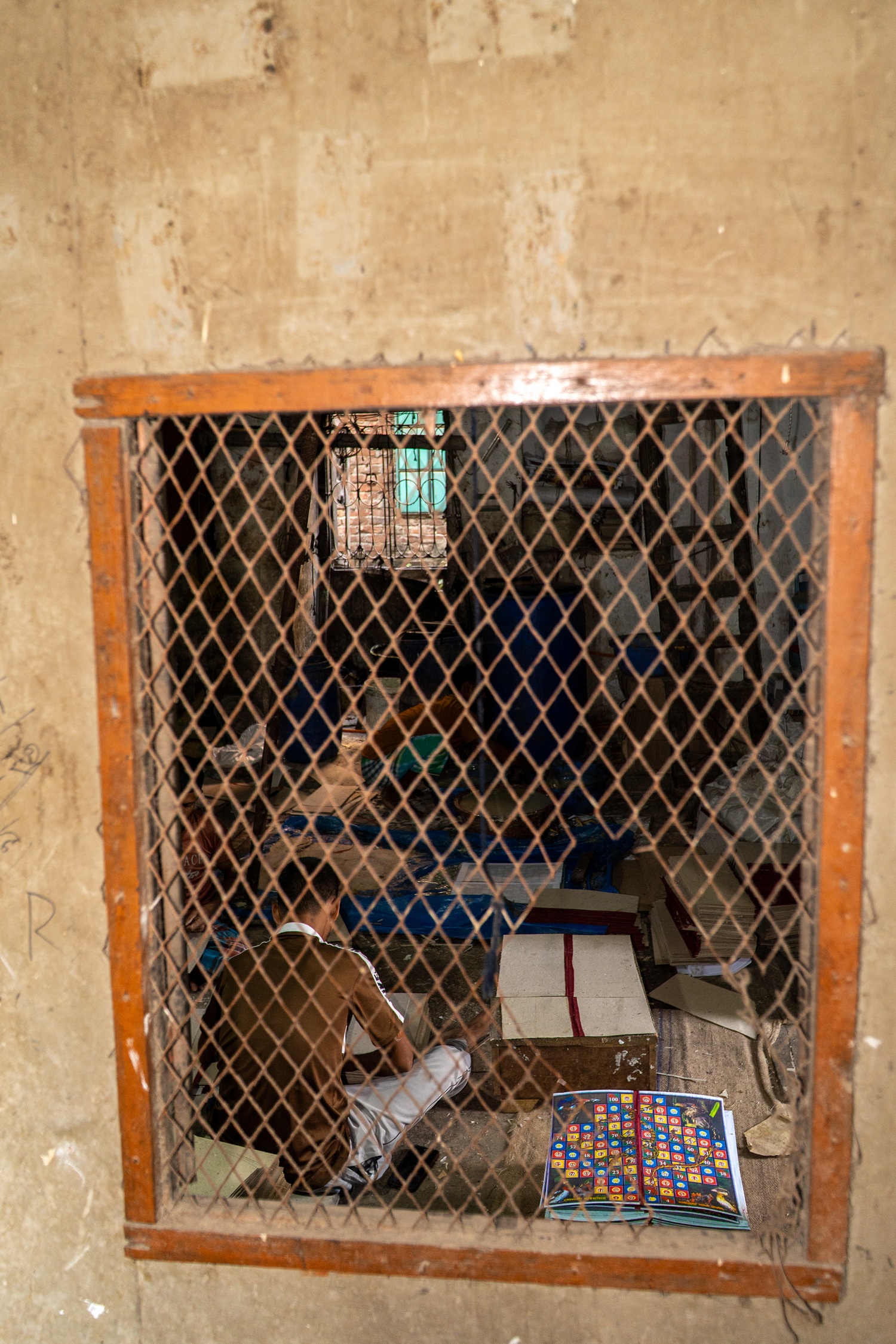
Still, a small factory in Chhoto Katra, Chawkbazar, Old Dhaka, continues to make these boards. Every day, retailers buy hundreds of them at wholesale prices and sell them through shops and temporary roadside stalls across the country.

The business may no longer be what it once was, but the artisans keep the craft alive through their labour and years of experience.
In a dimly lit room inside the factory, patches of dried glue cover the floor, marking years of work. This is where the process of making a Ludo board begins.
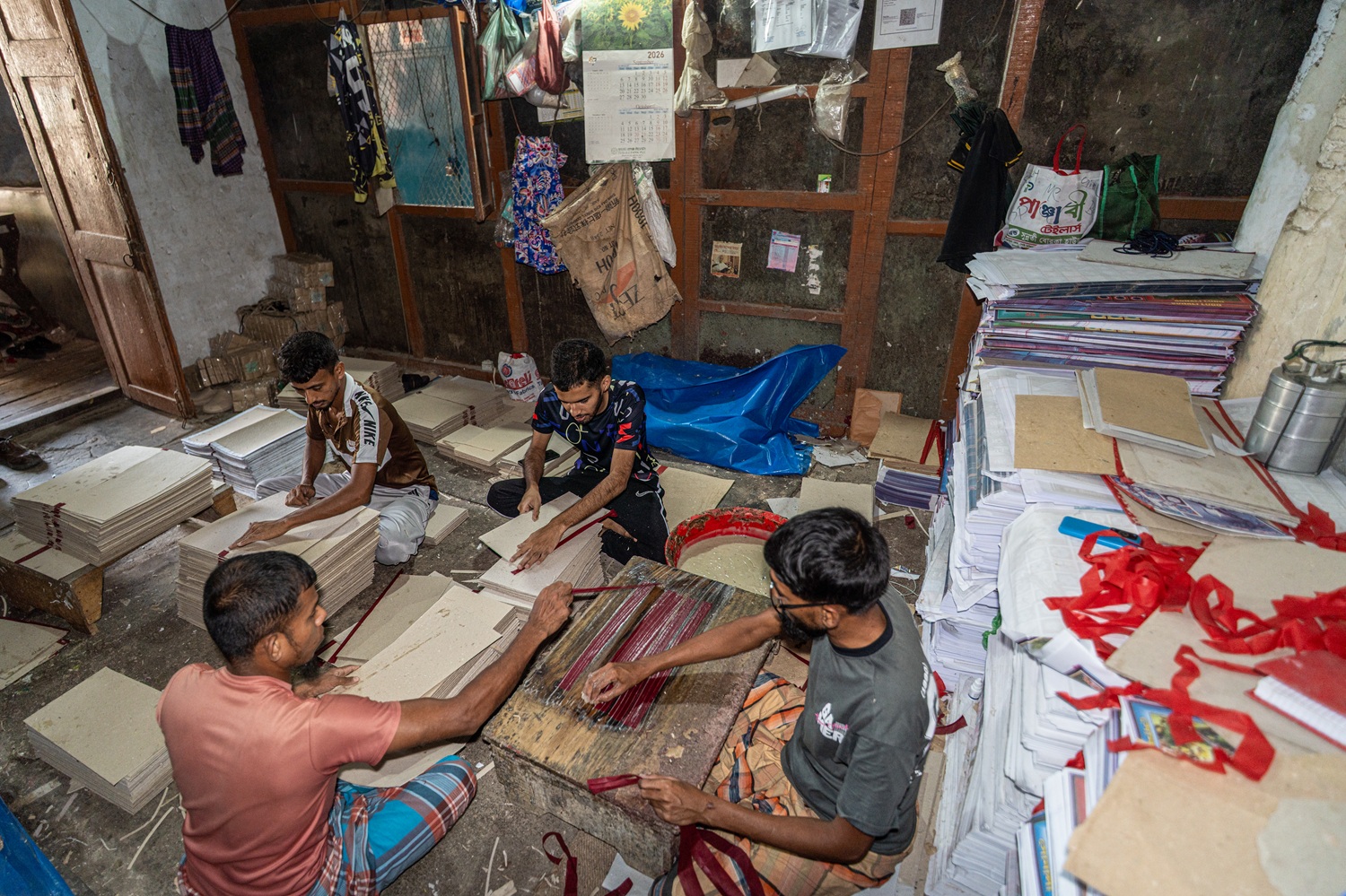
First, a cutting machine is used to cut paper into two pieces of the required size. The pieces are then joined with cloth.




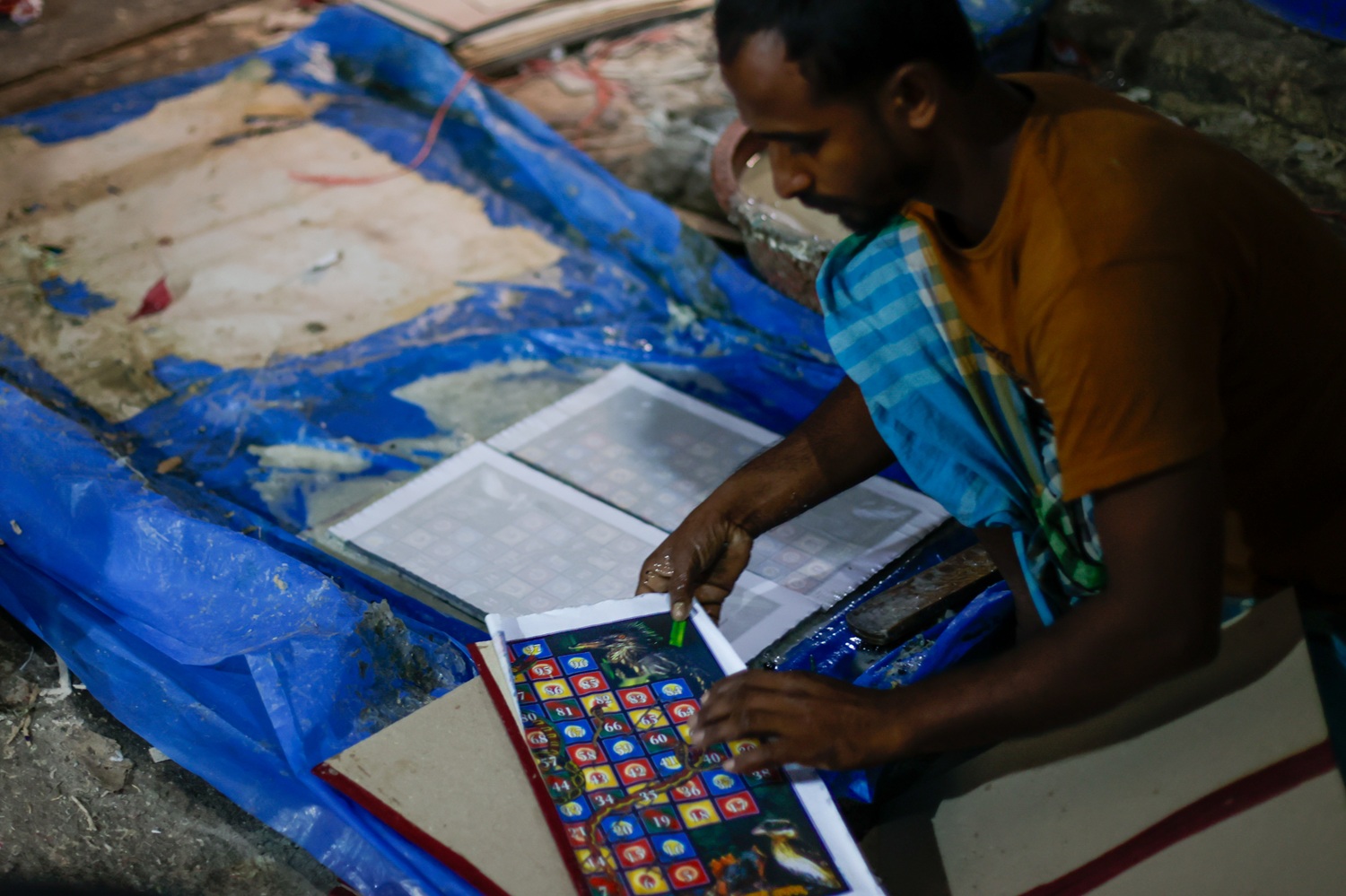
Next, sheets of printed paper in bright and dark colours are glued to both sides of a thick, grey hardboard. One side carries the familiar Ludo layout, with four coloured sections and 72 squares. The other features a Snakes and Ladders board.
Once the paper is attached, the boards are pressed to make them firm and sturdy. They are then taken outside to dry in the open air.
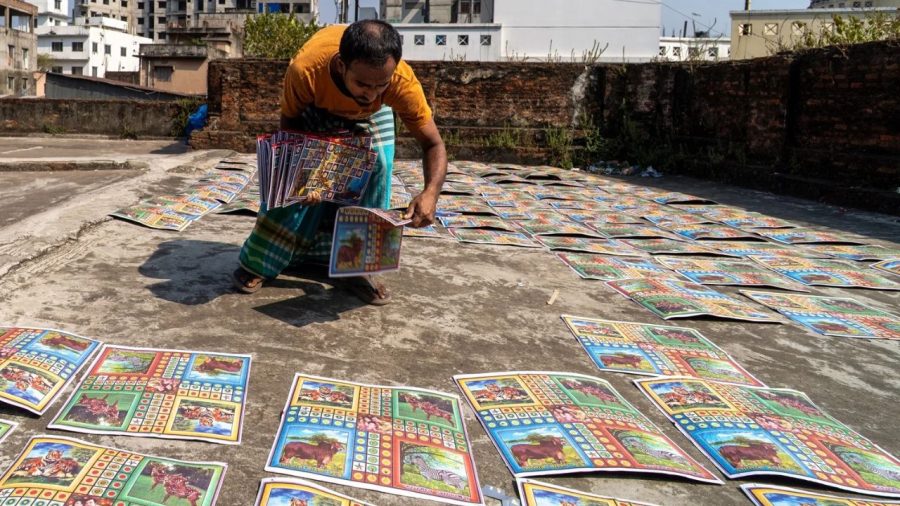
On the factory’s flat rooftop, boards are arranged in long rows under the sun. Spread across the roof, the red, yellow, blue and green boards look like a giant Nakshikatha.
After drying, the boards are packed with playing tokens and prepared for delivery to the market. The process continues every day, producing hundreds of boards.
There was a time when orders kept the workers busy, and the factory needed many hands to meet demand. According to the artisans, the situation began to change as mobile Ludo games became increasingly popular.

“We used to have 20 to 30 people working here. Gradually, the number of artisans started falling. As the Ludo business got worse, the number of workers also decreased,” said a worker at the factory.
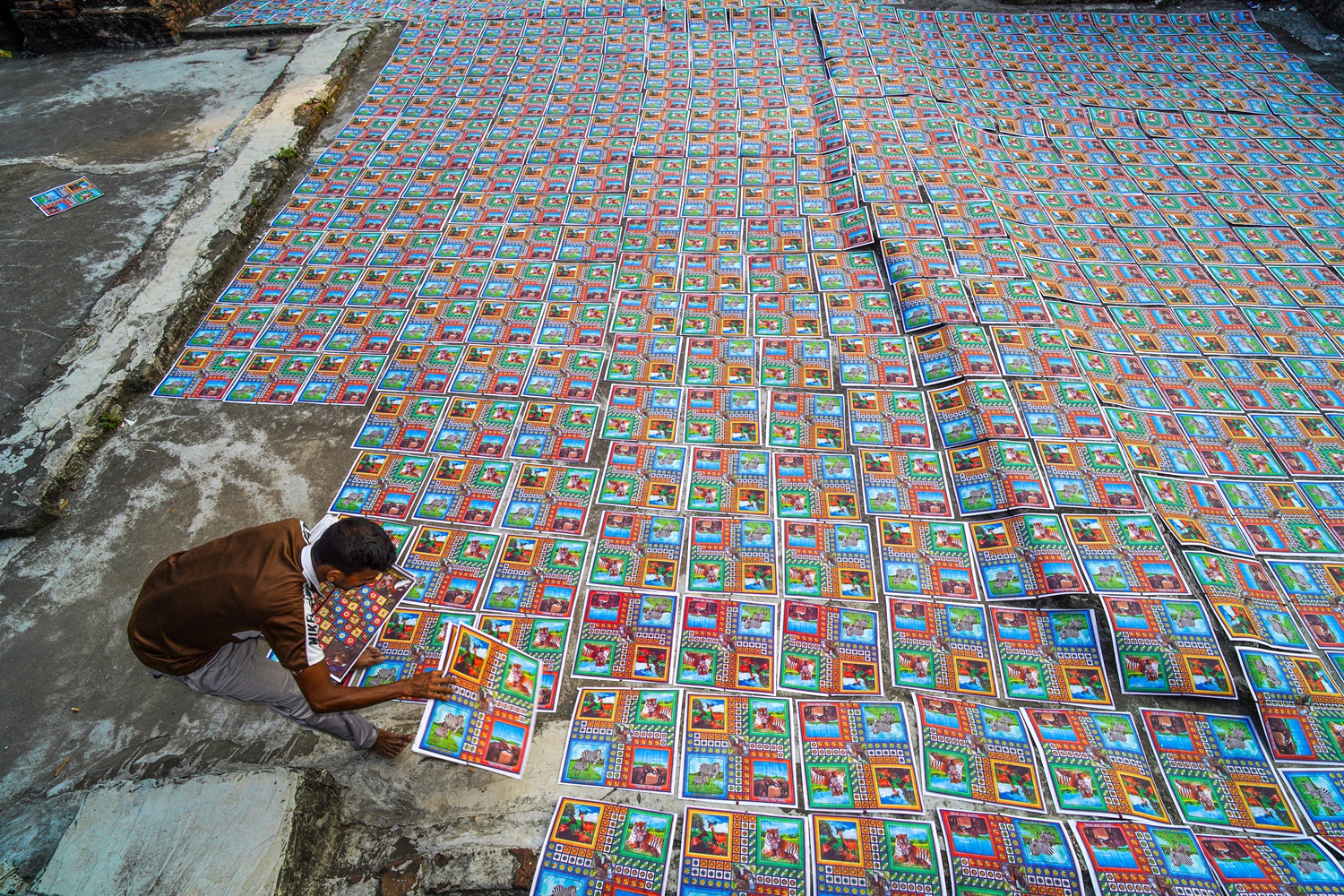
The change is clear in the factory’s daily production. The worker said it once produced more than 5,000 boards a day. Now, the number has dropped to between 500 and 1,000.
For many, earning enough to provide two meals a day for their families has become a challenge. Some have taken up other jobs at night while continuing to make Ludo boards during the day to cover household expenses.
A game that once brought families together around a colourful board now offers little certainty to the people who make it.
The tokens may still find their way home, but for the artisans behind the boards, a return to better days remains uncertain.