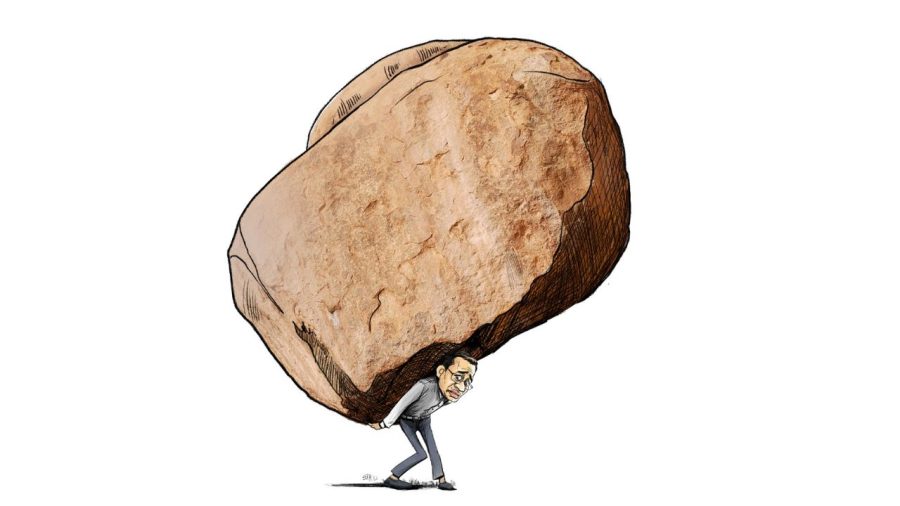



The government and opposition have publicly taken a hard line against the Awami League, but some leaders from both camps are privately discussing a possible political comeback for the party – under remorseful leaders untainted by its past crimes, and only after those responsible for crimes against humanity have been tried and punished.
They argue that such a move could help keep the country’s politics free of conflict.
Some believe the Awami League must either be politically suppressed and eliminated or be allowed to resume political activities under new leadership. Otherwise, prolonged political instability will harm the country.
Leaders of the BNP, Jamaat-e-Islami and the National Citizen Party (NCP) publicly agree that the Awami League should not be allowed back into the political arena for now. Amid recent developments, they have made clear their support for building national unity and taking tough measures to prevent sabotage plus subversion by AL activists.
Ousted prime minister Sheikh Hasina’s announcement that she would return to the country next December has renewed concerns in recent days about the ongoing and possible sabotage in the days to come by the Awami League which faces ban on its political activities.
The party’s recent acts of arson, crude bomb explosions and other attacks have heightened those concerns. The government has also said it has found evidence of Awami League’s behind-the-scenes role in violent protests by garment workers. These developments have once again brought the party’s political future and the country’s stability into focus.

The issue featured prominently in two consecutive days of parliamentary discussions amid criticism of the government’s handling of law and order. The opposition alleged that the situation was deteriorating and accused the government of inaction. The government, however, said a few isolated incidents of sabotage did not justify describing the overall situation as alarming.
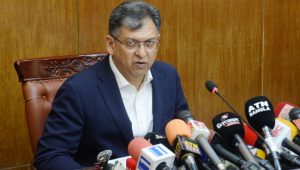
In a statement in parliament on Wednesday under Rule 300 of the Rules of Procedure, Home Minister Salahuddin Ahmed pledged to deal firmly with any conspiracy involving the Awami League.
The home minister said fugitive “fascist” Sheikh Hasina was instigating activities from across the border.
“Fascist forces will never be able to return to Bangladesh,” he added.

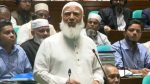

He firmly stated no conspiracy, whether originating inside the country or beyond its borders, would be allowed to succeed. Law enforcement agencies would take tougher action, he observed, saying national unity like that seen before 5 August was needed.
BNP leaders have publicly endorsed the government’s tough stance.
BNP Joint Secretary General and Water Resources Minister Shahid Uddin Chowdhury Anee told TIMES, “We secured our country through the 1971 Liberation War. The 2024 mass uprising, too, had to be achieved through struggle. If necessary, we will continue to fight against the Awami League in the days ahead. There is no scope for reconciliation with the Awami League.”
Jamaat leaders support the BNP’s position but want the government to maintain consistency in its stance and statements on the Awami League.
Expressing hope that the government will take a firm position on the Awami League, Jamaat central executive council member Nurul Islam Bulbul MP told TIMES, “Government advisers make different statements at different times on the Awami League issue, giving the party an opportunity to return to the political arena; the government must first decide what action it will take against the Awami League.”
Jamaat Assistant Secretary General Ahsanul Mahboob Zubair said, “National unity was forged when the Awami League fell. The same unity is needed to prevent the party from returning. The government, however, must act responsibly in this regard.”
Alongside the BNP and Jamaat, the NCP, formed by young leaders of the 2024 mass uprising, has also adopted a tough position on the Awami League.
NCP Member Secretary Akhtar Hossain MP asserted, “A party whose even one single activist has yet to show remorse does not have the right to engage in politics. Reconciliation is out of the question, and no concessions will be made to the Awami League. We remain united on this issue.”
Different thinking behind the tough rhetoric

Despite the public hard line taken by BNP and Jamaat leaders, some senior figures in the ruling and opposition parties privately hold different views about the Awami League’s political future.
A BNP vice-chairman, speaking on condition of anonymity, said the Awami League must either be politically suppressed and eliminated or, after those responsible for its crimes have been brought to justice, new leadership and individuals with clean records must be given the opportunity to engage in politics.
Otherwise, he said, political instability would persist, damaging business and trade and potentially worsening the country’s fragile economy.
A member of Jamaat’s executive council said the Awami League had failed in its attempt to govern the country by suppressing the BNP and Jamaat for 17 years, adding political uncertainty does not benefit the country.
Although the Awami League’s crimes are unforgivable, he believes the party should be allowed to engage in politics without Sheikh Hasina and others responsible for such crimes, in order to maintain stability and ensure the normal functioning of business, trade and the economy.
Political analyst Professor Abdul Latif Masum believes time has not yet come for reconciliation with the Awami League and the government must first firmly stop the party’s ongoing arson and acts of sabotage.
He said, “If the Awami League ever apologises for its wrongdoing, people may once again view the party positively. But there is still no sign of remorse within the party. There are also questions about whether such contrition and political change are possible while Sheikh Hasina is alive.”