The fascist Awami League forces that fled Bangladesh during the mass uprising will never return to the country, just as Hitler’s Nazi forces could not return to Germany and resume politics, Home Minister Salahuddin Ahmed has said.
He made the remarks under Rule 300 during the third day’s sitting of the fourth session of parliament on Wednesday.
Salahuddin alleged that a fugitive Awami League leader was directing party activists through audio and video calls to list July uprising participants and demolish their homes. The leader had also threatened to teach the July fighters a severe lesson if she returned to Bangladesh, he said.
Comparing the party’s flight from Bangladesh with the retreat of Nazi forces, the minister said that the Awami League would never be allowed to return.
Citing the party’s past political violence, Salahuddin referred to the 4 June 2004 incident in which a double-decker BRTC bus was set on fire in front of Hotel Sheraton during an AL programme in Shahbagh. Eleven people were killed after passengers became trapped inside, he said, adding that a statement by AL leader Sheikh Fazlul Karim Selim on the incident was available on YouTube.
The home minister said 55 incidents of mob violence were recorded between February and October 2025, compared with 16 during the same period in 2026. The government would take steps to stop such incidents.
“We did not want to turn law enforcement agencies into a force of thugs, and we will not do so,” he said, adding that lawful and strict measures would be taken as necessary.

He said the International Crimes Tribunal’s investigation team would investigate crimes committed under the previous government, including extrajudicial killings, enforced disappearances, murders, abductions, fabricated cases and casualties during the July uprising.
Salahuddin alleged that ousted forces were exploiting the government’s human rights-based approach to create instability. The government would not allow enforced disappearances, crossfire or torture in the Aynaghar, he said, adding that police had been instructed to act lawfully in accordance with the principle of “right of private defence”.
On labour unrest, he said workers were suffering from the global economic slowdown and rising fuel and commodity prices. The ousted forces and their local collaborators were trying to exploit the situation to create unrest in the readymade garment industry, he alleged.
The government had formed a wage board ahead of schedule after meeting workers, employers and other stakeholders. Several meetings had been held, and the minimum wage would be announced based on their views, he said.
Salahuddin also alleged that money from across the border was being used to foment unrest through labour leaders and underground groups. The government had evidence of the involvement of fugitive ministers, members of parliament and leaders of the ousted government, he added.


Referring to the death of a soldier during an anti-human trafficking operation in Cox’s Bazar, the minister described it as one of the most successful operations in recent years. Fifty-six hostages had been rescued and reunited with their families, he said.
He said lists of drug traffickers had also been prepared and operations were under way to arrest them.
Salahuddin said a case had been filed over Awami League leader Ranjit Sarkar’s entry into Bangladesh from India, where he held a meeting before returning across the border.
Twenty people had been named in the case, with 175 unidentified people also accused. Seven people who attended the meeting had been arrested, he said. Police in Sunamganj and Sylhet were jointly working to arrest others involved, while the route used by Sarkar was being investigated in coordination with the Border Guard Bangladesh.
Comparing border figures, Salahuddin said 2,482 people had been pushed into Bangladesh between 1 January 2025 and 16 February 2026, compared with 37 between 17 February and 8 November 2026.
He also claimed that the government had thwarted 194 attempts by the Border Security Force to push 1,351 Bangladeshis into the country during the latter period.
Twenty-two Bangladeshis were killed by BSF personnel and Indian citizens between January and October 2025, compared with 12 during the same period in 2026, he said.
The government would continue working to prevent further deaths along the border, he added.
The home minister also criticised an earlier statement by the opposition leader about forgiving the Awami League for political persecution during its rule. The opposition leader had made the remarks at an event in Dhaka on 3 September 2024, Salahuddin said.
He said it was unacceptable to forgive the party unilaterally without any expression of remorse or apology for 15 and a half years of oppression and persecution.

Salahuddin also said that the opposition leader had objected to repeatedly labelling Awami League leaders as fascists at an event in London on 13 November 2024.
Jamaat chief rejects allegations
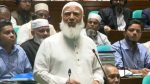
Opposition leader and Jamaat-e-Islami Ameer Shafiqur Rahman rejected allegations that senior leaders of a political party had held secret meetings with foreign intelligence agencies in Dhaka.
Jamaat had no history of meeting any country’s intelligence agency, he said. “We are a political party. We will sit with political opponents and friends. There is no question of sitting with any agency.”
Shafiqur alleged that those accusing Jamaat had themselves met various agencies at home and abroad, travelled to the countries where they were based and expressed regret. They had also acknowledged that their party’s past policies were wrong and promised not to repeat them, he said.
He agreed with the home minister’s observation that someone was instigating matters from across the border. However, he asked whether the minister was suggesting that a political party had reached an understanding with a foreign intelligence agency.
Shafiqur said that if the minister was referring to a person with the status of a secretary appointed by the government to deal with Jamaat-related matters around the clock, the party had challenged the allegation and demanded evidence.
He alleged that those making the accusations were themselves behind the dealings and said the matter was no secret to the public.
He also said he had been misquoted over a press conference on 12 August, after claims that he had forgiven the AL.
“I did not mention the Awami League even once in that 22-minute statement, not even in my dreams,” he said, adding that the video remained available for anyone to watch.