


For anyone who grew up playing Street Fighter in the 1990s, the latest big-screen adaptation feels like stepping into a time machine. Familiar characters, signature fighting moves and a soundtrack packed with nostalgic hits make it an entertaining trip down memory lane. But beneath all the colourful action and fan service, the film struggles to keep its story on track.
Directed by Kitao Sakurai, Street Fighter is a fast-paced action spectacle that brings the iconic video game franchise to life with an extravagant mix of martial arts, comedy and 1990s pop culture.
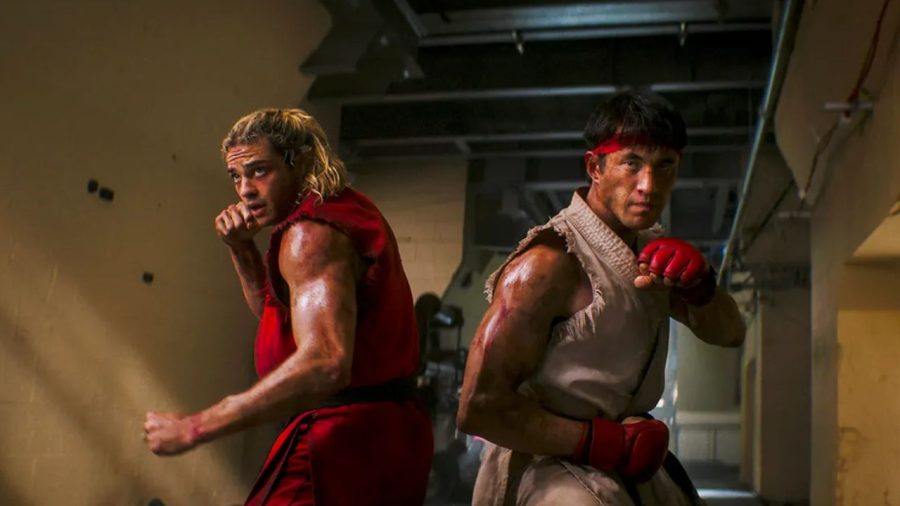
Starring Noah Centineo as Ken Masters, Andrew Koji as Ryu and Callina Liang as Chun-Li, the film assembles a sprawling cast of fighters, villains and familiar faces. Yet, in its rush to entertain, it often leaves the narrative behind.
Set in 1993, the story follows Ken and Ryu, former martial arts partners who have drifted apart after the death of their mentor, Gouken. Ken has become a troubled celebrity, while Ryu lives in isolation.
Their paths cross again when Chun-Li recruits them for the World Warrior tournament, organised by the sinister M Bison. However, the tournament serves a darker purpose, as Bison plans to exploit the fighters’ abilities for his own gain.

On paper, it sounds like the perfect setup for a gripping fighting adventure. On screen, however, the screenplay feels as chaotic as the tournament itself. Character introductions, competing storylines and sudden shifts in tone pile up one after another. The film moves at such a furious pace that its central story occasionally disappears in the commotion.
Even the relatively straightforward premise struggles to find a clear direction.
Still, the ride has its pleasures, particularly for those familiar with the games. Recognising iconic characters, signature moves and familiar references becomes part of the fun. From E Honda’s hundred-hand slap to Guile’s famous flash kick, the film leaves little room for fans to complain about missing game references.




The casting adds another layer of amusement. Seeing WWE star Cody Rhodes as Guile, rapper 50 Cent as Balrog and wrestling personality Roman Reigns as Akuma brings an unexpected thrill. Vidyut Jammwal also makes an impression as Dhalsim, bringing the grace and precision of his Kalaripayattu training to the action.
Jason Momoa’s appearance as the hulking Blanka adds to the film’s larger-than-life spectacle.
Among the central cast, Centineo embraces Ken’s flamboyant, self-destructive personality with an entertaining comic touch, while Koji brings emotional weight to Ryu. Liang stands out as Chun-Li, combining commanding screen presence with impressive physicality.
Her fight sequences are among the film’s highlights, while her sharp, straightforward remarks often cut through the surrounding absurdity. David Dastmalchian also gives M Bison a distinctly sinister presence.
Sakurai’s direction leans heavily towards spectacle rather than storytelling. The fight choreography delivers some genuinely entertaining moments, blending recognisable game moves with hard-hitting combat.

The visual presentation embraces the franchise’s exaggerated aesthetic, from colourful costumes and elaborate character designs to animated flashbacks inspired by the games. However, some of these 2D sequences prove more visually striking than their live-action counterparts.
But the film’s biggest attraction may not be its fights at all. Its music practically turns the screening into a nostalgic radio session. Familiar hits such as MC Hammer’s 2 Legit 2 Quit, Montell Jordan’s This Is How We Do It and Who Let the Dogs Out keep appearing throughout.
Every time a recognisable song returns, it feels like stumbling upon an old favourite on the radio. The urge to sing along becomes part of the experience, making the soundtrack one of the film’s most enjoyable features.
For a 1990s kid who grew up with these games and songs, Street Fighter offers plenty of reasons to smile. It is a colourful, noisy and occasionally hilarious rollercoaster ride. But the faster it goes, the more its story seems to lose its grip.
Those without a connection to the games or the music may find themselves watching a parade of fighters, frantic battles and nostalgic references without much to hold on to. The film also leaves its ending open, clearly making room for another round.
Ultimately, Street Fighter knows how to entertain its fans, but nostalgia can only carry a film so far. It delivers the familiar punches, the familiar faces and the familiar tunes. What it struggles to deliver is a story that hits just as hard.