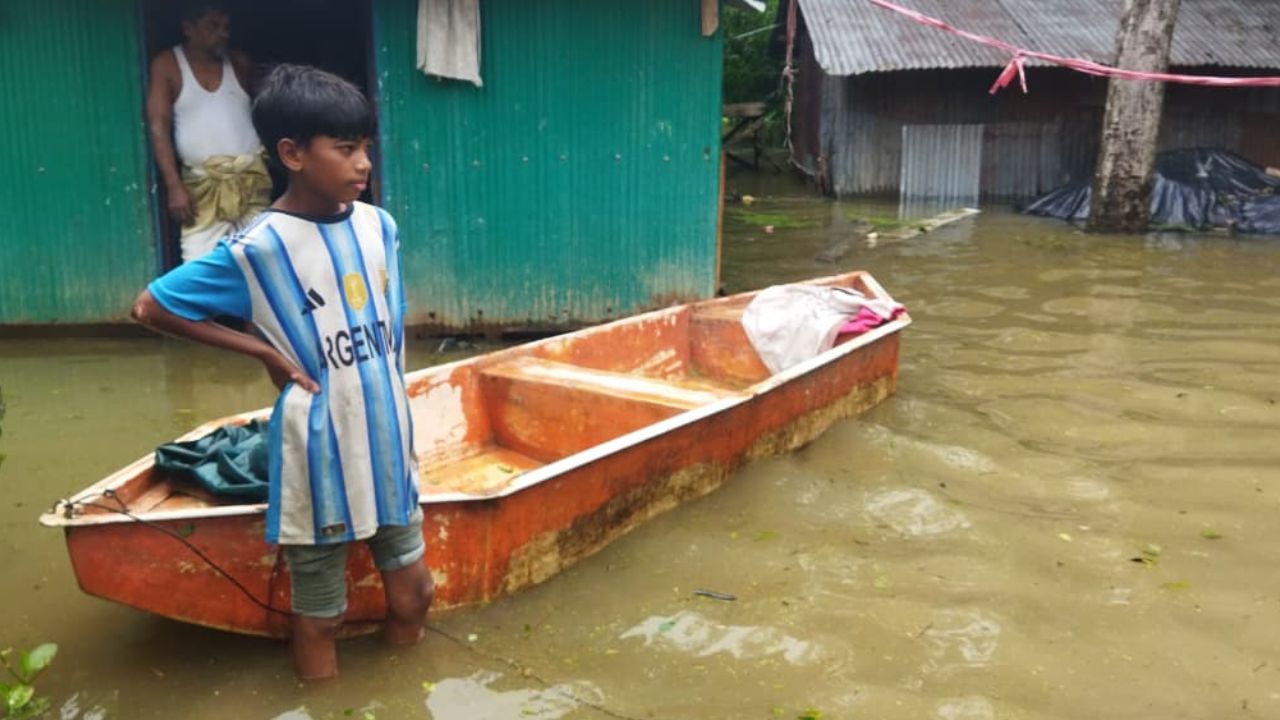






The silence of climate change considerations in the master plans of Bangladesh’s major cities, despite the nation’s reputation as one of the most climate-vulnerable in the world, exposes a planning failure that is no longer defensible. Cities such as Dhaka, Chittagong, Cox’s Bazar, and Khulna are expanding rapidly, yet their foundational documents still reflect a troubling absence of environmental foresight. The gap between policy rhetoric and urban reality could not be more visible.
To begin with the facts, Dhaka’s Capital Development Authority (RAJUK) prepared the Dhaka Metropolitan Development Plan for 1995–2015 without any reference to climate change. Only in 2016, when a detailed regional plan was prepared, did Dhaka begin to integrate climate resilience into its framework. In Chittagong, the Chittagong Development Authority (CDA) also overlooked the issue in both the metropolitan master plan for 1995–2015 and the urban development plan for 1995–2005. Cox’s Bazar adopted its ‘Development Plan for Cox’s Bazar Town and Sea Beach up to Teknaf (2011–2031)’ with little acknowledgment of climate risks. Khulna prepared three successive plans: the Structural Plan for Khulna Metropolitan Area (2001–2021), the Detailed Area Plan (2018–2023), and the Khulna Metropolitan Development Plan Mongla (2011–2031), none of which treated climate adaptation as a priority. Even Rajshahi ignored the issue in its first master plan (2004–2024), only beginning to address it in the version prepared for 2022–2041.
This pattern is astonishing because climate risks are not theoretical projections but present realities. Dhaka now ranks among the top ten percent of global cities most exposed to extreme weather and climate related damages. Studies on the urban heat-island effect reveal that Dhaka, Chittagong, Khulna, and Gazipur experience rising temperatures due to dense concrete infrastructure, disappearing green zones, and poorly managed development.
Officials often explain this neglect by saying that climate change was a ‘new concept’ when these plans were made. By the 1990s, global urban policy was already shifting toward adaptation, and by the early 2000s, climate resilience had become a central element of international planning frameworks. Bangladesh’s continued exclusion of climate concerns was not a matter of ignorance but of misplaced priorities.
The deeper problem lies in the way development and environment have been treated as opposing objectives. Urban planning in Bangladesh traditionally focuses on land-use zoning, real-estate expansion, and infrastructure growth, often sidelining ecological resilience, flood management, drainage systems, and temperature regulation. Climate change has been viewed as an afterthought rather than a defining principle of city design. This reflects a policy culture where environmental concerns are secondary to short-term economic or political interests.
The case of Cox’s Bazar demonstrates how dangerous this mindset can be. Being repeatedly struck by cyclones, it faces constant threats of tidal surges, salinity intrusion, and coastal erosion. Yet its master plan remains largely silent on these vulnerabilities. Infrastructure that ignores sea-level rise, storm-surge height, or the future availability of freshwater becomes a liability rather than an asset. The long-term costs of retrofitting climate resilience into such a plan will far exceed the costs of incorporating it from the beginning.
Khulna provides an even clearer picture of failure. As its wetlands are filled for construction and informal settlements grow without drainage or ventilation planning, it is becoming hotter, drier, and more flood-prone. Studies link the loss of its waterways to intensified heat stress and increased urban flooding. Cities designed without accounting for climate impacts are destined to spend far more resources responding to disasters than preventing them.
When master plans disregard climate change, several risks accumulate. Infrastructure risk such as drainage systems, roads, and buildings designed without future climate projections often fail under heavier rainfall or flooding. Poor communities that live along canals, low-lying land, or reclaimed wetlands suffer the most from climate shocks, yet they are almost always left out of planning discussions. Real-estate development, transport corridors, and urban utilities lose long-term value when not built to withstand environmental pressures. Finally, when cities must constantly revise their plans or rebuild their infrastructure, public trust in institutions erodes.
There are, however, signs of slow progress. In 2024, Dhaka’s North and South City Corporations launched their first comprehensive Climate Action Plans, pledging to reach net-zero emissions by 2050. Narayanganj has become the first Bangladeshi city to adopt an Urban Climate Action Plan. A World Bank-backed project worth $560 million is now supporting climate-resilient urban infrastructure across several cities through the Global Center on Adaptation (GCA). These are encouraging steps, but they remain scattered and limited in scale.
For meaningful change, Bangladesh’s urban development authorities must move beyond symbolic inclusion of climate language in documents. Resilience must be built into the foundation of city planning rather than appended as a decorative phrase. Climate-sensitive zoning, wetland restoration, green infrastructure, and stormwater retention systems must be treated as essential urban assets. Urban design should focus on regulating heat, ensuring drainage, protecting wetlands, and building green corridors. In cities like Chittagong and Cox’s Bazar, which face repeated tidal and storm impacts, these measures are not luxuries but necessities for survival.
The next generation of urban planning must be guided by three urgent principles. First, every existing master and detailed area plan must be updated with climate risk assessments and adaptation frameworks. Second, all future infrastructure projects should be screened against projected climate scenarios, prioritising the protection of vulnerable populations. Third, institutional capacity must be strengthened so that climate-proofing becomes mandatory and not optional.
Bangladesh’s cities stand at a critical juncture. If climate risk remains absent from their development blueprints, the nation’s urban future will be one of constant recovery rather than sustainable growth. The country can no longer afford to plan its cities as if the climate crisis were someone else’s problem. The time has come for climate change to become not a footnote in planning documents, but the central axis around which all urban decisions revolve.


