As Bangladesh marks International Mother Language Day this February, a new linguistic shift is unfolding in its political arena.
While the month commemorates the 1952 Language Movement and honours those who died defending Bangla, recent protests and rallies reveal a noticeable rise in foreign-origin words in political slogans and speeches.
Since the 2024 July Uprising, observers say the soundscape of the streets has changed. Long-familiar slogans such as “Joy Bangla” and “Padma Meghna Jamuna – Tomar Amar Thikana” are now heard less frequently at demonstrations. In their place, crowds increasingly chant “Inquilab Zindabad”, “Azadi”, “Insaaf”, and “Mazloom” – terms rooted in Arabic, Persian and Urdu.
The slogan “Inquilab Zindabad” gained prominence in anti-British movements in colonial India, notably through the revolutionary Bhagat Singh.
“Inquilab” means revolution; “Zindabad” translates as long live. “Azadi”, derived from Persian, signifies freedom. Arabic-origin words such as “Insaaf” (justice), “Zulum” (oppression), “Zalim” (oppressor) and “Mazloom” (the oppressed) now feature prominently in speeches and placards.

Arnob Abdullah, a second-year student at the University of Dhaka, says the change became evident after the July Uprising.
“We are hearing words that were rarely used in mainstream political slogans before,” he said. “Many of these replace Bangla terms like ‘shadhinota’ with alternatives that carry a slightly different emotional tone. The literal meaning may be similar, but the connotation shifts.”
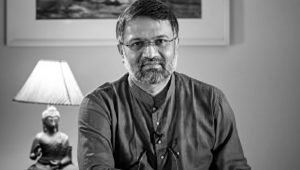
Soumitra Sekhar Dey, professor of Bangla at the University of Dhaka, has also noted the trend. He divides users into two broad groups.




“Some are adopting these words spontaneously, following trends or peer influence,” he said. “Others are doing so deliberately. In those cases, the choice is political.”
He argues that language carries historical weight in Bangladesh. The Liberation War, he notes, grew directly from the 1952 Language Movement.
“When we have Bangla equivalents, replacing them with foreign words can weaken our linguistic confidence,” he said. “Borrowing enriches a language when there is no native alternative.
But discarding existing words suggests a different intention.” The shift is not limited to loanwords from South Asian or Middle Eastern languages. Hybrid slogans blending Bangla and English have also gained traction.
During the quota reform movement, chants such as “Quota na medha? Medha! Medha!” echoed across campuses. Similar rhythmic refrains – “Dalali na Rajpath? Rajpath! Rajpath!” and “Aposh na shongram? Shongram! Shongram!” – have become staples of recent street politics.
Dey raised concerns about mixed-language expressions in formal settings. “In casual conversation, people may speak in a blend of languages,” he said.
“But in public speeches, one should speak either standard Bangla or standard English. A half-and-half approach dilutes clarity and undermines linguistic discipline.”
Linguists and political analysts suggest the trend reflects more than stylistic preference. After years dominated by a single political narrative, sections of the younger generation appear to be crafting a counter-narrative.
Words that were historically familiar yet politically marginalised are being revived as markers of dissent.
For a nation whose modern identity was forged through a struggle over language, such shifts are unlikely to pass unnoticed.
International Mother Language Day is intended to celebrate linguistic heritage. Yet on the streets, the language of protest is evolving, signalling not only a generational shift, but a broader contest over symbols, memory and power.