
The interim government has moved forward with its plan to replace the 15-year-old International Long-Distance Telecommunications Services (ILDTS) policy to simplify and modernise the telecom network and licensing regime.
The Advisory Council on Thursday approved the draft of the much-debated “Telecommunications Network and Licensing Policy 2025” despite strong opposition from the telecom industry’s homegrown players and the BNP.
In recent months, relevant industry associations have urged the interim government to rethink the new policy, claiming it would “wipe out most of the small players and favour giant operators.”
Chief Adviser’s Special Assistant for Posts, Telecommunications, and ICT Faiz Ahmad Taiyeb, in a press conference, said the new policy aims to eliminate middlemen’s profiteering encouraged by the previous government, paving the way to ensure the quality of telecom services and boost competitive telecommunications businesses for more affordable, quality data and voice.
“Under the ILDTS policy, the BTRC now grants 26 categories of licences, which were awarded to 2,999 entities. The policy was abused to create profiteering middlemen, leading to chaos in the industry that hindered the BTRC from ensuring discipline and quality of services,” he said.
“We have minimised the previous licensing verticals into three major layers, allowing every licence holder to operate in a broader layer,” he added.

The three new major layers are – the Access Network Service Provider licence, which will include all connection providers. The National Infrastructure and Connectivity Service Provider licence will allow the ownership and operation of telecom infrastructure, such as nationwide fibre optic cable networks, mobile towers, and data centres.
The International Connectivity Service Provider licence will cover all gateways, as well as terrestrial and submarine cables.
A separate license category has been created for satellite-based services, while smaller services like national internet exchanges, call centres, and telecom value-added services will be left unregulated for the sake of deregulation.
Taiyeb stated that the ILDTS policy was for outdated technologies and hindered efforts to modernise services efficiently.




He said the abuse of the policy had created a situation where returns on significant investments were hindered, allowing favoured ecosystem players to earn from rent-seeking activities on every minute of voice calls, data consumed, or SMS circulated, with minimal investments.
Why the opposition?
The ILDTS policy, aimed at helping grow local capacity in the telecom industry, will be replaced by the new network and licensing policy.
“This will end a protection for hundreds of smaller local businesses,” said Mohammad Aminul Hakim, president of the Internet Service Providers’ Association.
“Only a handful of politically favored groups may have abused the policy, not all homegrown entrepreneurs. Their investments have been real and need protection,” Hakim told TIMES of Bangladesh.
The licenses for international gateways, interconnection exchanges for voice calls and SMS, and international internet gateways for channeling and wholesaling data will no longer remain.
Meanwhile, local firms have invested huge sums and created jobs, according to the associations.
While the interim government argues that license holders will be accommodated in the respective broader license categories, local players fear they will fail to compete with big investors who will have the advantage of offering multiple services within a broader layer.
Bangladesh’s telecom industry is significantly dominated by foreign players, especially mobile operators. Through the new policy, the remaining small stakes of local investors are expected to be handed over to foreigners, said International Gateway Operators’ Forum President Asif Rabbani.
“Through the new policy, we are seeing signs that even the small businesses currently in the hands of local investors will be handed over to foreigners. This sector already has unchecked dominance by foreign Mobile Network Operators (MNOs), and the new policy will further increase their control,” he said.
“There is no justification for handing over businesses in sectors where local investors have the capability,” he said, adding that the IGW sector alone has around Tk5,000 crore in investments while it contributed Tk10,500 crore in cumulative state revenue.
“If mobile operators are allowed to enter the fixed broadband internet business, the homegrown ISP industry will be wiped out, and the regulator must clarify that this will not happen,” said Aminul Hakim.
Contesting the interim government’s argument of affordability of telecom services through the new policy, he said, “The government should stop taking away over half of the telecom consumer spending first.”
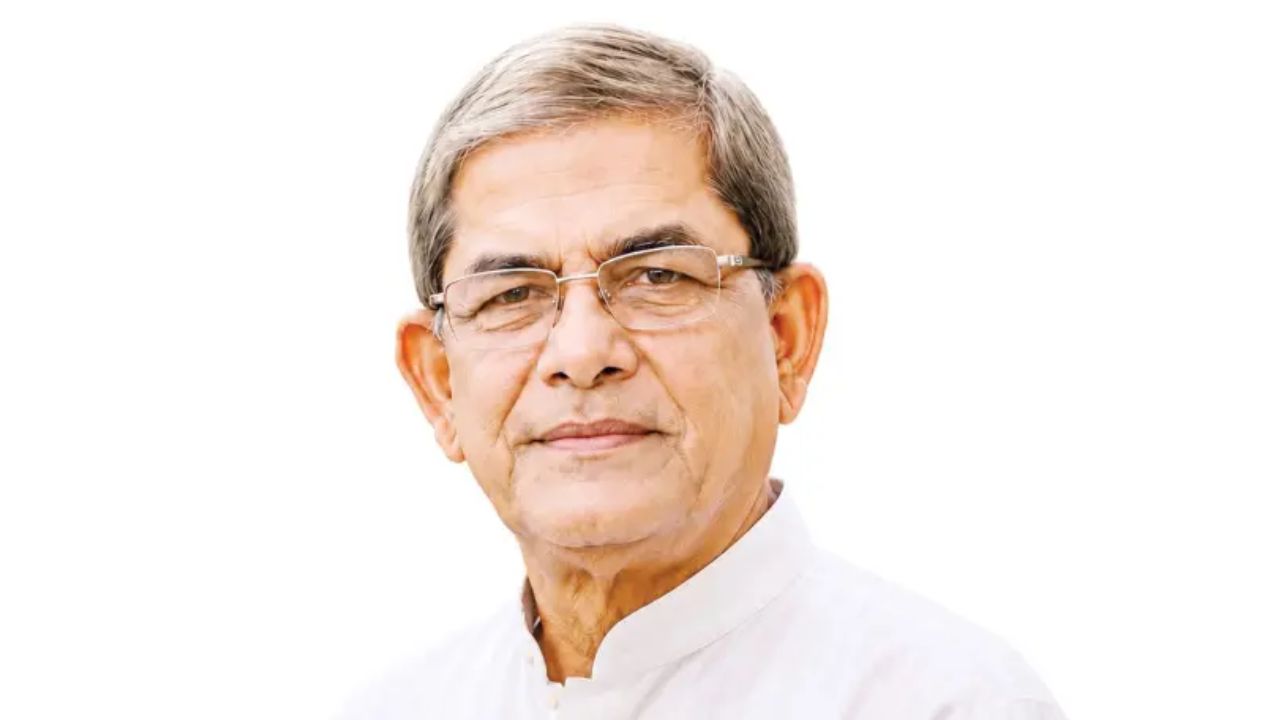
BNP Secretary General Mirza Fakhrul Islam Alamgir, earlier this year, echoing the concerns of local entrepreneurs, said in a press conference that the telecommunications policy is decisive for the nation and that an unelected interim government should not push for it.
He urged the government to leave the matter to the upcoming elected government.
The policy will be fully implemented by June 2027, as most of the licenses are set to expire by then.