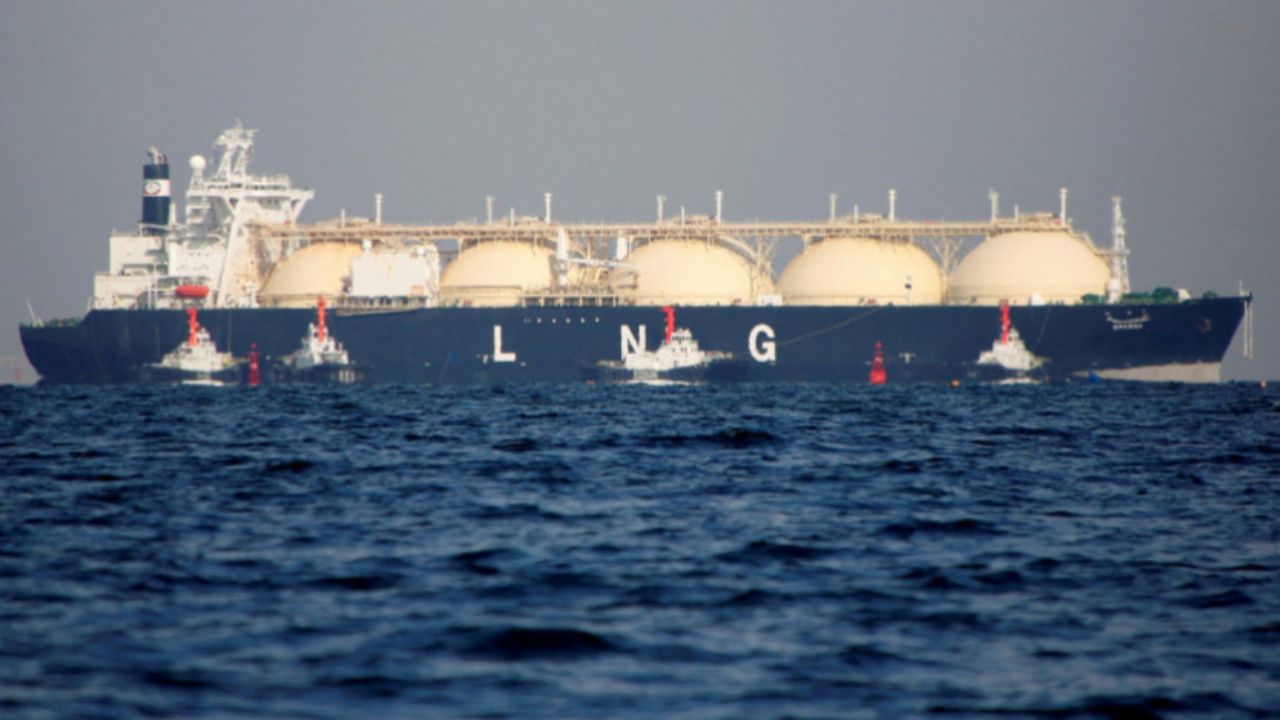



Gas supply from one of the two floating liquefied natural gas (LNG) terminals off the coast of Moheshkhali was suspended on Tuesday following a technical fault, reducing Bangladesh’s imported LNG supply by more than half and intensifying pressure on the country’s already strained gas network.
The disruption occurred around 11:30am when the Floating Storage and Regasification Unit (FSRU), operated by US-based Excelerate Energy, failed to establish a connection with an LNG carrier delivering the fuel.
“The FSRU could not connect with the LNG vessel, forcing us to suspend gas transmission from the terminal,” Engineer Muhammad Nasir Uddin, deputy general manager (LNG) at Rupantarita Prakritik Gas Company Limited (RPGCL), told TIMES of Bangladesh.
He said engineers were working to restore operations as quickly as possible.

According to Petrobangla officials, the country’s two floating LNG terminals had been supplying around 1,070 million standard cubic feet per day (MMscfd) of regasified LNG before the disruption.
Following the shutdown, supply has dropped to about 550 MMscfd, reducing gas injection into the national grid by more than 500 MMscfd.



Bangladesh operates two Floating Storage and Regasification Units (FSRUs) off the coast of Moheshkhali in Cox’s Bazar, the country’s main gateway for imported LNG.
Each terminal has a regasification capacity of 500 MMscfd, enabling them to inject roughly 1 billion cubic feet of gas into the national transmission network under normal conditions.
The first terminal, Moheshkhali Floating LNG (MLNG), began commercial operations in 2018 and is owned and operated by Excelerate Energy under a 15-year agreement, after which ownership will be transferred to Petrobangla.
The second terminal, Summit LNG Terminal, started operations in 2019. It is owned by Summit LNG Terminal Co Ltd, while its FSRU is also operated by Excelerate Energy.
RPGCL, a subsidiary of Petrobangla, oversees LNG imports, terminal operations and the delivery of regasified LNG into the national gas grid.
Bangladesh’s daily natural gas demand is estimated at around 3.8 billion cubic feet, while current supply stands at about 2.6 billion cubic feet per day.
Under normal conditions, the two Moheshkhali LNG terminals contribute between 1.0 and 1.05 billion cubic feet of gas per day, accounting for nearly 40 per cent of the country’s total supply.
The outage has removed roughly 15 to 19 per cent of Bangladesh’s overall gas supply, likely worsening shortages for power plants, industries and other major consumers already grappling with limited gas availability.