



Bangladesh’s cultural space is facing growing pressure from groups operating under the banner of “Tawhidi Janata”, with objections to concerts, film screenings and traditional events, alongside attacks on shrines, raising concern among artists, social thinkers and Islamic scholars.
The pressure has surfaced in various parts of the country in recent months, with cultural programmes disrupted, concerts opposed and traditional events facing demands for cancellation.
In Sylhet’s Beanibazar upazila, a traditional boat race scheduled for 28 August on the Sunai River has come under pressure after a group using the “Tawhidi Janata” banner launched a Facebook campaign demanding its cancellation.
The group also held a meeting at Barigram Bazar Mosque last Thursday under the banner “Tawhidi Janata Lauta Union” and reiterated its demand to stop the event.
Earlier, on 19 August, a cultural programme at Brahmanbaria district police lines was disrupted after several students from Darul Arkam Islamia Madrasa objected to loud music. More than 100 madrasa students later entered the venue and vandalised it, triggering a clash.
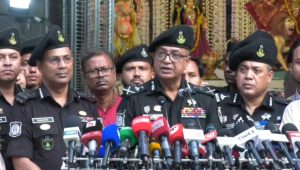
Police said, “I will do my duty, so that no one else is harmed.”
The same day, the Imam-Ulama Parishad, Kishoreganj Sadar unit, demanded the cancellation of a concert featuring several bands at the old stadium, describing it as “against Shariah”.
The group announced a protest rally and procession but suspended the programme after the concert was postponed.

Earlier, on 30 May, a screening of “Bonolota Express” organised by Brahmanbaria Film Society for Eid-ul-Azha was suspended after students of the Qaumi Chhatra Oikya Parishad campaigned against it on Facebook.
Nasrullah Muaz, a Qaumi Oikya Parishad leader who led the campaign, posted the film’s photo card with a red cross on Facebook, writing, “Brahmanbaria is a city of ulema. Allama Fakhre Bangal once stopped films in this city, and now some ‘conspiratorial groups’ are trying to restart cinema screenings.”
The developments have triggered concern among members of the cultural community, who fear repeated objections and disruptions could gradually shrink the space for cultural activities.
Filmmaker Ashfaque Nipun said the government must legally curb attempts to shut down cultural activities at will.
“If the government wants to prove to citizens that it is culture-friendly, then the culture of shutting down whatever one wants must be curbed through law,” he said.




Baul singer Arif Dewan said cultural activities had faced few such obstacles for a long period after independence, but attacks and other incidents had since created a “confrontational tendency” directly affecting folk culture.
He blamed an “extremist opportunistic group” for the trend.
Dhaka University sociology professor and theatre activist Samina Luthfa said the developments were rooted primarily in a clash of cultural values.
Bangladesh’s traditional culture is diverse and inclusive, she said, but has increasingly come into conflict with different religious and social perspectives.
Speaking in parliament, independent lawmaker Rumeen Farhana highlighted the plurality of Bangladesh’s cultural identity.
“Those who want to take the country backwards and towards darkness and want to portray Bangladesh as a fundamentalist state are behind such activities,” she said.
Shrine attacks add to concern
The wider backdrop is a series of attacks on shrines. “Makam: Centre for Sufi Heritage” claims 103 attacks have been documented since the 2024 movement, including at least 97 during the interim government’s tenure.
The attacks involved vandalism, arson and looting, as well as deaths. On 11 April, ‘Pir’ Shamim Reza was beaten and hacked to death in Daulatpur, Kushtia, following an alleged accusation of blasphemy.
Only 12 cases have been filed over the attacks, with little visible progress in most investigations and no significant arrests, according to the organisation.
The continuing incidents have raised concerns among analysts and social thinkers over the implications for Bangladesh’s pluralistic cultural identity.
Writer and thinker Farhad Mazhar described the developments as “religious fascism”.
“Violence is not the path of Islam, and those who oppress innocent people cannot claim to be followers of the Prophet,” he told TIMES of Bangladesh.
He said imposing one’s views on other citizens through oppression amounted to a criminal offence, adding that mortal human beings could not claim divine authority by presenting themselves as holders of absolute truth.
Iftekharuzzaman, executive director of Transparency International Bangladesh, said the incidents reflected the growing strength of a force opposed to Bangladesh’s folk traditions, pluralism and religious and cultural diversity.
He urged religion-based political parties to clarify their positions on cultural diversity, folk heritage and the coexistence of different beliefs and practices.
Religious scholars reject violence
Religious scholars have also expressed concern over the incidents.
Islamic scholar Mufti Saiful Islam, imam of Taqwa Mosque in Dhaka, said, “Islam does not support such attacks in any way.”
Any complaint, he said, could be brought to the administration, but carrying out attacks was illegal.
Islamic researcher Dr Waliur Rahman, who served Islamic Foundation Bangladesh as a Muhaddis (Hadith scholar) for over 18 years, said such incidents were often driven by local youths or people with limited knowledge of religious matters.
According to him, some become agitated after leaving mosques and subsequently become involved in attacks or assaults.
Amir-e-Shariat of Bangladesh Khilafat Andolan Allama Abu Jafar Qasemi summed up the issue: “Regardless of differences of opinion, no one has the right to take the law into their own hands.”