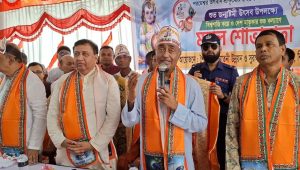
Tarique Rahman, BNP chairman and the leading contender for the prime minister’s office, has formally declined an offer from political rivals to form a national unity government following the upcoming election scheduled for 12 February.
Speaking in an interview with Reuters at his Gulshan office on Friday, Tarique expressed firm confidence that his party is poised to secure a clear majority and govern independently.
The 60-year-old leader returned to Bangladesh last December after nearly two decades in exile in London. His return follows the collapse of Sheikh Hasina’s administration in August 2024 after a youth-led uprising.
A shifting political landscape
Jamaat-e-Islami, a resurgent Islamist organization that was previously banned, has proposed a unity government to help stabilise the nation. The BNP and Jamaat have a historical precedent, having governed together in a coalition between 2001 and 2006.

However, Tarique dismissed the current proposal, questioning the viability of such an arrangement.
“How can I form a government with my political opponents, and then who would be in the opposition?” he asked, adding that he hopes Jamaat will serve as a “good opposition” if they do not win the majority.
Aides to the BNP chairman indicated that the party expects to win more than two-thirds of the 300 parliamentary seats. The BNP is directly contesting 292 of those seats, with its remaining allies competing for the rest.


While polls suggest a BNP victory, the party faces a significant challenge from an alliance led by Jamaat-e-Islami, which includes a new “Gen Z” political party that rose from the 2024 student protests.
Economic growth and diplomatic pragmatism
Tarique’s primary focus remains on economic revitalization following the massive disruptions to Bangladesh’s giant garments industry during the 2024 unrest. He emphasised that his government would prioritize job creation for the nation’s 175 million citizens to improve their quality of life.
On the diplomatic front, relations with India have been strained by New Delhi’s decision to provide shelter to the ousted Sheikh Hasina. This tension has provided China with an opportunity to increase its political and investment footprint in the country.
When questioned on a potential shift toward Beijing, Tarique advocated for a pragmatic foreign policy.
“Whoever, while protecting the interests and sovereignty of Bangladesh, offers what is suitable for my people and my country, we will have friendship with them, not with any particular country,” he stated.
Humanitarian, domestic policies
Addressing the future of Sheikh Hasina’s children, Tarique noted that any individual welcomed by the public has the right to participate in politics. Currently, the Awami League is barred from the February 12 election, and many of its senior figures remain abroad.
Regarding the approximately 1.2 million Rohingya refugees in Bangladesh, Tarique struck a humanitarian tone that differed from the interim government’s recent calls for urgent international assistance in repatriation due to resource constraints.
While he expressed a commitment to working on their eventual return to Myanmar, he insisted it must be safe. “The situation has to be safe for them to go back there. As long as it is not safe, they are very welcome to stay here,” he said.