


The American Chamber of Commerce in Bangladesh (AmCham) has set a target of mobilising an additional $5 billion from US companies over the next five years, but warned that policy certainty, effective reforms, reliable infrastructure and energy supply would determine whether the ambition translates into actual capital flows.
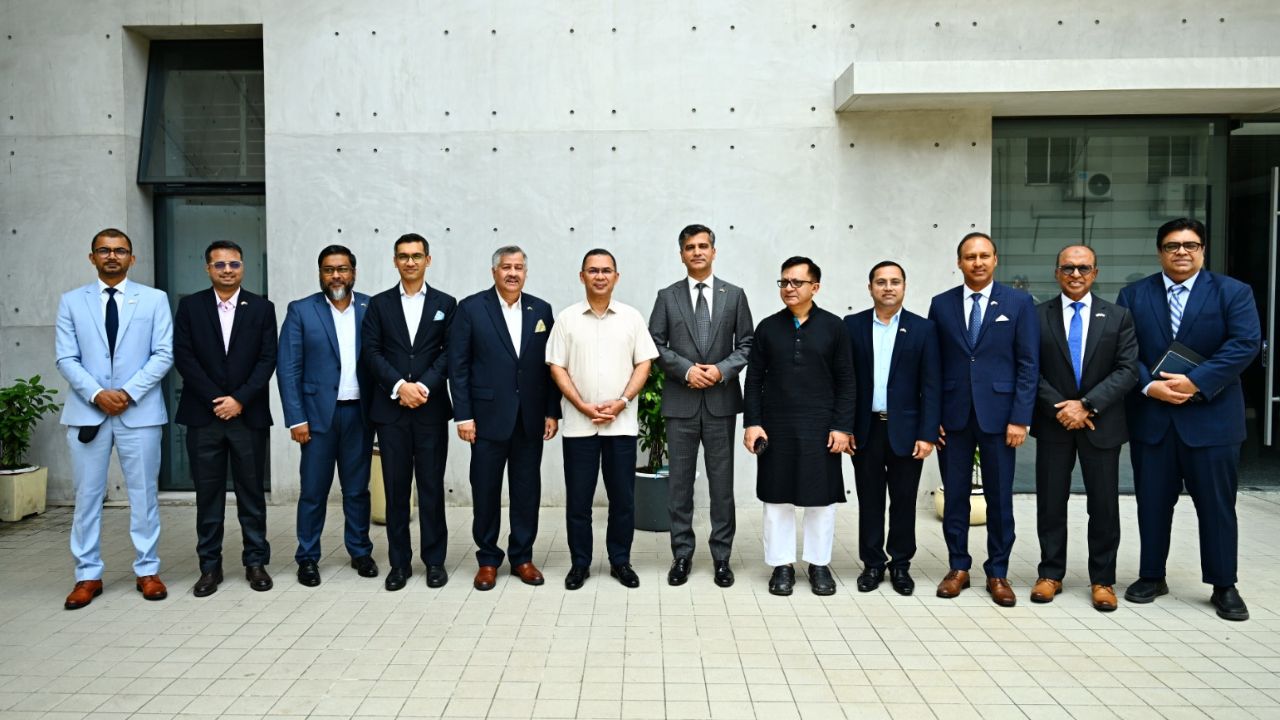
AmCham presented the target to Prime Minister Tarique Rahman at the Secretariat on Tuesday, saying the goal would be pursued through its existing members and prospective American investors considering Bangladesh.
The $5 billion is a fresh capital-mobilisation goal, not money already committed to specific projects.
Since 1996, AmCham has worked to strengthen Bangladesh-US economic and commercial relations and promote a transparent, predictable, competitive and investment-friendly business environment. Its member companies have already invested more than $5 billion in Bangladesh and collectively contribute more than 20 per cent of the country’s tax revenue.
AmCham President Syed Mohammad Kamal, vice president of Mastercard, presented the target during the meeting.
The chamber acknowledged progress in Bangladesh’s business climate, particularly under the FY2026-27 reform package, but said the bigger test now is execution. For companies considering long-term commitments, reforms need to produce faster approvals, lower compliance costs and predictable rules.

It welcomed time-bound approvals and licensing, implementation of the Single Window system, digital tax and value-added tax administration, reduced compliance requirements, easier capital and profit repatriation, and simplified customs procedures.
Long-term regulatory certainty in priority sectors was another concern. Projects involving substantial upfront costs and extended payback periods require confidence that the rules governing them will remain stable.
The availability and reliability of infrastructure and energy were also identified as critical to Bangladesh’s competitiveness and its ability to attract more capital.
The chamber sees the opportunity with the United States extending beyond conventional market access. It described the US-Bangladesh Reciprocal Trade Agreement framework as a strategic opening to deepen bilateral economic ties and strengthen Bangladesh’s integration into global value chains.



Potential areas for broader cooperation include technology, artificial intelligence and digital innovation, cloud services and cybersecurity, healthcare and life sciences, renewable energy, advanced manufacturing and financial-sector modernisation.
Digital governance could support that expansion. AmCham welcomed the enactment of the Personal Data Protection Act and the National Data Governance Act, while stressing effective implementation, artificial intelligence readiness, cybersecurity resilience and clear regulatory frameworks.
To help remove obstacles and improve the investment climate, the chamber proposed a Digital Economy Advisory Forum or Task Force and a Public-Private Competitiveness Council, with representation from the government, business community, foreign investors and AmCham.
The proposed platforms would identify bottlenecks, help carry reforms through to execution and improve coordination between policymakers and businesses, according to the chamber.
AmCham also reaffirmed its willingness to work with the government as a strategic partner, offering investor intelligence and practical business feedback, policy collaboration and access to US corporate decision-makers. It would also promote Bangladesh’s reforms and investment opportunities internationally and strengthen business-to-business engagement.
For the $5 billion ambition to materialise, investors would need to see reforms applied consistently, predictable tax and customs administration, dependable infrastructure and energy, and stronger institutional coordination between government and business.
Prime Minister Tarique welcomed AmCham’s continued engagement and acknowledged its contribution to Bangladesh’s economic development. He said Bangladesh had entered a new phase of economic transformation and offered a favourable environment for investors.
The prime minister said the government’s priority was to ensure effective implementation of continuing reforms while strengthening investor confidence through “policy predictability, efficient governance and constructive dialogue with the business community”, according to the chamber.
He also assured prospective foreign investors of the government’s “full support” and expressed commitment to deepening cooperation with AmCham to advance Bangladesh-US economic relations and shared prosperity.
AmCham invited the prime minister to attend as chief guest the opening ceremony of the 30th US Trade Show, jointly organised by AmCham Bangladesh and the US Embassy in Bangladesh.
Commerce Minister Khandakar Abdul Muktadir, Prime Minister’s Adviser on Posts, Telecommunications and Information Technology Rehan Asif Asad, and Bangladesh Investment Development Authority Executive Chairman Chowdhury Ashik Mahmud Bin Harun also attended the meeting.
The AmCham delegation included Vice President and MetLife Bangladesh CEO Ala Uddin Ahmad and Treasurer and Philip Morris Bangladesh Managing Director Reza Ur Rahman Mahmud.
Executive Committee members Mohammad Habibur Rahman Bhuiyan of Excelerate Energy Bangladesh, Mohammad Rashel Al Mamun of NATco Bangladesh and Mohammad Sazzad Hossain of Avery Dennison also attended.
The delegation also included Executive Committee member Ataur Rahim Chowdhury of ShopUp and Executive Director Chowdhury Kaiser Mohammad Riyadh.