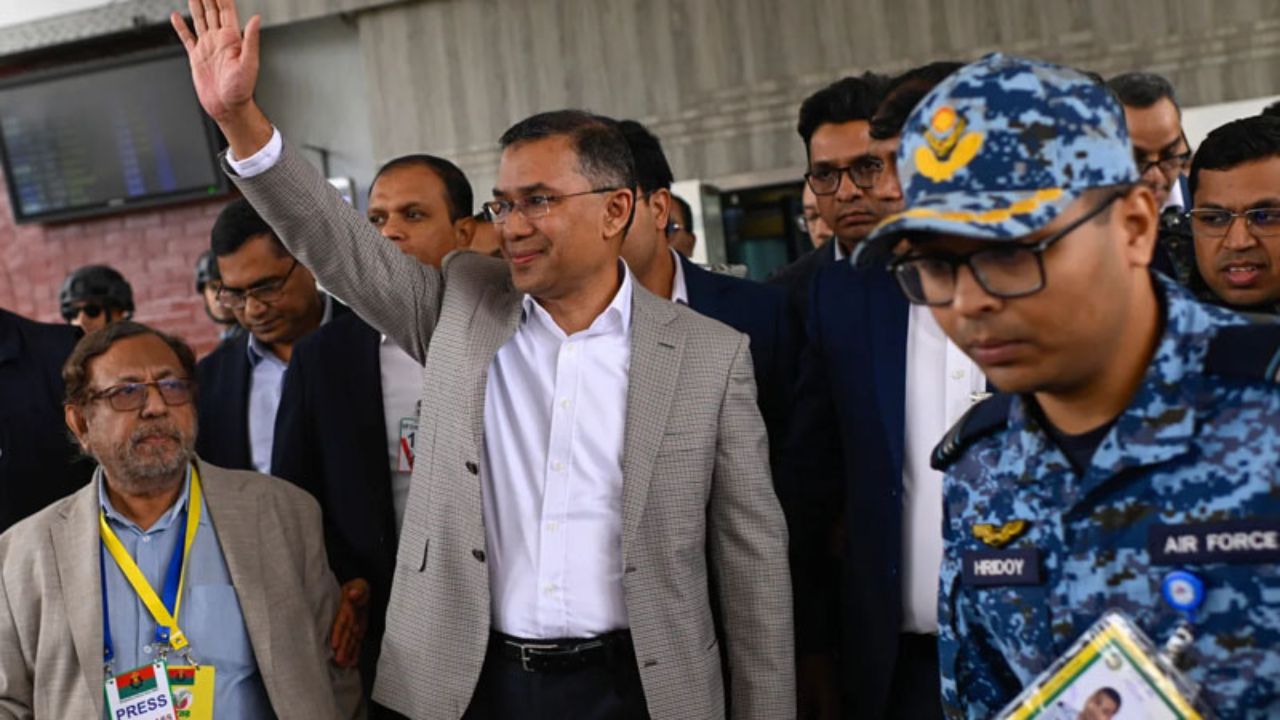

BNP Chairman Tarique Rahman has pledged to develop satellite towns outside the capital, equipped with modern healthcare and education facilities, to ease traffic congestion and reduce the over-centralisation of jobs and services in Dhaka.
He made the remarks on Saturday while speaking with the young winners of the national reel-making competition Bangladesh in My Thoughts at Justice Shahabuddin Ahmed Park in Gulshan.
Outlining what he described as a vision for a “transformed Bangladesh”, Tarique proposed the introduction of Family Cards to consolidate state welfare benefits, alongside reforms in education, transport and urban management.
He also criticised the existing metro rail system as expensive and space-intensive, suggesting that a monorail system with smaller carriages could serve as an alternative or complement to improve connectivity across the city.

Tarique Rahman is leading the BNP’s election campaign for the upcoming national polls, which he formally launched in Sylhet. He is scheduled to address a campaign rally at the Polo Ground in Chattogram on Sunday.
At Saturday’s programme, Tarique said a future BNP administration would bring existing government projects and welfare benefits under a single Family Card system to address what he described as fragmentation and poor coordination across programmes.


He said rising living costs could not be tackled without increasing production in line with population growth, adding that unethical profiteering by intermediaries must be stopped.
The BNP leader said weak communication infrastructure contributes to high commodity prices and argued for incentives for farmers to stabilise supply and prices.
“Whatever plan we make, we must ensure the security of everyone and prevent corruption,” he said, adding that resolving these core issues would ease many other problems.
On education and social values, he said physical infrastructure alone cannot address social decay and incidents of mob justice, stressing the need to develop qualified teachers and instil values from early childhood.
Rahman said education should be enjoyable and accessible to increase student engagement, proposing the integration of sports, arts and culture into the core curriculum, with students also required to pass in sports.
He said a more holistic education system would help reduce excessive internet dependence, adding that coordinated teams involving multiple ministries would work on the reforms.
Rahman also spoke about migrant workers, saying many young people go abroad without adequate skills and outlining plans for vocational training to produce skilled workers.
He said incentives would be considered for expatriates who send remittances through official channels.
During a question-and-answer session, Rahman briefly spoke about missing his mother, adding that his exhaustion fades when he sees people continuing to support his cause late into the night.