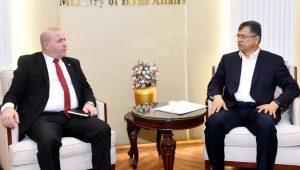
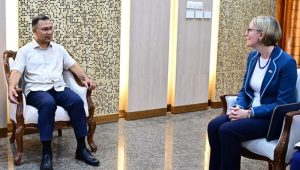
Bangladesh is set to officially join Chinese President Xi Jinping’s flagship Global Development Initiative (GDI), with a Memorandum of Understanding (MoU) expected to be signed today in Beijing.
The signing will follow bilateral talks between Prime Minister Tarique Rahman and Chinese Premier Li Qiang, aiming to elevate the nations’ Comprehensive Strategic Cooperative Partnership. While Beijing has pushed Dhaka to join four of its major global initiatives, Bangladesh has so far agreed only to the GDI.
The high-level discussions will span strategic cooperation, trade, investment, defense, and budgetary support. Additionally, Foreign Secretary Asad Alam Siam noted that at least 16 bilateral instruments are expected to be signed during the visit, with the critical Teesta River management project featuring prominently on the agenda.
Packed schedule in Beijing
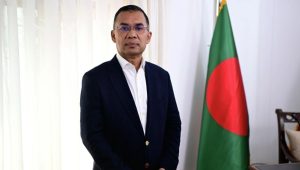
Prime Minister Tarique Rahman has a series of high-level engagements scheduled with senior Chinese policymakers on Wednesday.
He will first meet Liu Jianchao, head of the International Department of the Communist Party of China (IDCPC)—the party organ responsible for China’s party-to-party diplomacy and strategic political engagement worldwide.

The Prime Minister is also scheduled to meet Chinese Water Resources Minister Li Guoying. Discussions are expected to focus on hydrology, river management, and broader water-resource cooperation, an area of growing importance for Bangladesh.
Additionally, he will hold separate meetings with Chen Xiaodong, Chairman of the China International Development Cooperation Agency (CIDCA), and Chen Huaiyu, Chairman of the Export-Import Bank of China, which oversees one of China’s key institutions for global infrastructure and development financing.



Alongside these official meetings, the Prime Minister will meet senior executives from Cherry Group, Handa Group, and Chinatex Corporation. He is also set to attend the Bangladesh Investment Forum, which is expected to draw leading Chinese investors.
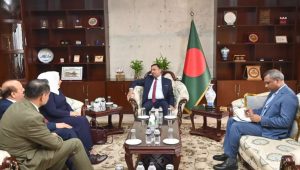
The official bilateral talks between Tarique Rahman and Premier Li Qiang will take place in the afternoon, followed by the signing of several agreements and memoranda of understanding. Officials from both countries are currently finalising a joint statement outlining the outcomes of the visit and future areas of cooperation.
Teesta to feature in talks
Bangladesh is expected to raise the Teesta River issue during the upcoming prime minister-level discussions.
Foreign Secretary Asad Alam Siam stated on Saturday that the matter would be addressed within a broader framework of integrated water resources management, rather than as an isolated project.
“The discussions are expected to be broader in scope, covering the management of other rivers as well as overall water resources management,” Siam said.
He noted that consultations with China regarding the proposed Teesta project have been ongoing for several years under successive governments.
“The feasibility study conducted earlier is currently being reviewed, with particular focus on technical aspects such as reservoir capacity and operational design,” he added.
PM concludes WEF engagements
Earlier on Wednesday, Prime Minister Tarique Rahman concluded a busy schedule at the World Economic Forum’s (WEF) Annual Meeting of the New Champions in Dalian, before travelling to Beijing via a three-and-a-half-hour high-speed train journey.
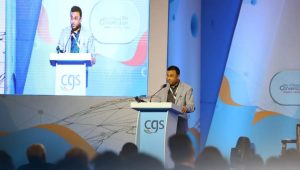
The Prime Minister attended the WEF plenary session, titled “Innovating at Scale”, alongside Chinese Premier Li Qiang and several world leaders, including South Korean Prime Minister Kim Min-seok, Kazakh Prime Minister Olzhas Bektenov, Mongolian Prime Minister Nyam-Osoryn Uchral, Montenegro Prime Minister Milojko Spajić, and Guinean Prime Minister Amadou Oury Bah. WEF President and CEO Alois Zwinggi delivered the opening address to an audience of more than 1,700 government officials, policymakers, business leaders, and tech entrepreneurs from over 90 countries.
On the sidelines of the three-day forum, Tarique Rahman held key bilateral meetings. According to the Prime Minister’s Office, discussions with Kazakh Prime Minister Olzhas Bektenov led to an agreement to strengthen bilateral cooperation, with Bangladesh endorsing Kazakhstan’s water diplomacy initiative. The two leaders also agreed to establish embassies in their respective capitals and expand collaboration across human resource development, renewable energy, the digital economy, technology, and agriculture.