


The few taka earned from ferrying passengers across the river must cover boat rent, ghat lease, guard fees, and serial costs. The remaining money goes toward their own food, family maintenance, and dreams of building their children’s future.
Many of those who row all day yet cannot balance their household accounts spend their nights on the very plank of that boat. At Sadarghat, the busiest river port in the capital, the name of such a group of people’s life struggle is boatman.
This profession has no income security or fixed working hours. In some places, boats carry eight to 10 passengers as a group, with a fare of Tk5 per person. Boatmen’s earnings depend on how many passengers they can get each day.
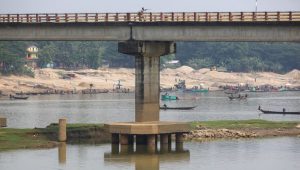
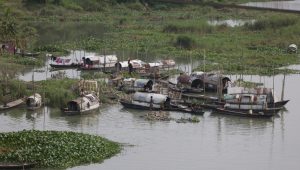
Countless passenger boats move daily at various ghats, including Sadarghat, Wiseghat, Badamtoli, and Shyambazar in Old Dhaka, from Babubazar Bridge to Postogola Bridge. Nearly one and a half to two thousand people earn their living on these boats.
For passengers, this few-minute boat ride is an easy means of reaching their destination, but for the boatmen, it is their sole means of livelihood.

Most boatmen here do not own their own boats. They must rent from a mahajan or owner for Tk75 to Tk80 per day. Beyond that, they must pay Tk85 to the ghat lessee. Guarding the boat at night costs another Tk10, and serial fees amount to Tk5.
Every expense is deducted from their meagre earnings, and what remains must cover food, family, and the future.

The markets on both banks of the river and local people’s movement are now the main source of income for many of them. On Fridays and Saturdays, the weekly holidays, the number of passengers decreases further.
Along with this, the expansion of new bridges, roads, and modern vehicles has greatly reduced people’s reliance on passenger boats compared to before.
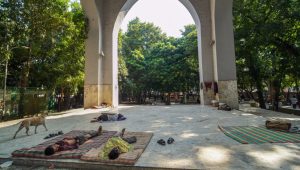
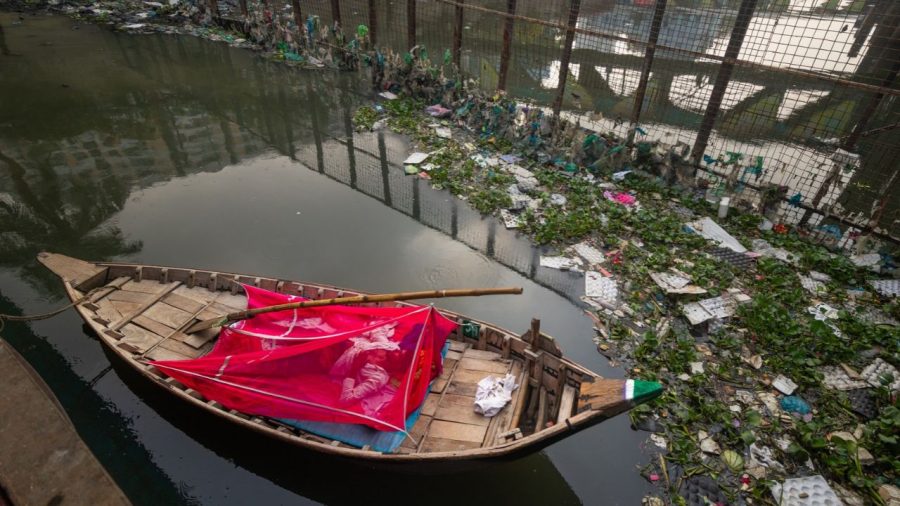
These people, who have come to Sadarghat from various districts of the southern region, including Barishal, Bhola, Jhalokathi, and Patuakhali, in search of livelihood, have no shelter to live permanently in Dhaka. Unable to afford house rent and daily expenses, the boat’s plank is their bed, and the open sky their roof.
To prevent the boat from drifting in the current, they tie it firmly to the ghat or pillars with rope. On this boat, they must meet their daily needs, including eating, bathing, and resting. And the polluted environment of the Buriganga has made this life struggle even harder.
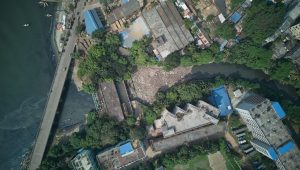
The river once called the lifeline of Dhaka now receives industrial waste, sewage, drain water, and various kinds of garbage in its waters. Along with the blackened water due to pollution, a strong stench spreads all around.
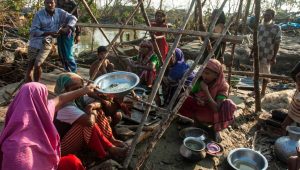
In this polluted water, alongside rowing boats every day, they must wash their hands or plates before and after meals, and even bathe. Although the river water stinks, with no alternative arrangements, the boatmen are forced to depend on it.

Moreover, the mosquito infestation beside the accumulated garbage has taken a terrible form.
Yet amid so much uncertainty and adversity, boats float on the bosom of the Buriganga. Habit and affection for the river have kept them tied to this life. A life that also sways with the waves of the Buriganga’s polluted water.
For the boatmen of Sadarghat, the river is not just a workplace. It is home, livelihood, and identity, all bound together on a wooden plank that rocks with every passing wave. They row because they must.
They endure because they have no alternative. And they hope against hope that the river that has given them so little will not take away the little they have.