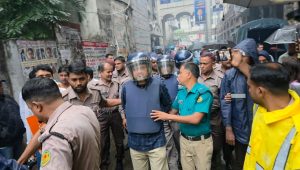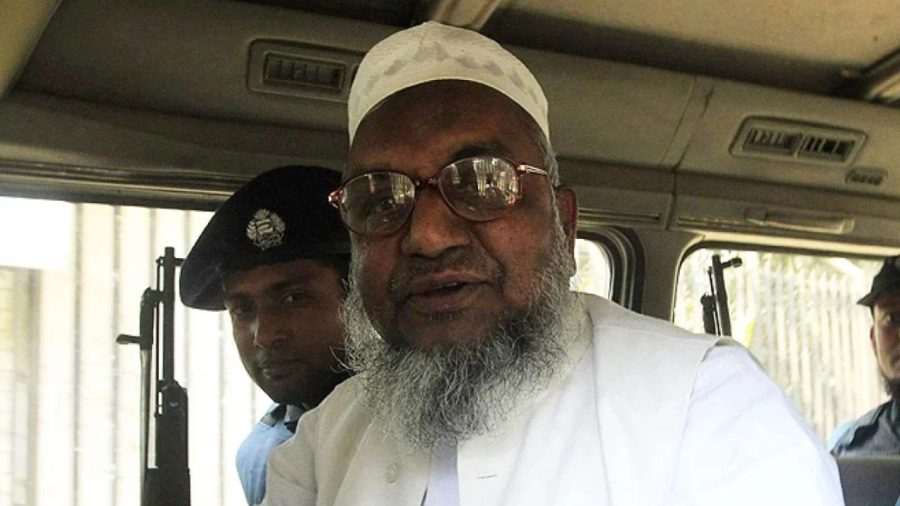



The execution of Abdul Quader Molla, assistant secretary general of Jamaat-e-Islami, for 1971 crimes against humanity, re-entered public discussion following alleged comments attributed to Chief Justice Zubayer Rahman Chowdhury.
Several media reports quoted the chief justice describing Molla’s hanging on a short order as history’s worst event. However, the Supreme Court administration, chief prosecutor’s office, and attorney general’s office jointly clarified Thursday night that the chief justice made no such comment.
Beyond this dispute, the case raised a key question – how the death sentence was executed before full review judgment publication. Molla was the first convict executed for 1971 crimes against humanity after the tribunal sentenced him to life imprisonment on 5 February 2013.
Following Shahbagh protests by Ganajagoron Moncho demanding his execution, Parliament amended the law on 17 February 2013 enabling prosecution appeals against non-acquittal sentences.
On 17 September 2013, the Appellate Division granted the state’s appeal, imposing the death penalty.
Unprecedented speed, legal arguments
Legal experts highlighted the execution’s unusual timing. Saiful Islam Uzzal, a Supreme Court lawyer, told TIMES that no precedent exists in Bangladesh or South Asia for executing a death penalty on a short order prior to full review judgment publication.
Md Tariqul Islam, a Supreme Court lawyer observing proceedings, noted Molla is probably the world’s only person executed before review judgment release.

Conversely, Sarwar Ahmed, a senior lawyer, said precedents exist where death row convicts were released on short order after acquittal, asking why execution could not occur if release could.
He argued executing on a short order is not illegal, though publishing the full judgment first was preferable.
SM Shahjahan, a criminal law expert, noted the sentence was executed with extreme speed within hours of short order.
An Appellate Division bench led by Md Muzammel Hossain, chief justice, alongside Justice Surendra Kumar Sinha, Justice Md Abdul Wahhab Miah, Justice Syed Mahmud Hossain, and Justice AHM Shamsuddin Choudhury dismissed Molla’s review at 12:06pm on 12 December 2013 with a single-sentence order.




Surendra Kumar Sinha and Syed Mahmud Hossain later became chief justices, Md Abdul Wahhab Miah served as acting chief justice, while AHM Shamsuddin Choudhury retired from the Appellate Division.
In his 2015 book “Notebook-e Quader Molla: Hatkora to Phansir Dori,” journalist Ahmed Al Amin detailed that the chief justice dismissed the review in courtroom one in a few words.
Mahbubey Alam, then attorney general, requested an order copy, but the court replied no observations were given and the order would proceed legally. Signed order copies were sent to the tribunal, home ministry, and prison authorities that afternoon.
Molla was hanged at 10:01 pm that night, whereas the 65-page full review judgment was published 348 days later on 25 November 2014.
High-stakes midnight drama and the gallows
The execution followed intense procedural drama.
On 5 December 2013, the Appellate Division published its 65-page appeal judgment, after which the government prepared for execution at Dhaka Central Jail on 10 December night.
Defence lawyers argued under Article 105 of the Constitution that execution could not occur pending review resolution, while state prosecutors claimed review rights did not apply to crimes against humanity. Family members visited Molla in prison that evening as authorities prepared the gallows with red cloth, lighting, a coffin, and supplies brought by a guard at 8pm.
With the executioner ready from 9pm, news arrived at 10:15pm that Syed Mahmud Hossain, a chamber judge of the Appellate Division, stayed execution until 10:30am on 11 December following a late-night petition at his residence.
The Appellate Division heard review arguments on 11 and 12 December before dismissing the petition.

Hasan Jamil, Molla’s son, expressed grief that the government announced and executed the hanging the day the review was dismissed, denying the family opportunity to learn the grounds.
Following the 10:01pm hanging on 12 December, Molla’s body was buried in government presence at Amirabad in Faridpur Sadar upazila by 4:10 am on 13 December.
Political fallout and lasting jurisprudence
The trial was intertwined with public demonstrations and political shifts. The initial life sentence on 5 February 2013 sparked continuous Shahbagh protests by Ganajagoron Moncho demanding the death penalty.
The movement received government patronage, with ministers, MPs, and Sheikh Hasina, then prime minister, addressing Jatiya Sangsad on 10 February in solidarity. This political pressure led directly to the 17 February legal amendment enabling prosecution appeals.
However, Ganajagoron Moncho later lost public support over allegations of anti-Islamic sentiment against some members, and its activists eventually suffered harassment, attacks, and torture by law enforcement agencies.
Legally, the case settled a major constitutional debate regarding review rights in crimes against humanity trials.
Authoring the full review judgment agreed upon by all five bench members, Justice Surendra Kumar Sinha established that review petitions are permissible for both state and defence under crimes against humanity legislation.
The judgment specified that review applications must be filed within 15 days of full appeal judgment release and heard on priority basis, ending long-standing legal debates.