The joint US–Israeli air attack on Iran was a bid to bring about regime change and establish total US–Israeli dominance in the West Asian region. The nuclear enrichment issue, which the two had touted as the reason for the deadly strikes, was only a pretext to forcibly overthrow the radical Islamic regime and install a puppet government.
Yes, decapitation has taken place. Ayatollah Khamenei, along with other key leaders, has been killed. But the next critical step — setting up an alternative puppet regime that will endure — will be highly challenging, experts on Iran say.
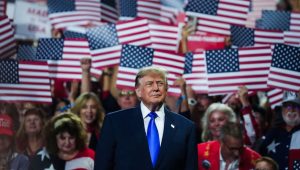
Equally important, the Trump–Netanyahu action does not have the full support of the American people or the US Congress. Therefore, the troubles in Iran and West Asia are compounded by challenges at home.
American liberals disapprove, saying that President Donald Trump broke the law by not obtaining Congressional sanction first.
He disregarded Iran’s offers for a peaceful and reasonable settlement of the nuclear issue and went to war without consulting the American people.
Congressman Ro Khanna demanded swift action from Congress to stop what he described as the Trump administration’s unauthorised military assault on Iran. In a video posted on social media, Khanna said, “The American people are tired of regime change wars that cost us billions of dollars and risk our lives. We don’t want to be at war with a country of 90 million people in the Middle East. Every member of Congress should go on record today on how they will vote on my War Powers Resolution.”
Dr Brahma Chellaney, an Indian expert on international affairs, said that the Omani Foreign Minister — a key mediator in US–Iran talks — had publicly disclosed that Iran had agreed during negotiations to surrender its enriched uranium stockpiles and forswear the acquisition of nuclear weapons indefinitely. The disclosure was intended to strip Trump and his team of a nuclear pretext for war.
Officials from the Obama administration who worked on the 2015 nuclear deal with Iran were quoted as saying that Trump was wrong to claim Iran was insincere in its dealings with the US.

Trump wanted Iran to abandon all nuclear projects, including peaceful ones. Iran rejected this, arguing it would violate international law and equity.
Trump, however, had a different perspective. He believed that given Iran’s regional ambition to displace Israel and the US as the dominant force, it should not be allowed to emerge as a challenge.
It appears that, for the US, it is acceptable for North Korea, Pakistan or India to possess nuclear weapons because these countries do not challenge American interests in their regions. But Iran, under the Ayatollahs, is a different kettle of fish. It threatens vital US interests in West Asia.
War unpopular in the US
Trump had gambled by going to war at a time when war had become unpopular among Americans. A YouGov/The Economist poll conducted between 13 and 16 June 2025 revealed that only 16 per cent of Americans believed the US should take military action against Iran. The survey reflected growing public dissatisfaction with Trump’s aggressive foreign policy.
The YouGov report showed that 56 per cent of Americans supported diplomacy over force regarding Iran’s nuclear programme. This included majorities in both political camps — 58 per cent among Democrats and 61 per cent among Republicans.


A Gallup poll published last week found that 41 per cent of Americans sympathised with Palestinians, compared with 36 per cent who sympathised with Israelis. A year ago, Israelis had a clear lead — 46 per cent versus 33 per cent for Palestinians.
There is thus a clear swing in America towards peace, human rights and justice — justice not only for Americans but for all people.
Supporters of military action
Supporters of military action argue that Iran’s leadership was intent on destroying America and Israel. Others contend that kinetic action is needed to liberate the Iranian people from what they describe as medieval bondage imposed by the Ayatollahs. West Asia, they argue, must be freed from a disruptive force supporting groups such as Hezbollah in Lebanon, the Houthis in Yemen and Hamas in Gaza.
Iranian-backed groups have also been active in Iraq and Syria.
In a video message to the Iranian people, Trump said, “When we are finished, take over your government. It will be yours to take. This will probably be your only chance for generations.” On 13 February, he said regime change was “the best thing that could happen”.
Karim Sadjadpour, a senior fellow at the Carnegie Endowment for International Peace, wrote in The New York Times that since taking power in 1989, Ayatollah Khamenei had dangerously extended Iran’s reach.
Paranoid about being eliminated, Khamenei governed with hypervigilance and brutality. He saw the US and Israel as the chief conspirators against him and believed the Islamic Republic required enmity with America to survive. According to Sadjadpour, the regime’s slogans were “Death to America” and “Death to Israel”, not “Long Live Iran”.
US Secretary of State Marco Rubio told the Munich Security Conference and later in Hungary that Iran’s Shia clerics could not be trusted to be rational. “These people make policy decisions on the basis of pure theology. So, it’s hard to do a deal with Iran.”
Sadjadpour noted that Khamenei isolated Iran’s population from the global financial system. Its currency became one of the world’s most devalued, its passport among the least accepted, and its internet among the most censored. Brain drain became one of Iran’s top exports, with around 150,000 Iranians leaving annually.
Khamenei spent billions funding an “Axis of Resistance” across the Middle East, backing Hezbollah in Lebanon, the Houthis in Yemen and Hamas in Gaza. His missiles struck not only Israel but also Qatar, which hosts US bases.
In retaliation, Israel dealt devastating blows to Iran and its allies. Hamas leader Ismail Haniyeh was killed in Tehran. Yahya Sinwar was killed in Gaza. Hezbollah leader Hassan Nasrallah was also eliminated.
In the 12-day war in June 2025, Israel battered Iranian cities and military installations and assassinated top Revolutionary Guards commanders, paving the way for the US to drop 14 bunker-busting bombs on Iran’s nuclear sites.
Khamenei targeted citizens
Khamenei also turned his wrath on the Iranian population. In January 2026, as protests over the economy engulfed the country, he ordered a crackdown that claimed 6,800 lives, according to the US-based Human Rights Activists News Agency. Estimates from two senior officials in Iran’s Ministry of Health, reported by Time magazine, put the toll at as many as 30,000 killed in a 48-hour rampage.
Challenges in regime change
By decapitating Iran’s political structure, the US and Israel have demonstrated that they are, at least for now, the dominant powers in West Asia.
The next step would likely be installing a friendly or puppet government, as the US attempted in Venezuela.
However, in an article in Middle East Monitor, Timothy Hopper debunks the theory that external intervention can engineer desirable regime change.
He writes: “Contrary to popular belief, domestic protests and widespread societal discontent are not necessarily signs that the public is ready to accept a power vacuum or foreign intervention. In many instances, external pressure has not weakened the regime; instead, it has reinforced internal cohesion and provoked nationalist sentiments.”
“This policy — pursued by Washington and its allies in various forms since the 1980s — has not only failed in the case of Iran but has also produced instability rather than lasting political transformation elsewhere. Experiences in Libya and Venezuela show that relying on external pressure without internal consensus leads to chaos, not sustainable change. In Iran, the regime sustains itself not merely through repression but also through social connections and ideological cohesion. Change imposed from outside — without first disrupting these internal bonds — has consistently failed.
“The continued push for this outdated policy reflects not a solution, but a lack of strategic imagination in Western foreign policy.”
“The Islamic Republic of Iran is not just a political regime; it is deeply embedded in religious, military and ideological institutions that form part of the Iranian state identity. Efforts to force its collapse without a gradual and deliberate replacement process lead not to liberation, but to the reproduction of structural violence.”