A stakeholder consultation seminar on preparing the National Integrated Multimodal Transport Master Plan for Bangladesh was held in Dhaka on Sunday, with policymakers, experts and development partners calling for a decisive shift away from excessive road dependence towards greater use of railways and inland waterways to ensure sustainable and coordinated transport development.
The seminar was organised by the Road Transport and Highways Division and the Roads and Highways Department at Sarak Bhaban as part of the ongoing initiative to formulate the long-term national transport master plan, according to a press release.
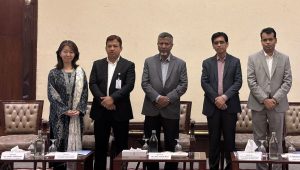
Planning Adviser Wahiduddin Mahmud, speaking as the chief guest, said Bangladesh had long neglected cost-effective rail and water transport by prioritising roads due to political and commercial considerations.
He said the country must restructure its railways and inland waterways and ensure their wider use as alternatives to road transport, particularly for carrying goods, while also decentralising the communication system to ease pressure on roads.

Road Transportation and Bridges Adviser Muhammad Fouzul Kabir Khan, who attended the seminar as special guest, said a lack of coordination in transport sector development was causing damage to other sectors, including agriculture and the environment.
He said the government was now emphasising a coordinated multimodal transport system to avoid obstructing natural waterways, reduce reliance on a single mode of transport and establish a data-driven transport network based on appropriate information and planning.
The session was chaired by Roads and Highways Division Secretary in routine charge Mohammed Ziaul Haque, while senior representatives from ministries, government agencies, development partners, port and terminal authorities, private sector bodies, academia and civil society organisations also attended.




Presentations at the seminar drew on the Baseline Assessment Study and Strategic Roadmap for the master plan, highlighting key challenges in the transport sector, including excessive dependence on roads, congestion, safety risks, high logistics costs and the underutilisation of railways and inland waterways.
The proposed framework stressed multimodal integration, hub-and-spoke connectivity, stronger links between ports and economic zones, integration of urban transport systems and phased implementation of projects.
During the open discussion, participants emphasised the need for stronger institutional coordination, corridor prioritisation, improved last-mile connectivity, environmental sustainability, better safety standards and long-term resilience of transport infrastructure.
The plan aims to reduce dependence on roads, which currently carry nearly 88 per cent of traffic, by strengthening rail and inland waterways, utilising 42 natural multimodal hubs and upgrading land ports into multimodal facilities without major new investments.
It also proposes limiting new road expansion, optimising and standardising existing highways and shifting freight and passenger traffic to more sustainable transport modes.
Supporting infrastructure such as reliable power supply, logistics facilities, information and communication technology systems and updated regulatory frameworks, along with efficient data sharing among agencies, were identified as critical to sustaining integration and reducing long-term costs.
The consultation reflected a shared commitment among stakeholders to collaborative planning and collective ownership of the master plan.
Officials said feedback and recommendations from the seminar would be incorporated into the refinement of the Baseline Assessment and Strategic Roadmap to pave the way for a comprehensive, integrated and implementable National Integrated Multimodal Transport Master Plan for Bangladesh.