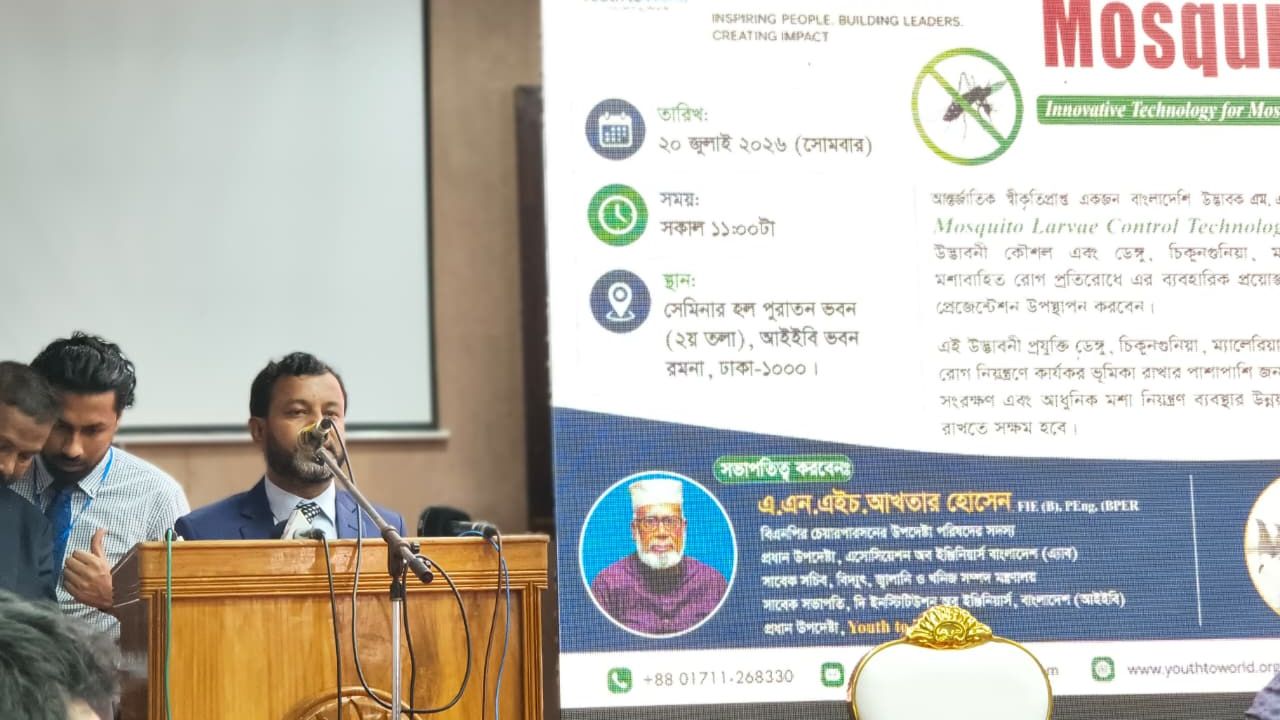

Domestic innovation and production of larvicide can reduce import costs, save foreign currency and create new industrial and employment opportunities, speakers said at a seminar in the capital on Monday.
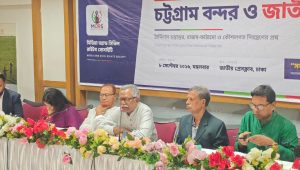
The seminar, titled “Domestic Innovations for Sustainable Larvicide Production and Dengue Control,” was organised by Youth to World at the Mercantile Bank Building, Institution of Engineers, Bangladesh (IEB) in Dhaka.
BNP Secretary General and Minister for Local Government, Rural Development and Cooperatives Mirza Fakhrul Islam Alamgir joined as chief guest via video conference.
He observed that many long-standing mosquito control technologies are no longer as effective as they once were.

“The effectiveness of newly developed domestic technologies needs to be verified through experimental testing,” the minister said, urging city corporations to take initiatives for more usage of such innovations.
He added that if proven effective, these technologies would strengthen mosquito control programmes while fostering domestic industry and job creation.




Internationally recognised Bangladeshi innovator MA Hamid presented the keynote paper. He said countries like the United States, Israel, Japan and the Netherlands lead in modern larva control technology, but Bangladesh has the potential to innovate and produce similar solutions.
“Local production would reduce import dependency, simplify quality control and increase effectiveness,” he said, stressing the need for safe, accessible products so families can regularly treat breeding sites such as flower pots, balconies, rooftops and construction sites.
Speakers highlighted dengue’s economic impact, noting research that puts the average treatment cost per patient at US$479.
In 2023, over 321,000 people were infected and 1,705 died in Bangladesh. Direct medical costs reached Tk1,700–1,900 crore, while total economic losses, including indirect damages, were estimated at Tk3,000–5,000 crore.
Special guest Engineer Shahrin Islam Tuhin, Convener of the Association of Engineers Bangladesh (AEB), said effective domestic technology could meet local demand and eventually be exported.
Production could begin with government and private funding, he added, stressing that community participation and personal awareness are vital alongside government initiatives.
Engineer ANH Akhter Hossain, advisor to Youth to World, presided over the seminar.