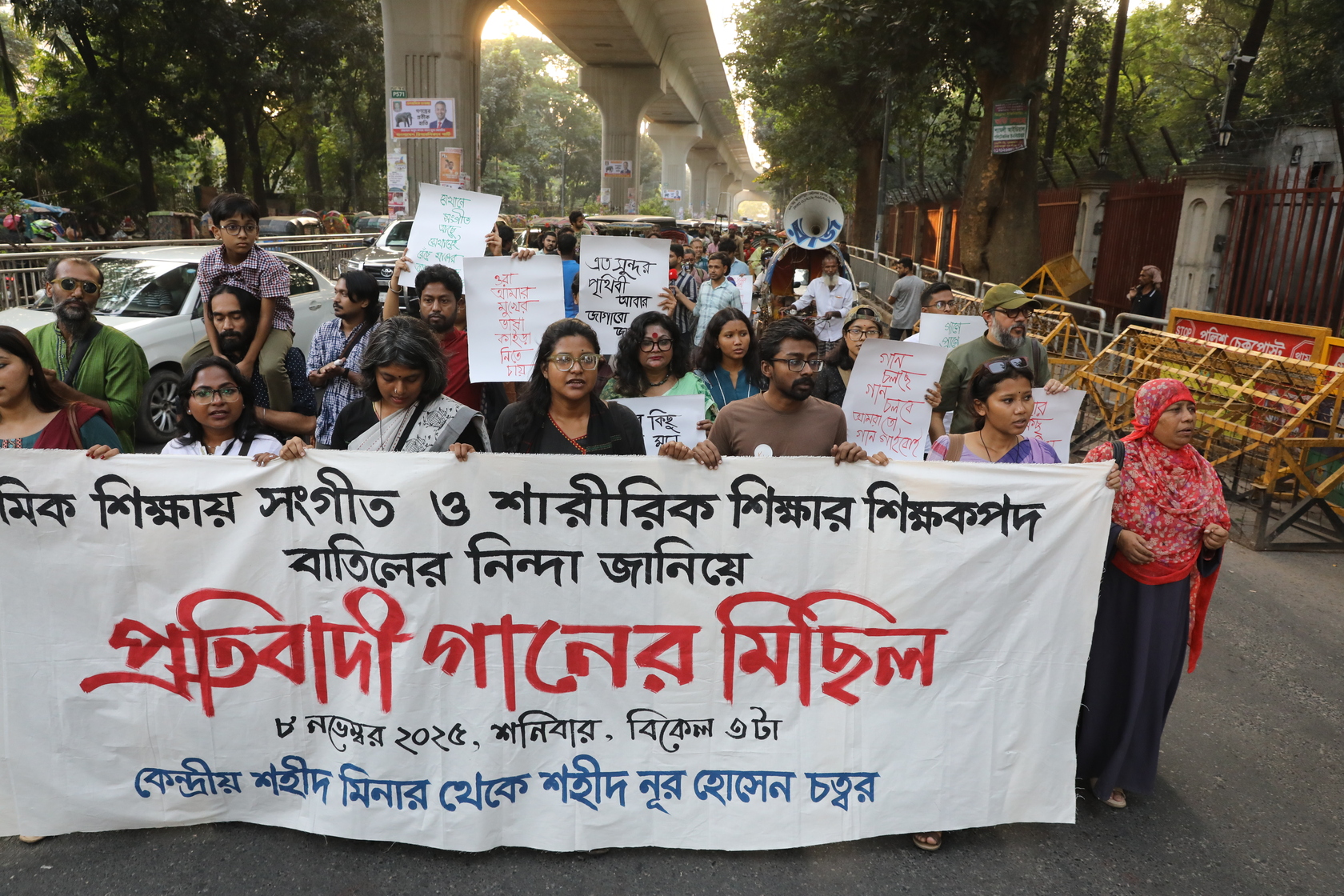

The sound of protest filled the air around the Central Shaheed Minar on Saturday, November 8. Students, teachers, musicians and music lovers gathered with songs, placards and anger against the government’s decision to scrap the posts of music and physical education teachers in primary schools.
The procession began on Saturday afternoon, moving through Doel Chattar and the High Court area before ending at Nur Hossain Chattar. What started as a rally soon turned into a moving concert of resistance. From “Amra Sabai Raja” to “Karar Oi Louho Kapat” and “Chal Chal Chal,” the crowd sang together. Their voices echo through the city’s heart.
For many, the protest was about more than just jobs. It was about the soul of education. “You can’t build a complete child without music or movement,” said a university student holding a flute. “We grew up singing in assembly, running in the field. Why should the next generation be deprived of that?”
Members of Udichi Shilpigoshthi, along with students from Dhaka University’s music and physical education departments, led the demonstration. They accused the interim government of bowing to pressure from a certain group that sees cultural education as unnecessary.

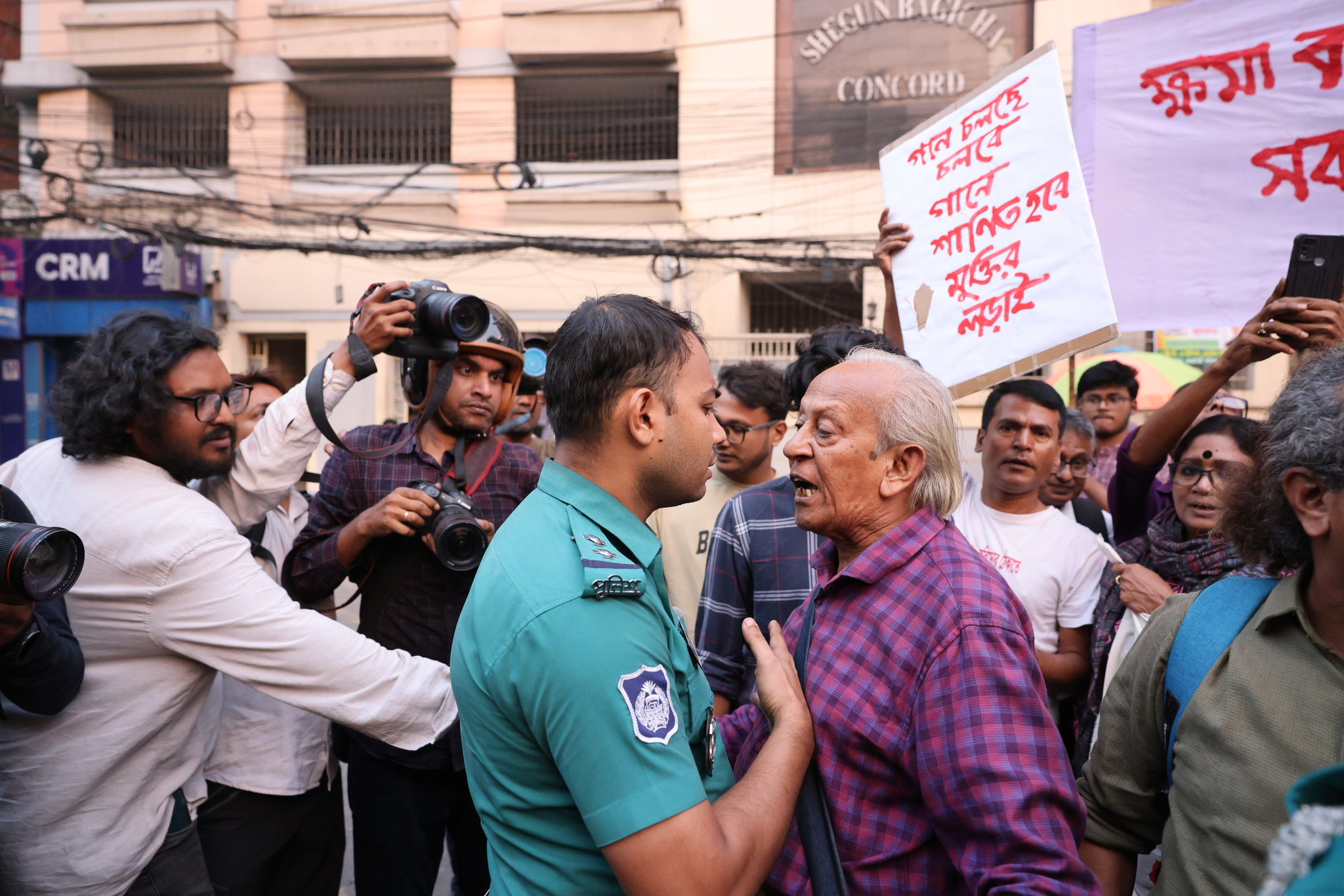
The Udichi procession had aimed to move toward the Jamuna State Guest House but was blocked by police at multiple points, including near Segunbagicha and the Dhaka Range DIG office. In response, Udichi gave the government a seven-day ultimatum to reverse the decision.
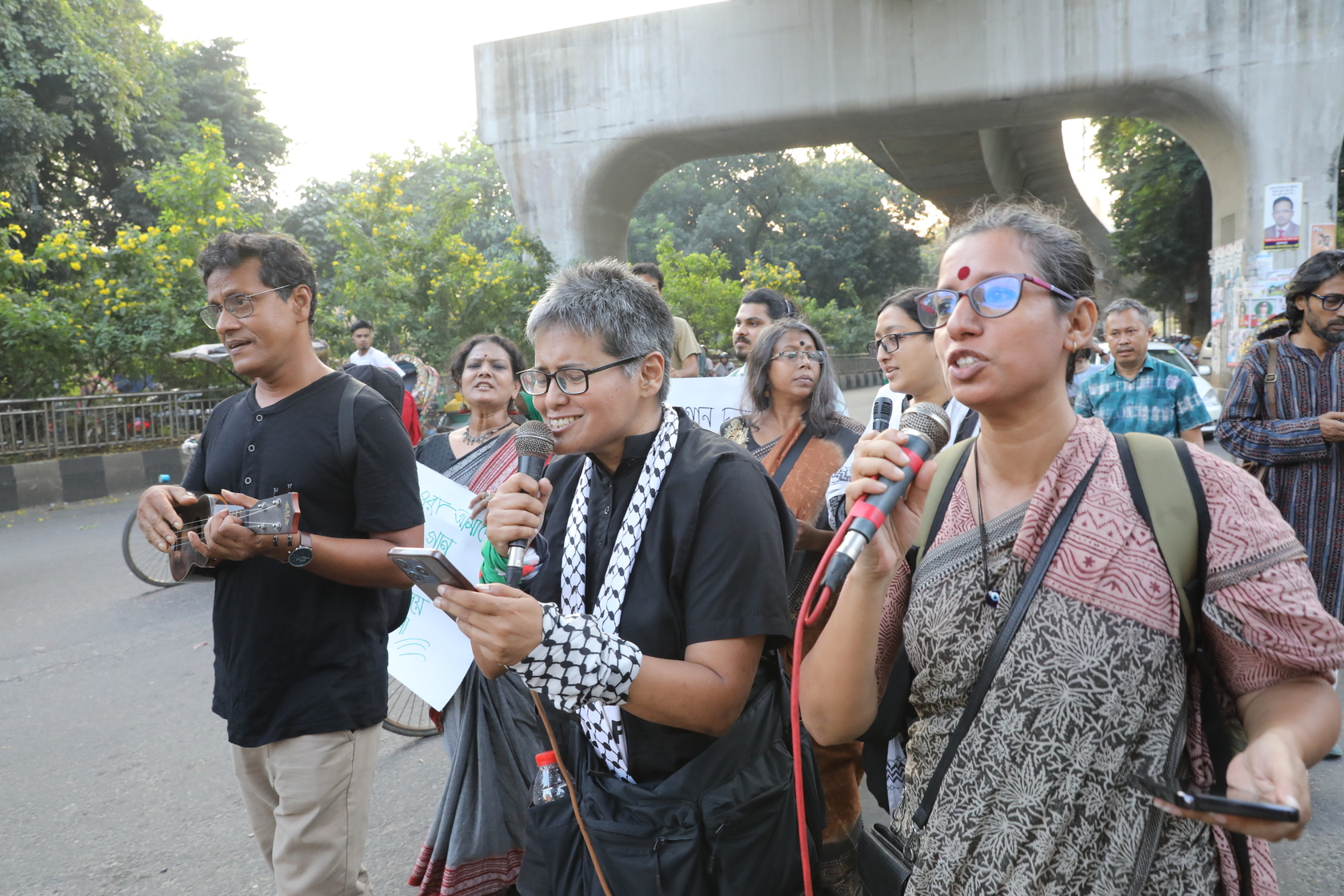
Udichi has also launched a nationwide protest, with cultural organisations across the country demanding the reinstatement of the posts. Many have begun signature campaigns and open-air performances to demonstrate what will be lost if music and physical education are removed from classrooms.




At the rally, children joined their elders, some beating small drums, others waving colourful ribbons. “Music is not a luxury, it’s a language,” said a teacher who travelled to Dhaka to attend the event. “It teaches rhythm, discipline and imagination. Without it, learning becomes lifeless.”
Educationists also warned of long-term damage. Physical education keeps young students active, improves concentration and prevents health issues, they said.
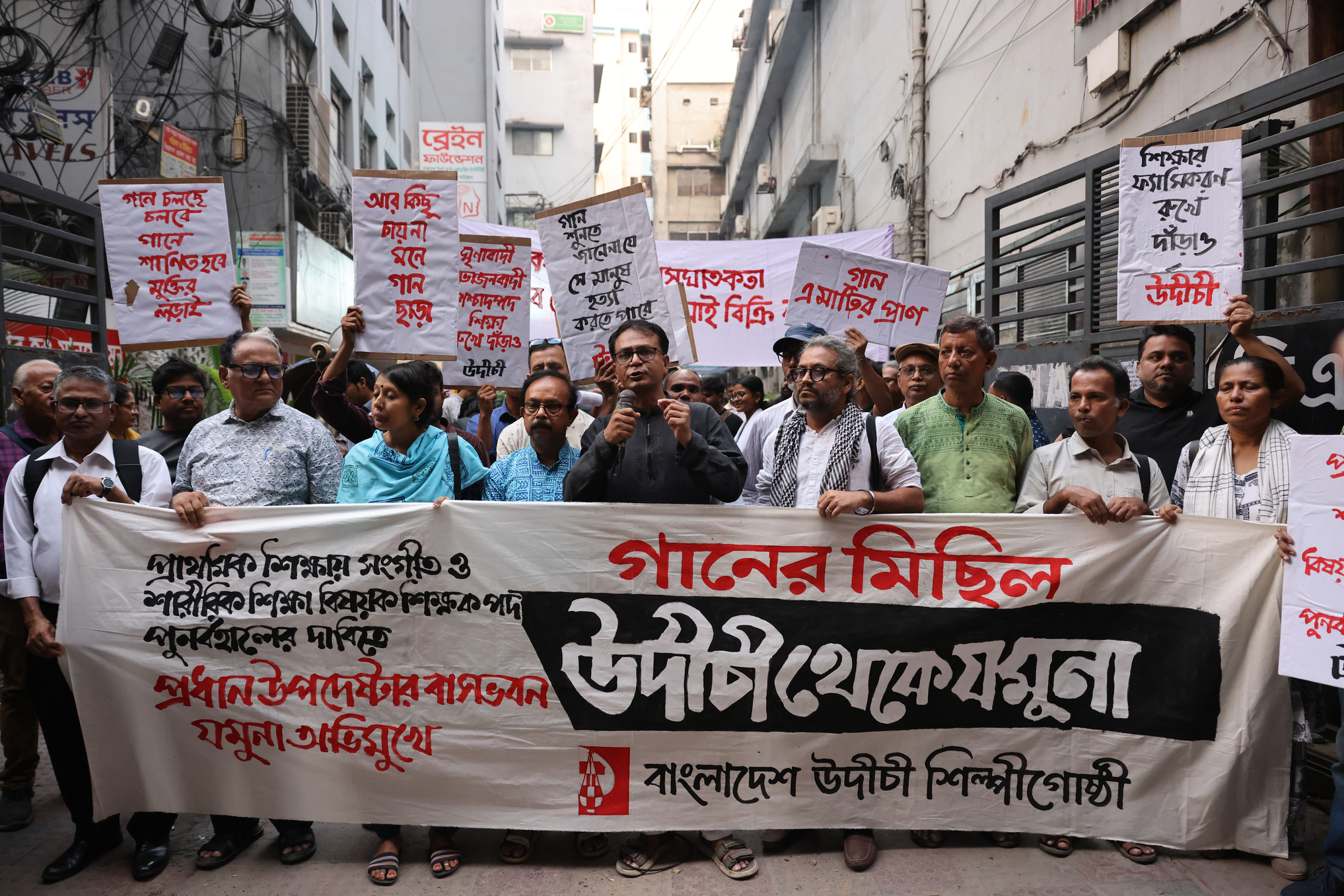
Social media has amplified the outrage. Videos of the protest, shared widely, show crowds singing under the open sky. Thousands have commented in support, calling the move “short-sighted” and “a blow to cultural roots.”
Musicians, too, have stepped in. From local bands to classical artists, many have joined online campaigns. Singer Farzana Wahid Shayan said, “Once we used to sing protest songs; now singing itself has become an act of protest.”
Even countries like Saudi Arabia, which previously banned music and restricted women’s freedoms, have recently begun promoting cultural activities and allowing women to drive. Advocates say Bangladesh should follow a similar path of cultural openness, not to extremism.
The Education Ministry has yet to respond publicly, but the pressure is mounting. Cultural activists are planning a nationwide human chain next week.
As the sun set over the Shaheed Minar, one voice rose above the others: “Music makes us human.” The crowd repeated the words, their chant turning into a promise that they will not let silence replace song in Bangladesh’s classrooms.