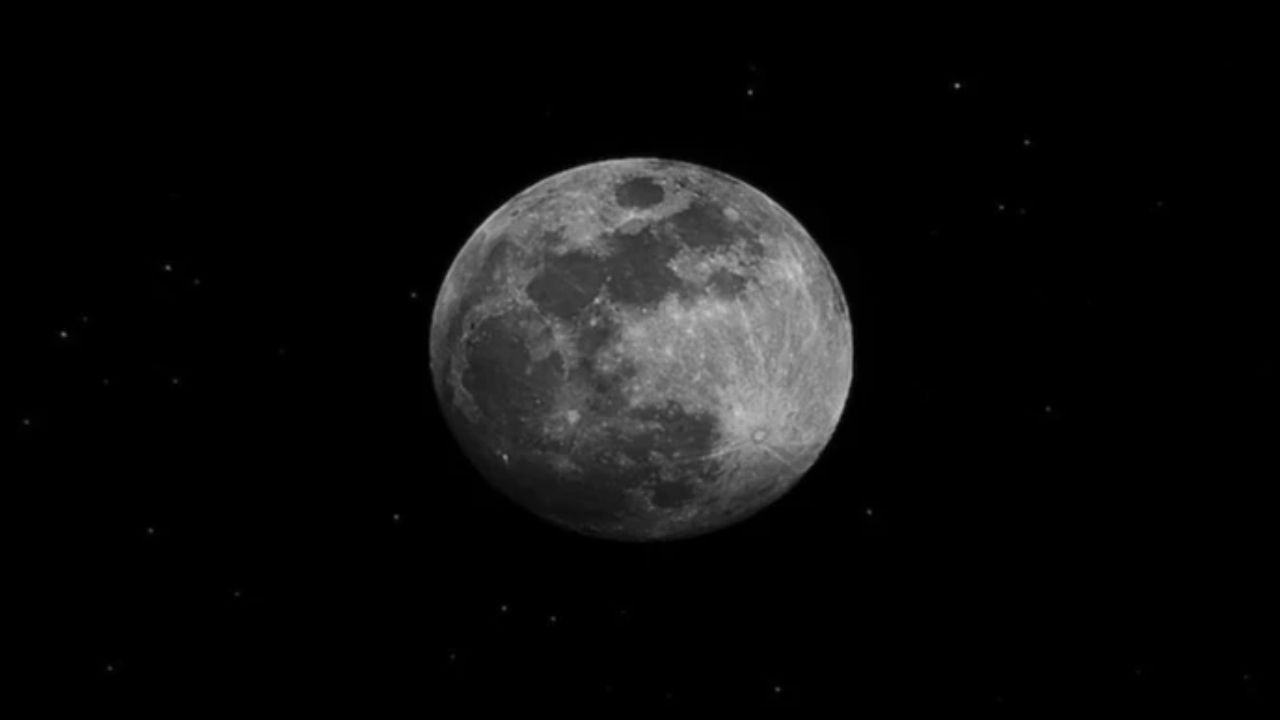

Scientists have discovered that the Moon, Earth’s closest neighbour, is shrinking at a rate faster than previously estimated, a finding that carries significant implications for future lunar exploration.
Recent research from the National Air and Space Museum’s Center for Earth and Planetary Studies reveals that as the lunar interior cools, the surface shrinks, creating tectonic features such as lobate scarps and widespread small mare ridges (SMRs).
The presence of these relatively young SMRs indicates that the Moon remains geologically active, reports BBC.

These structures point to new origins for moonquakes, which will influence the strategic placement of astronauts and hardware on upcoming missions.
“This work gives us a complete view of recent lunar tectonism, helping understand its interior, thermal history, and potential for moonquakes,” said Cole Nypaver, lead author of the study.




The shrinking Moon presents substantial hazards for human exploration. NASA has issued warnings that moonquakes resulting from surface contraction can originate at depths of 20–30 km, reach a magnitude of 5.5, and persist for more than 10 minutes.
Such intense seismic activity requires rigorous evaluation during the selection of landing sites and the engineering of infrastructure for the Artemis programme, which seeks to return humans to the lunar surface by 2028.
Tom Watters, senior scientist emeritus, remarked that the discovery of young ridges in the lunar maria provides a comprehensive global picture of a dynamic, contracting Moon.
He said understanding these tectonic shifts is essential for the safety of crews and the triumph of future scientific endeavours.
Experts continue to investigate the internal dynamics of the Moon to better comprehend its evolution while generating vital data for the next wave of lunar exploration.