From the Sultana Kamal Bridge in Demra, Dhaka, the view of the Shitalakshya River during heavy rain tells a striking environmental story. It is almost like two rivers flowing side by side without fully becoming one.
One stretch appears thick, black and stagnant, while another carries fresh rainwater, lighter, faster, and visibly more fluid. This separation is not just visual. It is driven by chemistry, biology, and years of unchecked pollution.
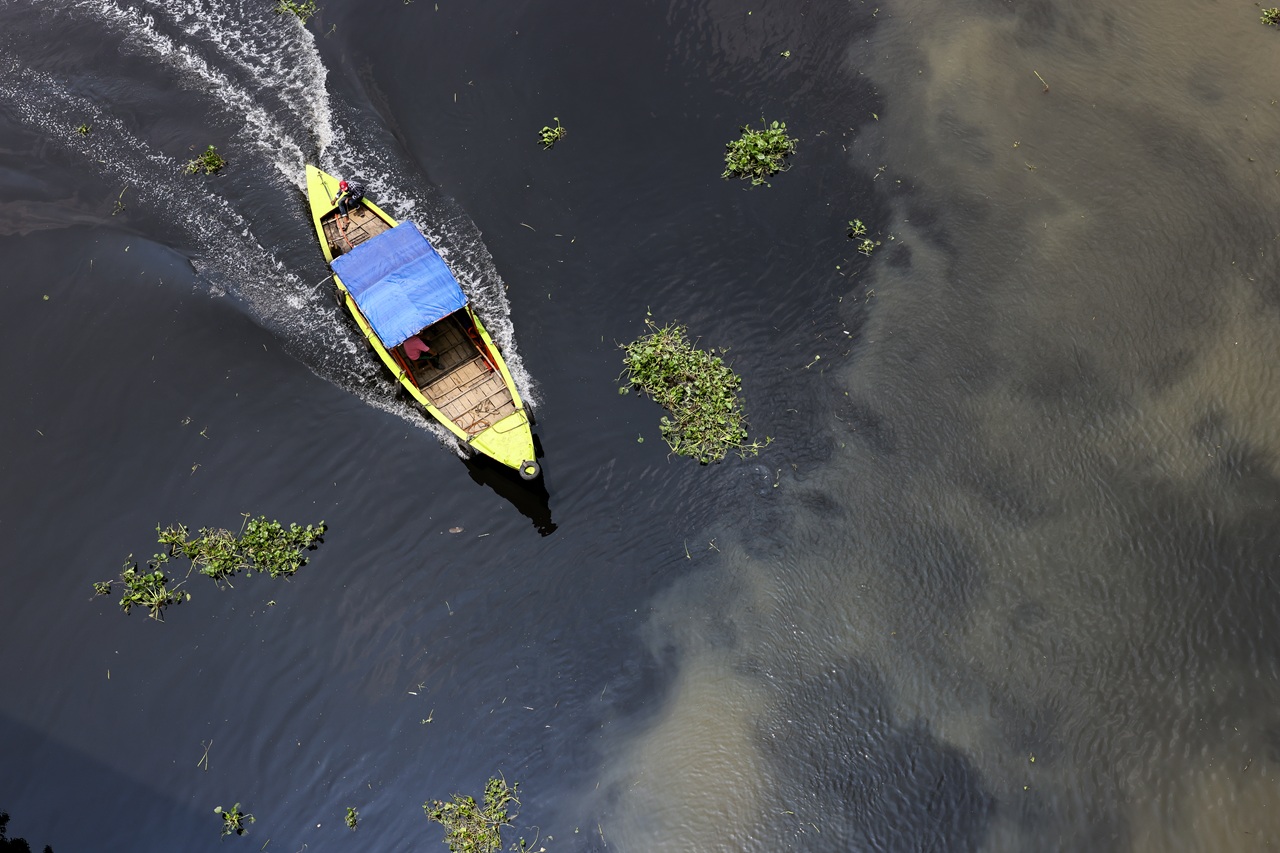
Over time, untreated industrial discharge from textile dyeing units, cement factories, and municipal sewage systems has heavily contaminated parts of the river. These effluents are rich in organic waste, dyes, heavy metals such as chromium and lead, and high levels of dissolved and suspended solids. As a result, the polluted water becomes denser, more acidic in pockets, and extremely low in dissolved oxygen.

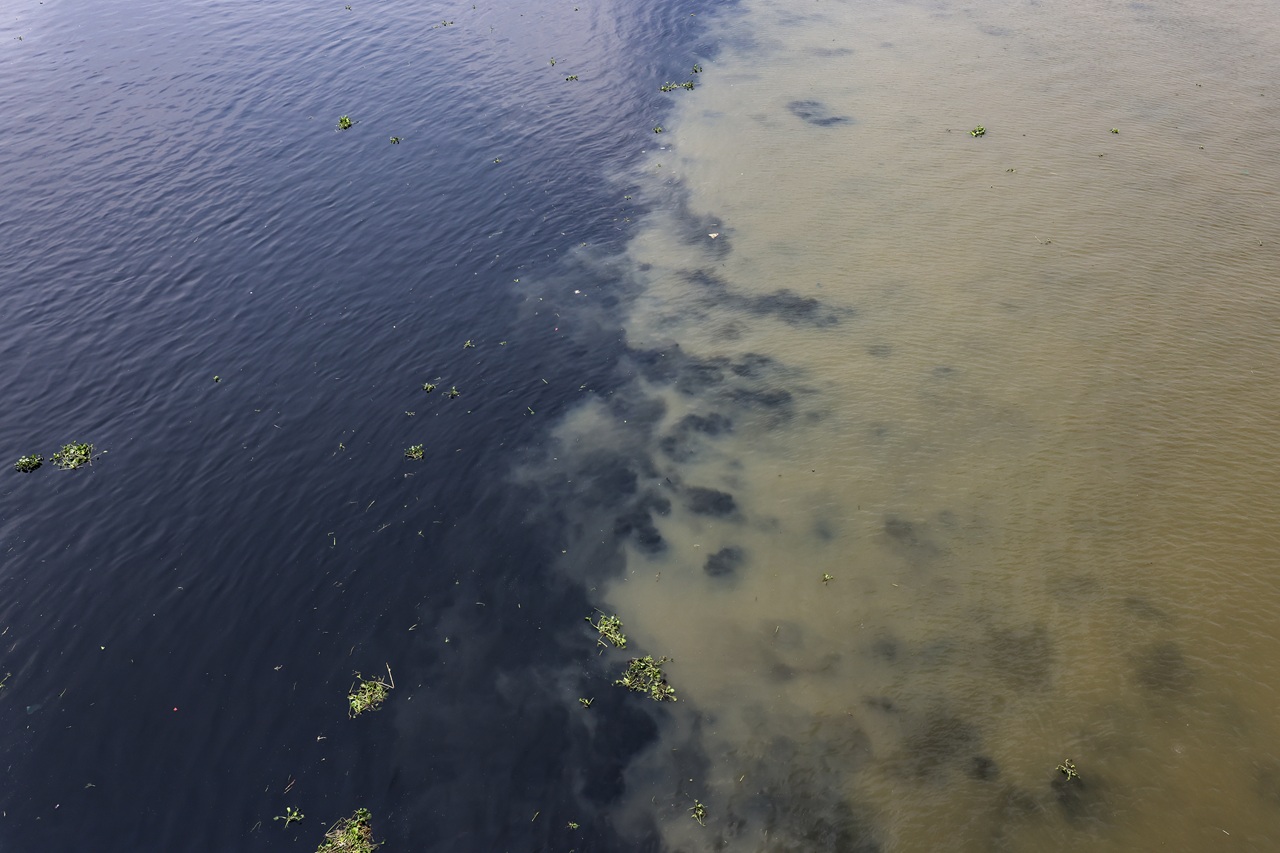
During the monsoon, rainwater enters the river in large volumes. It is relatively clean and low in pollutants. Because of the sharp difference in density, temperature, and chemical composition, the two layers do not mix easily. The polluted water, heavier and oxygen-depleted, tends to stay separated, creating a visible boundary line in the river flow.




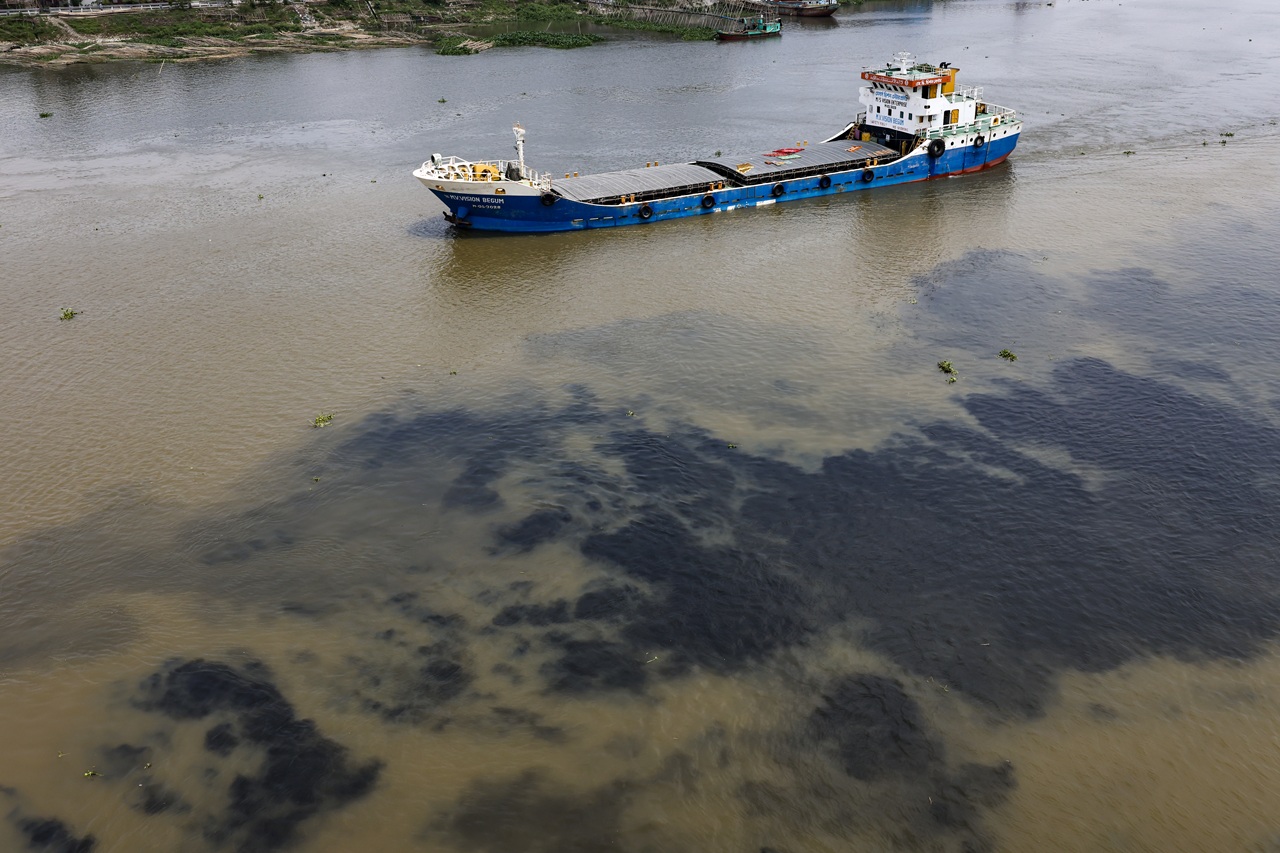
The environmental consequences are severe. Low dissolved oxygen levels make it nearly impossible for fish and aquatic organisms to survive, leading to repeated fish kills and the collapse of local biodiversity. Heavy metals accumulate in the food chain, eventually affecting humans who depend on the river for fish or nearby groundwater sources.
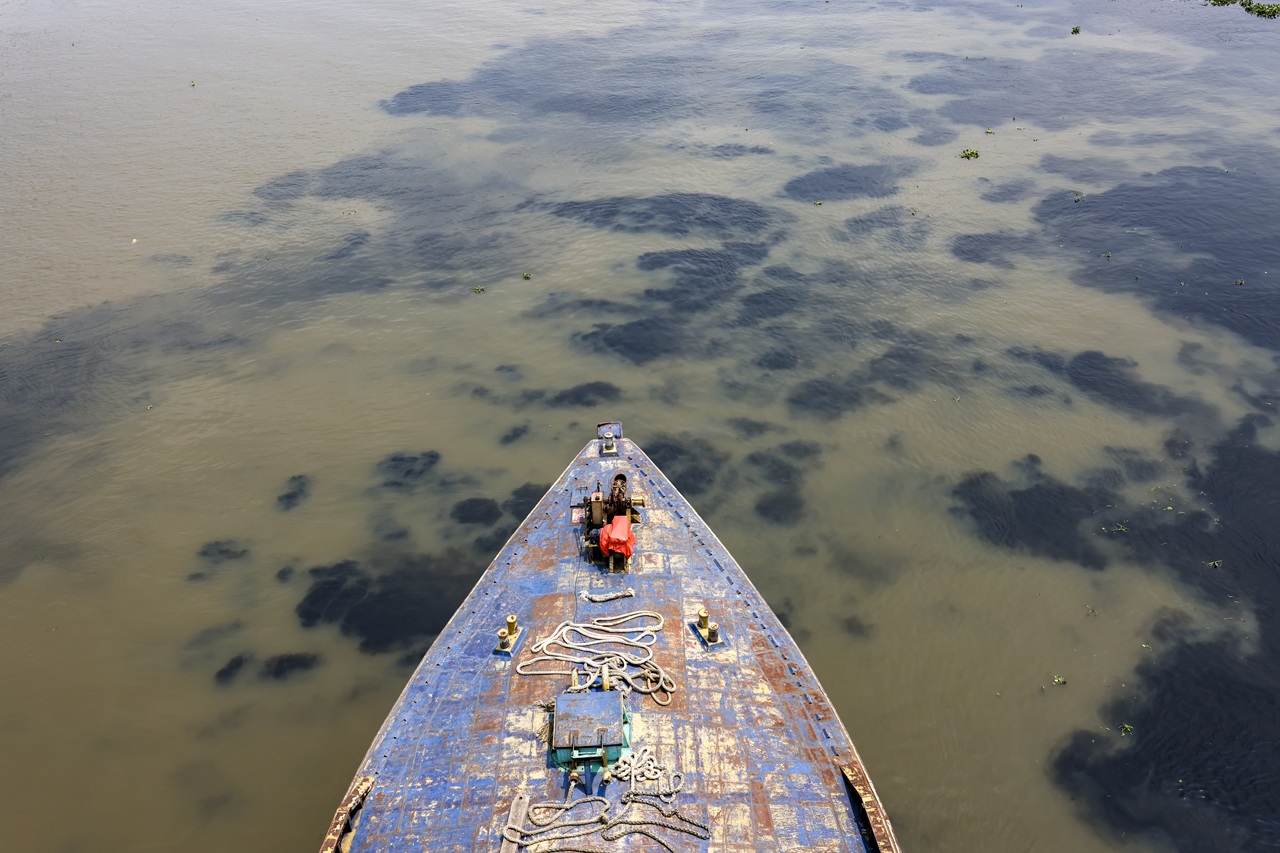
For communities along the riverbanks, the Shitalakshya is no longer just a water body; it has become a source of health risk. Skin diseases, foul odours, and contaminated water exposure are part of daily life for many residents. Fishermen, once dependent on the river’s natural abundance, now face declining catches and uncertain livelihoods.
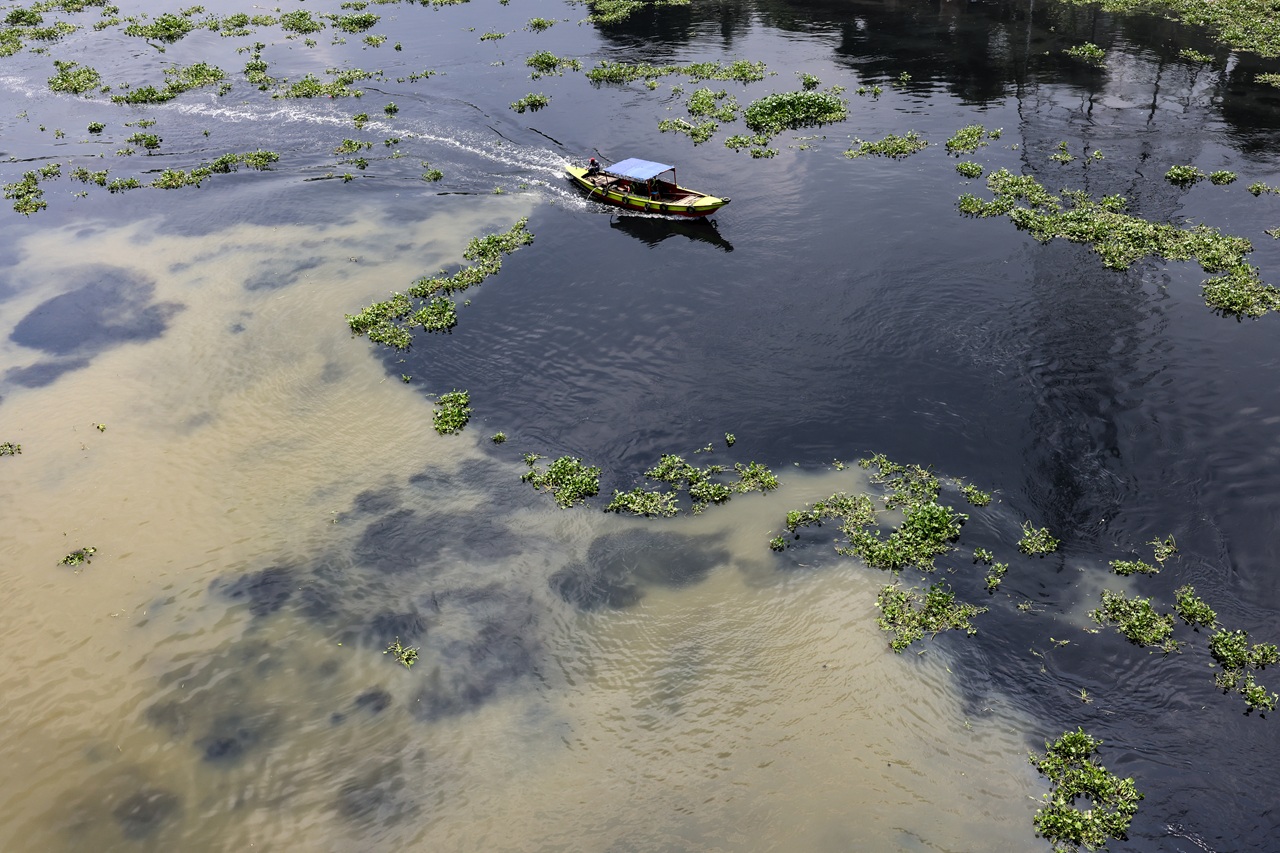
What appears as a “split river” is a warning sign: a living system struggling to survive under the weight of industrial neglect and urban waste.