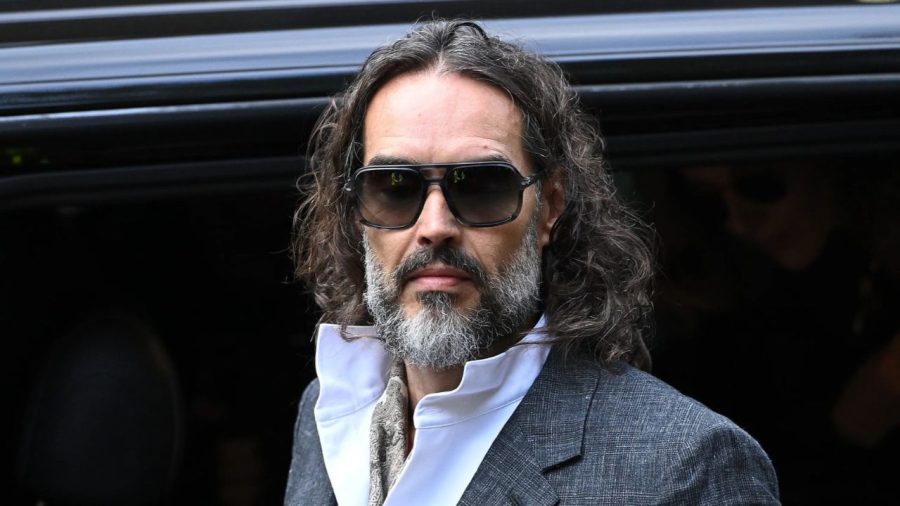



British comedian and actor Russell Brand faces a lengthy prison sentence after a London jury found him guilty of rape and three counts of sexual assault, bringing a four-week trial over allegations involving four women to a verdict.
The 51-year-old was convicted at Southwark Crown Court on Thursday, 5 November. The jury found him guilty of raping a 21-year-old woman in 2009 and sexually assaulting three other women in incidents between 2004 and 2009. However, it cleared him of two other counts of rape and one count of attempted indecent assault after deliberating for around eight and a half hours.
According to the BBC, the jury comprised eight men and four women. Following the verdicts, trial judge Mr Justice Bennathan said Brand should expect a significant prison term. He remanded the comedian in custody and set Monday, 9 November, for sentencing.
Brand stood in the dock as the jury delivered its decisions. He closed his eyes when he heard the rape conviction. Before entering the dock, he told his wife, Laura Gallacher, an author and illustrator who had attended court throughout the trial, “I love you”.
Although rape carries a maximum sentence of life imprisonment in the UK, the Sentencing Council’s guidelines generally place the custodial range between four and 19 years.
Following the verdict, London’s Metropolitan Police Service said Brand had used his influence, status and fame to exploit women and commit sexual offences.

“As his profile grew, so too did his sense of entitlement. I hope this conviction sends a clear message that no one is above the law, no matter how famous or powerful they may be,” Detective Superintendent Andy Furphy said.
David Roberts of the Crown Prosecution Service also criticised Brand’s conduct, saying the evidence showed him to be a calculated sexual predator who used his growing fame and power to create opportunities to pursue women regardless of their wishes.
The Metropolitan Police confirmed that detectives are continuing to investigate two further rape allegations against Brand. Prosecutors are assessing whether those complaints warrant additional charges. According to earlier court proceedings reported by the BBC, one allegation concerns a woman who dated Brand when she was 16 and he was 30.
Women recount alleged assaults
During the four-week trial, four women gave evidence about the offences for which Brand faced conviction. All the complainants are entitled to lifelong anonymity.




The woman at the centre of the rape conviction told the court that she met Brand after attending one of his shows in west London in 2009. She described a consensual sexual encounter involving another person at the venue before meeting Brand again at his Hampstead home several days later.
She told the court that the second encounter turned into rape when Brand forced her into anal sex and ignored her pleas to stop. She later struggled with alcoholism following the incident.
One of her friends described her as a “bright, bubbly and confident girl” before the encounter, adding that the experience had changed her.
Another complainant told the court that Brand groped her during a party at a bar in Soho in 2004. She said she felt ashamed and recalled that the comedian acted as though nothing had happened afterwards.
The other sexual assault convictions concerned incidents involving women at a London radio station and during a Channel 4 production in 2009. The allegations formed part of the prosecution’s case that Brand used his celebrity status to pursue women without their consent.
From comedy stages to online fame
Brand began his showbiz career as a stand-up comedian, drawing on his experiences with illegal drugs and sex addiction in his performances. He became a household name in Britain in the early 2000s as the host of Celebrity Big Brother’s Big Mouth, a spin-off of Celebrity Big Brother.
His chaotic energy, unfiltered language and provocative humour made him a divisive figure in British popular culture.
In 2001, MTV UK fired him after he turned up for work dressed as Osama bin Laden, two days after the September 11 attacks. Brand later attributed his behaviour to his addiction to crack cocaine and heroin. He entered rehabilitation in 2002 and has said he has remained sober since.

In 2006, he moved into mainstream radio with The Russell Brand Show on BBC Radio 2. The weekly Saturday night programme featured frank, often explicit conversations with his co-host and guests.
The show ended abruptly in 2008 after Brand and presenter Jonathan Ross left sexually explicit voice messages for Fawlty Towers actor Andrew Sachs. The broadcast sparked widespread outrage and breached UK broadcasting regulations.
The controversy did not stop Brand’s rise in Hollywood. He went on to star in films including Forgetting Sarah Marshall and Get Him to the Greek. He also married US pop star Katy Perry in 2010. The couple divorced in 2012.
Over the past decade, Brand moved away from his earlier sex-focused public image and turned towards spirituality, meditation and yoga. In 2017, he published the self-help book Recovery: Freedom From Our Addictions. His performances also shifted from traditional theatre stages to wellness gatherings.
That year, he married Gallacher, with whom he has three children.
Since the Covid-19 pandemic, Brand has built a substantial online following through content focused on spirituality, politics and social issues. His YouTube channel has more than 6.6 million subscribers, and he also hosts a show on the conservative-friendly platform Rumble.
Brand has been living in Florida and has described himself as a born-again Christian. In 2026, he published a book about his religious conversion through a new publishing imprint founded by conservative commentator Tucker Carlson.