Leaving behind the bustle and the narrow lanes of Old Dhaka, a short drive away stands the exquisite architectural treasure known as the Rose Garden.
One of the few surviving relics of Dhaka’s bygone grandeur, this mansion is a rare blend of history and beauty. Hidden for decades, the Rose Garden has now been restored to its former glory and is open to visitors, thanks to the Department of Archaeology.
The mansion’s origin is unique. Built in 1931 by Hrishikesh Das, a wealthy zamindar, it was surrounded by a lush garden planted with rare roses on 22 bighas of land, soon becoming known as the Rose Garden.
Hrishikesh Das was known for his extravagant taste, and his rivalry with Narendra Narayan Roy Chowdhury, the owner of Baldha Garden, sparked the creation of the mansion.
After being insulted by Chowdhury, Das vowed to build a more magnificent garden, one filled with beauty, music, and roses. Thus, the Rose Garden was born, a symbol of self-assertion in colonial-era Dhaka.

However, maintaining such grandeur drained his fortune, and in 1936, he sold the estate to Khan Bahadur Moulvi Kazi Abdur Rashid, who renamed it Rashid Manzil.
The mansion became a meeting place for intellectuals, political leaders, and artists, shaping discussions on national identity and reform. It was affectionately called “Humayun Saheber Bari” by locals.


In 1989, the Ministry of Cultural Affairs declared it a protected monument, and it has since been meticulously restored.
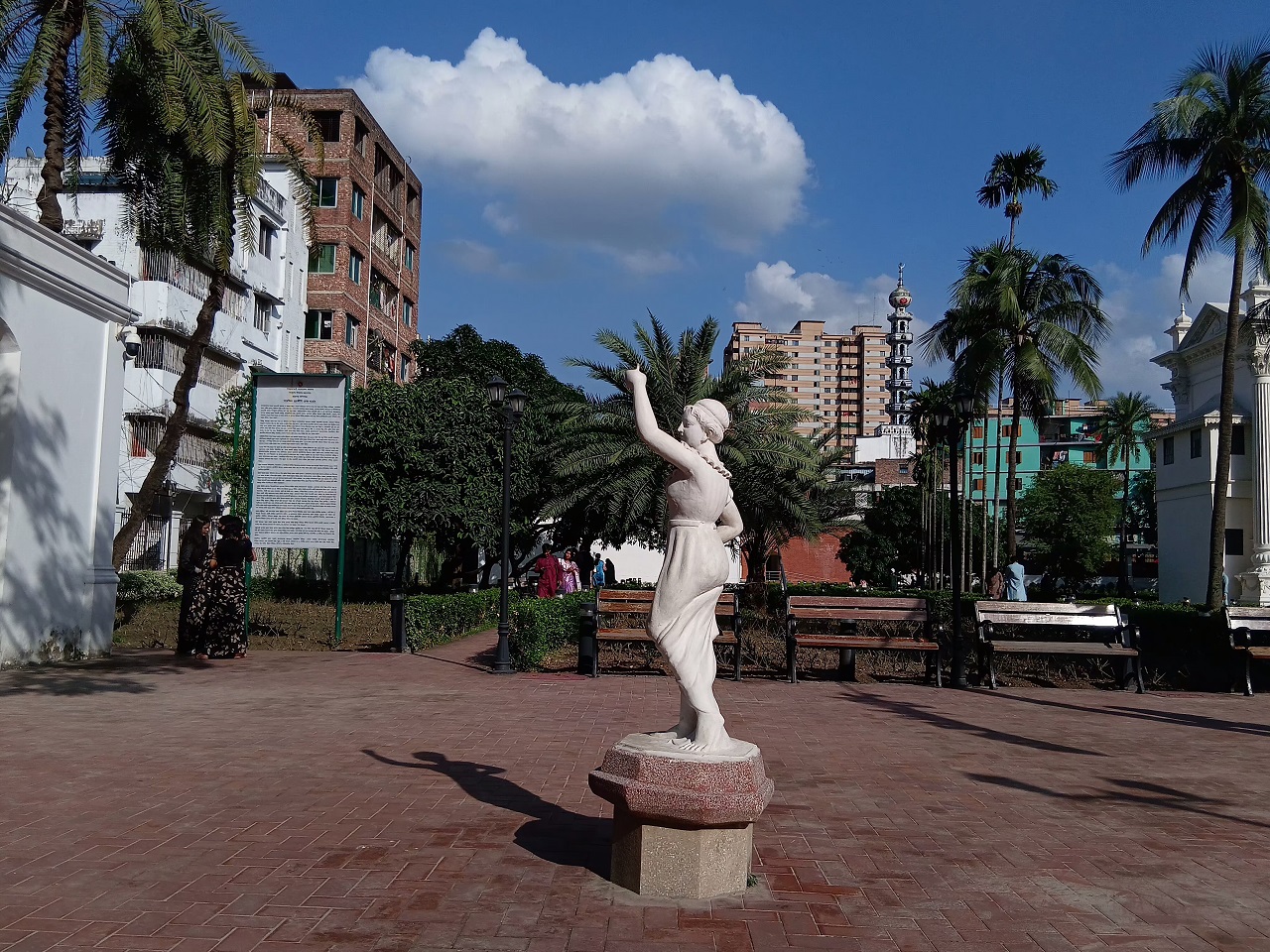
The estate now spans 2.2 acres and features the main palace, the historic Bengal Studio, several sculptures, and a large green lawn with a central fountain. Beyond the lawn lies a restored pond with two ancient ghats.
A three-story building added later by Kazi Humayun Bashir has been converted into a museum.
The Rose Garden was built in neo-classical style, with a whitewashed two-story structure measuring 29.35 meters in length and 19.96 meters in height. The ground floor includes five rooms, while the upper floor contains four rooms.
Two grand halls, once a dining and drawing room, are at the heart of the mansion. The western staircase and verandah were the principal gateway, flanked by curved balustrades. The eastern porch functioned as a carriage entrance.
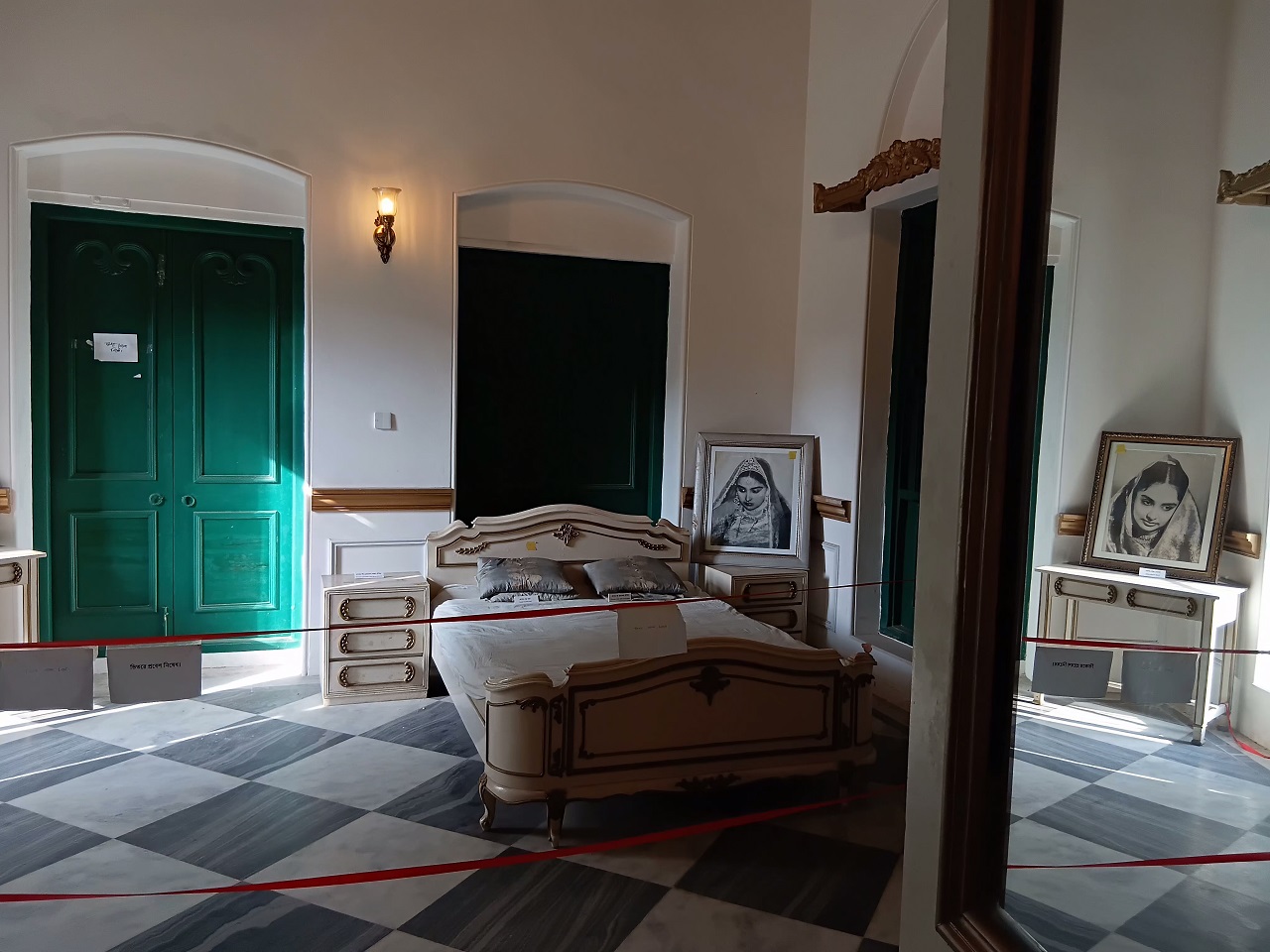
Today, the mansion houses an exhibition space showcasing furniture, artifacts, and items once belonging to the Kazi Abdur Rashid family, offering visitors a glimpse of Dhaka’s aristocratic past.
The Bengal Studio, established in the 1960s, has been fully refurbished and now serves as a hub for creative expression, with modern acoustic design, lighting, and air conditioning.
The pond and ghats, once in decay, have been restored, surrounded by green grass. The rose garden originally planted by Hrishikesh Das has been recreated, with vibrant blooms in full display.
The Rose Garden now thrives with life, its lawns, fountains, and sculptures drawing visitors to experience the beauty and history of this cherished space.
Once born of wounded pride, the Rose Garden now stands as a symbol of endurance, artistry, and renewal, a living museum where the echoes of a bygone era resonate through marble corridors and blooming petals.