




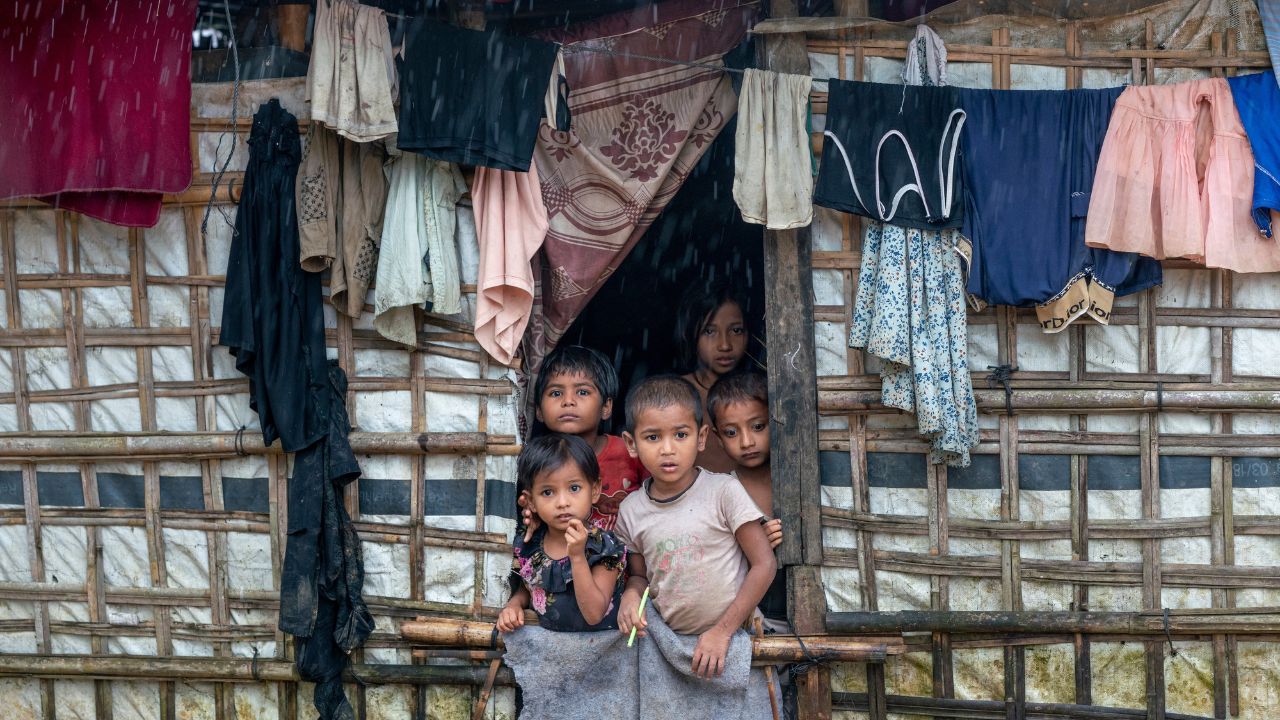
Rohingya refugees in Malaysia are facing a fierce new wave of hostility and systemic crackdowns, marking a dramatic shift from previous years when the country’s leadership actively championed their protection, reports BBC.
Educational centres have been raided, families evicted from their homes, and prominent public figures are increasingly employing dehumanising language as anti-refugee sentiment moves into the political mainstream.
This rising tide of hostility contrasts sharply with the stance of former prime minister Najib Razak, who in 2017 passionately called on Malaysia to defend Rohingya, stating that “their lives have value”.
Despite having never formally recognised asylum seekers, leaving refugees without legal rights to employment, housing, or education, the Muslim-majority nation has long been viewed by Rohingya as a safe haven and a place of economic opportunity.
Currently, the United Nations refugee agency (UNHCR) estimates that over 126,000 Rohingya are resettled in Malaysia, making it the second-largest host country after Bangladesh, though rights groups believe the actual number is significantly higher.
Most of the community fled Myanmar, a predominantly Buddhist state where they are denied citizenship and have faced decades of systematic violence, culminating in a brutal 2017 military crackdown that forced over a million to seek refuge in Bangladesh.
The military crackdown, which UN classified as “textbook ethnic cleansing” and the administration of US president Joe Biden designated as genocide, has led to a landmark case against Myanmar at the International Court of Justice. Former Myanmar leader Aung San Suu Kyi, who was widely criticised for playing down the violence, previously testified at the court.
However, overcrowded conditions, violence, and dwindling aid in Bangladeshi camps have prompted thousands of refugees to undertake perilous voyages across the Andaman Sea on cramped, fragile fishing vessels to reach Malaysia, resulting in thousands of deaths en route.
In Malaysia, educational access has now become dangerous for refugee children. Because Rohingya children are barred from attending Malaysian public schools, they rely on unlicensed, community-run “learning centres”.
Last month, eight uniformed police officers raided a northern Malaysian learning centre founded by Rohingya refugee Irhan, taking photographs of the students and ordering several to return home. Irhan, who arrived in Malaysia as a teenager in 2001, stated that families are now living in constant fear.
Similar fears have forced other educational facilities to take extreme precautions or close down entirely. In Selangor, a learning centre suspended all classes for a month before reopening at the end of July under strict new protocols.
Rohingya teacher Farooq explained that students have been instructed to go straight home without lingering and are forbidden from wearing their school uniforms.
“We’re keeping a low profile to protect our students from getting attacked,” Farooq said, noting that crackdowns are often haphazard and driven by hostile public sentiment.
In addition to educational disruptions, Rohingya families are facing forced evictions from villages they have occupied for years, with residents claiming their presence causes “social problems”.
Following a recent eviction from a fishing village near Penang, approximately 120 refugees, including more than 60 children, sought shelter outside the UNHCR headquarters in Kuala Lumpur, only to be temporarily detained by authorities.
This modern hostility is heavily intensified by social media, where misinformation has triggered severe public backlash. In May, viral online posts falsely accusing refugees of improperly disposing of animal remains during Eid al-Adha festival sparked widespread outrage.
These accusations rapidly snowballed into unfounded claims that Rohingya are demanding automatic citizenship, seeking political power, and trying to “take over” the country.
An online petition calling for the authorities to “Remove Rohingya from Malaysia” gathered more than 420,000 signatures before rights groups successfully campaigned for its removal.
Human rights advocates note that Rohingya, as the largest group of asylum seekers in the country, are being used as convenient scapegoats for domestic challenges such as the rising cost of living.
This sentiment back to COVID-19 pandemic, when refugees were blamed for spreading the virus and competing with locals for employment, leading to social media petitions for deportation and the turning away of boats at sea.
Karim, a 45-year-old Rohingya activist in Penang who arrived in 2003, recalled that Malaysians were once friendly and kind. “Now, however, life has become increasingly difficult,” Karim said, adding that he is often harassed on his daily commute and asked why he is making a mess of the city.
Anti-refugee rhetoric has also been embraced by prominent public figures. In July, during a campaign speech, Prime Minister Anwar Ibrahim warned Rohingya not to disrupt the lives of Malaysians, stating, “This is our country… Let no one else interfere,” while claiming that Myanmar had agreed to repatriate 5,000 refugees.
Other figures have used harsher language; Nurulhidayah Zahid, daughter of Deputy Prime Minister Ahmad Zahid Hamidi, published a post on Threads comparing Rohingya to “monkeys in the forest” who should not be fed while Malaysian children go hungry.
The former deputy police chief Ayob Khan Mydin Pitchay likened the influx of refugees to a “cancer” that demands urgent intervention. The BBC has reached out to the prime minister’s office and foreign ministry for comment.
According to Yap Lay Sheng, a Malaysia-based researcher for the human rights group Fortify Rights, the hostility is expected to intensify as the country approaches its next general election, which must be held before February 2028.
Yap stated that refugees are being turned into convenient political scapegoats to distract from internal domestic challenges. He added that the government’s treatment of the Rohingya exposes the “hollowness” of its international image as a compassionate Muslim nation.
Despite the escalating hostility in Malaysia, returning to Myanmar remains impossible for most refugees. Myanmar is currently locked in a devastating civil war, with intense fighting between the military junta and the Arakan Army causing catastrophic destruction in Rakhine State.
Returning refugees face the risk of forced conscription by the embattled military regime or becoming targets of the Arakan Army.
This week, UN High Commissioner for Human Rights Volker Türk released a report detailing how the plight of minorities in Myanmar has “plummeted to a new low,” describing the “misery and cruelty” suffered by the Rohingya as heartbreaking.
Left with no safe options, Rohingya community continues to live in pervasive fear. Farooq, Rohingya teacher, lamented the situation, saying, “I escaped the genocide in Myanmar hoping to find safety. Instead, many Rohingya today continue to live with fear of simply being who we are.”


