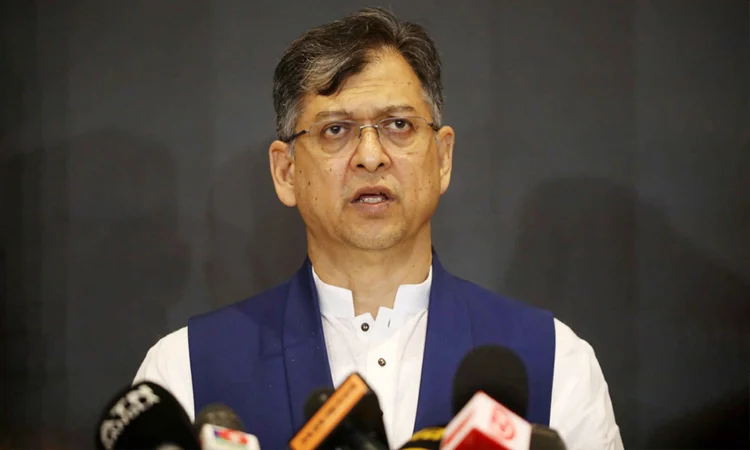

Bangladesh Nationalist Party (BNP) Standing Committee member Salahuddin Ahmed has urged the interim government and the Election Commission on Saturday to ensure that the national parliamentary election scheduled for the first half of February is delivered on time.
Speaking at a discussion organised by Chhatra Dal at the Diploma Engineers Institution in Dhaka, he asked the Election Commission to announce the poll schedule in the first half of December.
Salahuddin said that BNP and other democratic forces that oppose fascism will take part in the election, insisting that any referendum should be held on the same day as the national vote to avoid extra cost and logistical burden.
A separate referendum would be unnecessary and impractical, he added.

He explained that the referendum was proposed only to secure broad national consent for reforms, but that holding it on a different date would be expensive and unreasonable.
“The referendum and the national election must happen on the same day. There is no alternative,” he said, adding that once the schedule is announced the parties will move quickly into full-scale campaigning.


He said they were expected to act as neutral referees, instead, he argued, the interim setup has overstepped by acting like a referee who has already made a decision and is now telling political parties to decide within seven days — or it will decide for them.
“Remember, you are not an elected government. You do not have the authority to dictate that parties must decide within seven days. Such display of power is not appropriate,” he said, urging the interim administration to limit itself to organising a fair election.
He added that the BNP will support the Commission’s work within that proper boundary.
Salahuddin reaffirmed BNP’s historical role in Bangladesh’s politics and development, praising its past contributions to democracy and national progress.
He warned against any moves that, in his view, would strengthen authoritarian or fascist tendencies, and rejected calls for nationwide lockdowns tied to political events.
He also called on political opponents to participate in public debate rather than partaking in disruptive measures.