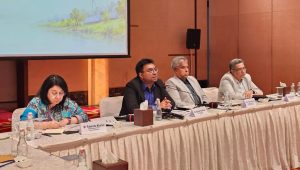
A roundtable discussion in Dhaka on Saturday raised strong criticism over reported “push-in” incidents along the Bangladesh–India border and alleged border killings, with speakers demanding stronger diplomatic and security measures.
The meeting, titled “Citizen Thoughts on Preventing Border Push-ins”, was organised by the Desh Bachao Manush Bachao Andolan at the VIP lounge of the National Press Club.
Speakers at the event alleged that individuals are being forcibly pushed into Bangladesh from across the border, describing the practice as a serious humanitarian and security concern. They also called for greater vigilance by border authorities to prevent further incidents.

Several participants questioned why, in their view, stronger measures were not being taken to address cross-border political and security issues. Some speakers also raised political questions in relation to former prime minister Sheikh Hasina’s reported presence in India, asking why opposition figures were not similarly affected by border actions.
The discussion also criticised recent remarks attributed to Indian officials regarding regional population dynamics, with speakers demanding clarification and expressing concern over what they described as interference in Bangladesh’s internal affairs.




Speakers further alleged that border management issues, including “push-ins” and killings, reflected strained relations and urged the government to take a firmer diplomatic stance. They called for strengthening the Border Guard Bangladesh (BGB) and enhancing the role of the Ministry of Foreign Affairs in addressing the matter.
National Labour Party Chairman Lion Md Faruk Rahman, National Democratic Party Chairman Abdullah Al Harun Sohail, and other political and professional leaders addressed the meeting, which was presided over by KM Rokibul Islam Ripon.
Speakers stressed the need for national unity to address border-related issues and called for sustained dialogue with India to resolve outstanding disputes.
The meeting concluded with calls for stronger border management, increased diplomatic engagement, and coordinated action to prevent further incidents along the frontier.