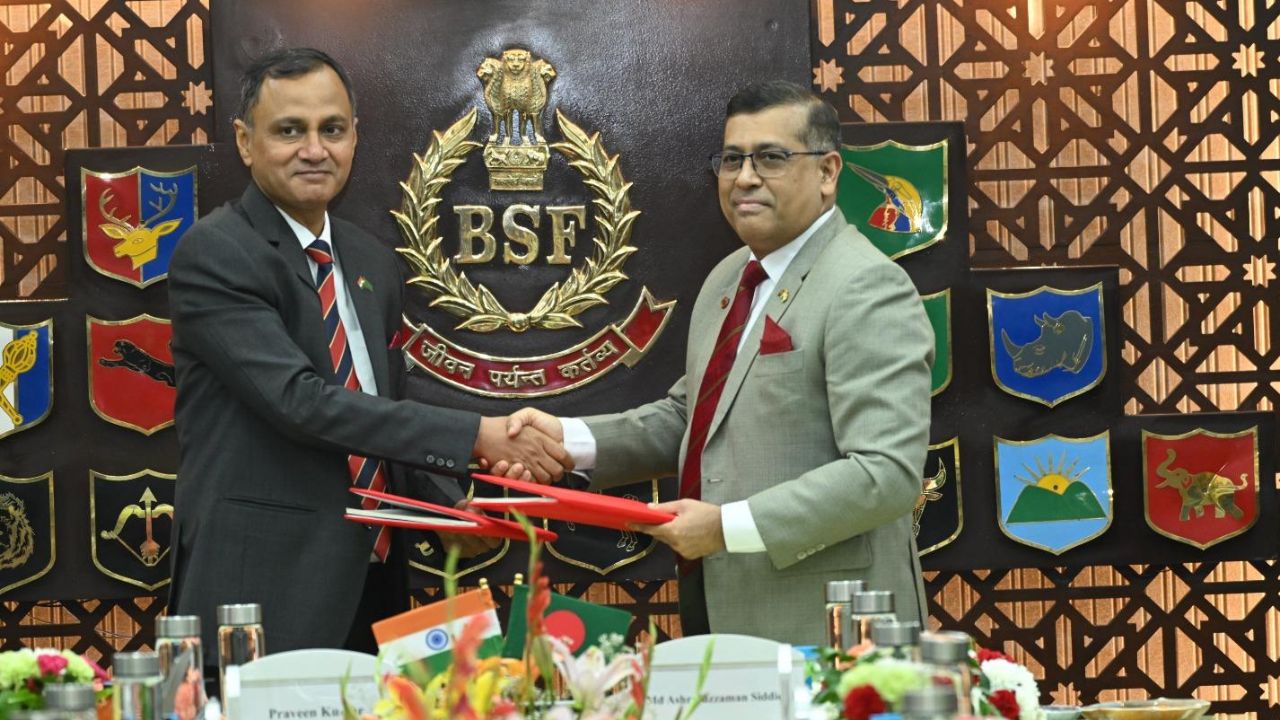

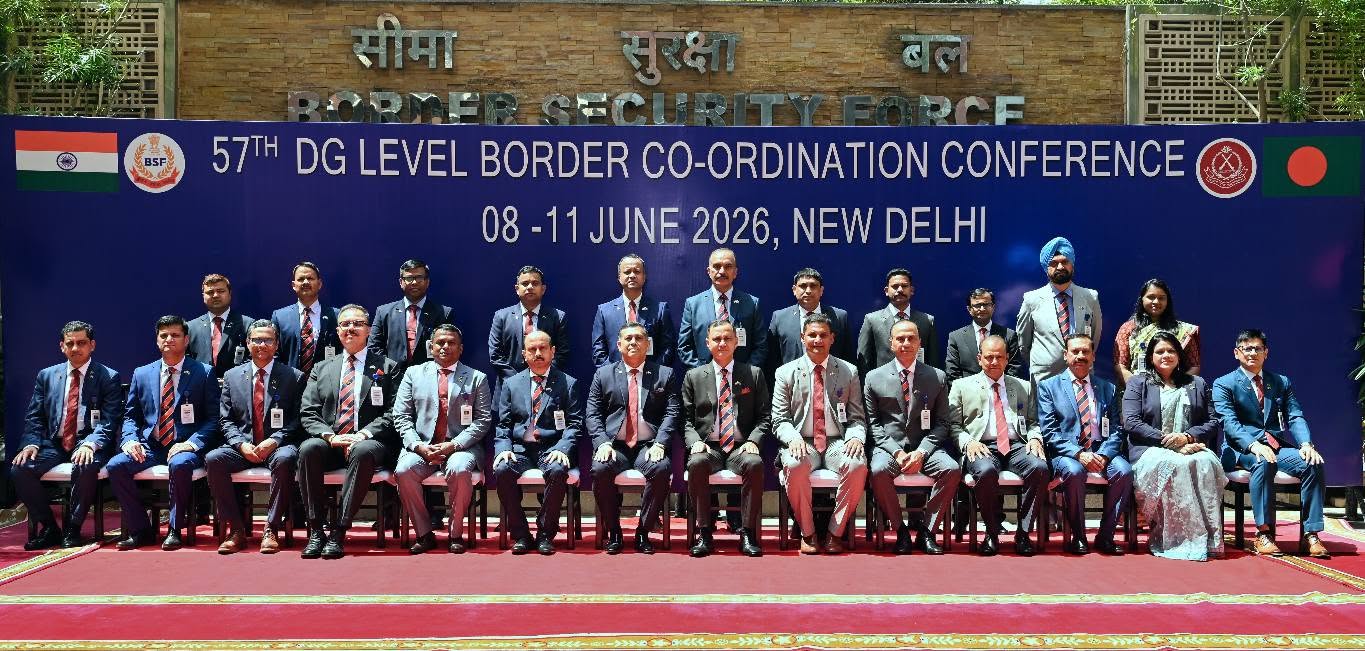
The 57th Director General-level Border Conference between Border Guard Bangladesh (BGB) and the Border Security Force (BSF) of India has concluded in New Delhi, with the Bangladeshi delegation issuing a stern call for an immediate end to border killings.
The four-day conference, held from 8 to 11 June 2026, was led by BGB Director General Maj Gen Mohammad Ashrafuzzaman Siddiqui, and his Indian counterpart Shri Praveen Kumar.
Throughout the sessions, the BGB chief maintained a firm stance on the necessity of a zero-killing policy to maintain bilateral stability.
Humanitarian crisis and legal accountability
During the high-level talks, Major General Siddiqui expressed deep concern over the continued deaths of unarmed and innocent Bangladeshi nationals, categorising these incidents as a “clear violation of human rights.”

He strongly urged the BSF to take effective measures to bring the number of border killings down to zero, emphasising that peace along the frontier requires strict accountability for every incident of violence.
In response, both forces agreed to strengthen security mechanisms by intensifying Simultaneous Coordinated Patrols (SCP), particularly during night hours in vulnerable patches.
To ensure these measures remain effective, both sides committed to reviewing vulnerable areas biannually as crime patterns evolve.



Furthermore, a significant agreement was reached to investigate all incidents of killings and take strict legal action against those responsible in accordance with their respective national laws.
Fencing deviations and demarcation disputes
The BGB Director General raised serious concerns regarding infrastructure and land management, citing the Joint India-Bangladesh Guidelines for Border Authorities, 1975, which prohibit unauthorised construction within 150 yards of the International Border.
Major General Siddiqui referred to a Note Verbale dated 16 February 2025 regarding deviations in constructed security-related fencing (SRF) and a more recent Note Verbale issued on 8 June 2026 requesting strict adherence to diplomatic protocols for any further construction.
On the issue of border demarcation, the BGB chief called for the immediate replacement of temporary markers with permanent border pillars in the Muhurir Char area. He also highlighted the need to restore missing pillars in the Kushtia sector and other riverine stretches to avoid ambiguity in border management.
Water sharing and economic security
Discussions also addressed critical issues of resource management and transborder crime. The BGB highlighted that under a 2022 Memorandum of Understanding, both nations are entitled to withdraw up to 153 cusecs of water from the Kushiyara River during the dry season.
However, delays in the excavation of the Rahimpur Khal intake channel have affected irrigation for approximately 5,000 hectares of land in Bangladesh.
The BGB further raised concerns over unilateral water withdrawal through multiple pumps and urged the implementation of 17 pending riverbank protection projects to prevent monsoon flooding.
Regarding economic security, while the BSF expressed concern over Fake Indian Currency Notes (FICN) and gold smuggling, the BGB noted that it has already deployed Fake Currency Detection Machines at Integrated Check Posts (ICPs) to combat these syndicates.
The two leaders provisionally agreed to hold the next conference in Dhaka in November 2026.