
The schedule for the 13th parliamentary election and the referendum on the July Charter — both slated for the same day in February next year — will be announced at any time this week, Election Commission officials said.
At a key meeting on Sunday, the commission decided to extend polling time from eight hours to nine. It further approved increasing the number of secret booths at polling centres and decided to exclude private bank employees from the list of polling officials for the time being.
Election Commissioner Abul Fazal Md Sanaullah disclosed the decisions after the meeting held at the EC headquarters.
“The CEC has said the election schedule will be announced within this week. As part of the formal procedures before the announcement, letters will be sent to Bangladesh Betar and BTV on Monday to record the CEC’s address, and a meeting will be held with the President,” EC Sanaullah said.
Officials earlier said the commission will meet the president on 10 December, with the schedule expected to be announced the following day.

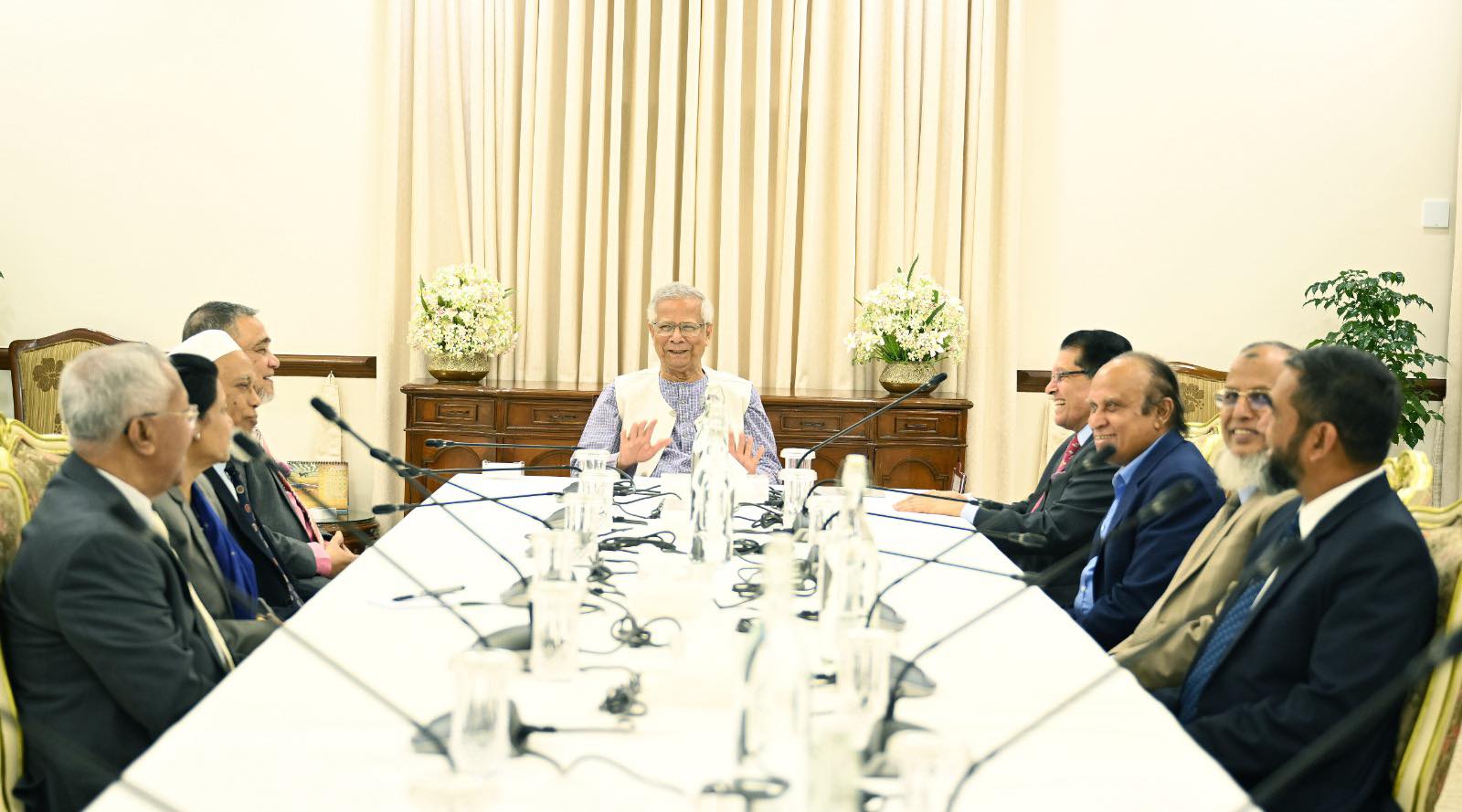
After the commission meeting, CEC AMM Nasir Uddin and the four election commissioners met Chief Adviser Muhammad Yunus at his official residence Jamuna. EC Senior Secretary Akhtar Ahmed accompanied them.
On the extension of polling hours, EC Sanaullah said the decision was taken to ensure better time management. “Voting will begin at 7:30am and continue until 4:30pm.”
He added that, based on mock voting experience and field feedback, multiple secret booths will be set up in each room to ease booth shortages.




For the first time in the country’s history, a referendum will be held on the same day as the parliamentary election, allowing voters to answer several questions on the implementation of the July Charter.
To help voters clearly understand the referendum questions, Sanaullah said sample versions will be displayed prominently at every polling centre.
On the appointment of polling officials, he said officers from government, semi-government and autonomous institutions, as well as employees of state-owned banks, will be included in the list. However, staff of private banks will be kept in reserve for now. “They will not be appointed unless absolutely necessary,” he said.
Earlier, on 23 November, the BNP submitted a written request to the Commission urging that staff of Islami Bank and similar institutions not be appointed as polling officials.
EC Sanaullah said ballot papers and other election materials will be sent to polling centres on the night before voting.
He said printing of postal ballots for overseas Bangladeshi voters will begin on Monday and despatching will start within the next two days. “Applications for domestic postal ballots will be accepted from the day the schedule is announced and continue for the next 15 days.”
He also said a circular will be issued to ensure that observers and journalists can perform their duties without hindrance.
Sunday’s meeting further decided that on the evening the schedule is announced, a virtual meeting will be held with deputy commissioners and superintendents of police to review law and order and administrative preparedness. “From the day after the schedule is declared, two executive magistrates will begin duties in every upazila or police station,” said EC Sanaullah.
In addition, a circular on the deployment of law enforcement agencies will be issued within this week. Based on that, the home ministry will prepare its deployment plan. A central monitoring cell will be set up at the Election Commission, comprising representatives of all forces and agencies. “This cell will also have the capacity to deal with misinformation and disinformation,” he said.
EC Sanaullah said taxis, pickups, microbuses and trucks will remain suspended for 24 hours, while motorcycles will be restricted for 72 hours centring the polling day. “Election day will be a public holiday.”
Asked whether the political situation and the illness of the BNP chairperson would be taken into consideration, he said the Commission is proceeding based on its own judgement, its prior commitments and the government’s existing plan.