



A battery-powered auto-rickshaw was stopped as soon as it attempted to enter the main road at Satrasta intersection in Tejgaon. Despite repeated pleas from the driver, the vehicle was overturned and left beside the road divider.
At the same time, traffic police turned back another battery-powered auto-rickshaw attempting to enter the main carriageway before resuming their traffic management duties.
Dhaka Metropolitan Police’s (DMP) Traffic Division has intensified its drive to remove illegal battery-powered auto-rickshaws from the capital’s main roads.
The impact of the campaign is clearly visible in areas under the Tejgaon Traffic Division, including Farmgate, Sonargaon Crossing, Satrasta intersection, Rainbow Crossing and Khamarbari. Auto-rickshaws found entering main roads are being seized and sent to the vehicle dumping yard.
A visit to these areas found traffic police intercepting battery-powered rickshaws trying to access the main roads. Some drivers were turned back, while others had their vehicles impounded.
A group of students from Dhaka Polytechnic Institute were seen assisting traffic police during the operation. One of them, Rafiul Islam, said many drivers comply and turn back, although some argue with officers or try to force their way onto the road. In such cases, police take the necessary action.

Mohammad Rafiqul Islam, who owns a pharmacy in the area, said police alone could not stop all the auto-rickshaws. “We, the local residents, have to help. Otherwise, how can they manage?” he said.
At Satrasta intersection, two auto-rickshaws had been seized for entering the main road and were left overturned while their drivers pleaded with officers, who refused to reverse the decision.
Traffic Sergeant Golam Dastagir, who was on duty at the intersection, said between 20 and 30 auto-rickshaws were being sent to the dumping yard every day from five key points under the division.
“Our main objective is to ensure these vehicles do not enter the main roads. We are maintaining a zero-tolerance policy against them,” he said.


Referring to public support, he added that local residents were frustrated by the growing presence of battery-powered auto-rickshaws. “Almost everyone knows someone who has been involved in an accident caused by these vehicles. People understand how dangerous they are on the main roads.”
Abdul Kader, owner of a shop named Sadai, said he frequently saw battery-powered auto-rickshaws making sudden lane changes or even travelling against the flow of traffic on major roads, causing numerous accidents. “The way police are stopping them now is a positive step,” he said.
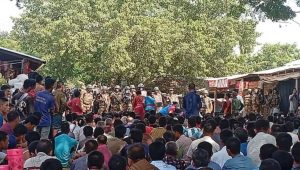
During the operation, a heated argument broke out between police officers and an auto-rickshaw driver, briefly escalating tensions and drawing a crowd of onlookers.
Police said the vehicle had been seized for violating traffic regulations.
Kamrul Ahsan, a private-sector employee at Satrasta, said battery-powered auto-rickshaws often stopped indiscriminately on busy roads, causing severe traffic congestion during office hours.
The DMP’s Tejgaon Traffic Division said the special drive was aimed at restoring discipline on the roads and reducing accidents by preventing illegal battery-powered auto-rickshaws from using major roads. Vehicles violating the restrictions are being impounded and legal action is being taken against their drivers.
On 3 June, the Tejgaon Traffic Division used loudspeakers at key locations to warn drivers, passengers and the public that battery-powered auto-rickshaws are completely prohibited from operating on roads used by buses, trucks and other heavy vehicles.
Mohammad Rafiqul Islam, Deputy Commissioner of the DMP’s Tejgaon Traffic Division, told TIMES that many of the drivers were untrained and the vehicles themselves failed to meet required safety standards.
“For now, in line with the authorities’ directives, we are trying to ensure that these vehicles stay off the main roads,” he said.
On Friday, more than 50 rickshaws and vans were overturned and their goods scattered on a road behind Dhaka Polytechnic Institute during the ongoing enforcement drive.
Garment worker Sumaiya Akter said she occasionally used battery-powered auto-rickshaws herself but believed they were unsafe on major roads.
“They should operate on internal roads, but not on the main roads,” she said.
Allegations of illegal electricity connections being used to charge the batteries of these vehicles are not new. A visit to Satrasta intersection, South and North Begunbari, and areas adjacent to the Bangladesh Standards and Testing Institution (BSTI) found rows of auto-rickshaws charging their batteries on pavements and roadsides.
In some cases, electricity was being drawn directly from utility poles using illegal hook connections, while elsewhere multiple unauthorised connections were operating behind a single legal electricity meter.
According to DMP Traffic Division sources, around 50,000 illegal charging points have been identified across the capital in the initial phase, with the list currently undergoing verification.
Dhaka Power Distribution Company Limited said there are 12 government-approved charging stations in the Tejgaon Industrial Area. It added that 17 enforcement drives have already been conducted to disconnect illegal electricity connections.