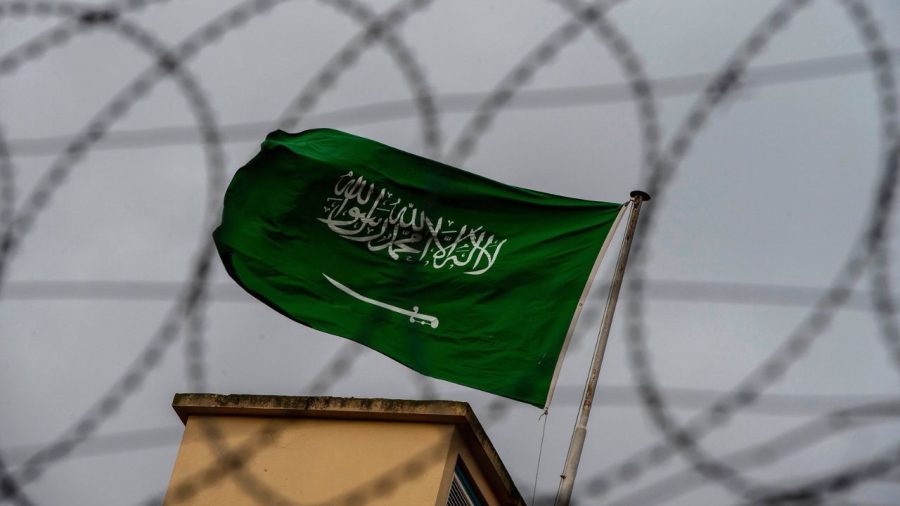



Foreign citizens, including Bangladeshi nationals, accounted for more than half of all executions carried out in Saudi Arabia during the first six months of 2026, according to a report by the European Saudi Organisation for Human Rights (ESOHR).
Documenting 108 executions between January and June this year, the rights group confirmed that 59 individuals put to death were foreign nationals, representing 54 per cent of the total, compared to 49 Saudi nationals (46 per cent).
Those executed hailed from 17 countries, comprising citizens of Bangladesh, Saudi Arabia, Ethiopia, Pakistan, Sudan, Yemen, Syria, Jordan, Somalia, Egypt, Nigeria, Benin, Iraq, Kuwait, Kenya, Uganda, and Afghanistan.
The findings come as the total number of executions conducted under the reign of King Salman bin Abdulaziz and Crown Prince Mohammed bin Salman reached 2,000, setting a record figure that exceeds all previous reigns and solidifying the kingdom’s position as one of the world’s top executioners.
Foreign workers hit hardest by drug offences
The high proportion of foreign nationals executed was heavily driven by drug-related cases, which formed the single largest category of capital punishment in the kingdom.

Out of 71 drug-related executions, representing 66 per cent (or 65.7 per cent) of the overall total, 49 were carried out against foreign citizens.
This means foreign nationals executed on drug charges alone constituted 45.3 per cent of all documented executions in the kingdom during the six-month period.
Those executed in drug cases came primarily from Ethiopia, Pakistan, Sudan, and Yemen.



Cases involving hashish, for which Saudi Arabia resumed executions in recent years, represented at least 18.5 per cent of all drug-related executions.
Systemic violations in death-row wards
ESOHR revealed severe systemic violations faced by foreign prisoners on death row, including an absence of professional interpretation, denial of legal assistance, a lack of understanding of judicial procedures, and a failure to afford defendants an effective opportunity to defend themselves.
Documented death-row wards holding foreign inmates include Khamis Mushait Prison, holding 58 Ethiopian nationals; Najran Prison, holding five Ethiopian nationals and five Somali nationals; and Tabuk Prison, holding eight Egyptian nationals.
Prisoners reported living under constant threat, witnessing fellow inmates being removed from death-row wards for execution following brief periods of isolation and severed contact with the outside world.
Offence breakdown and discretionary sentences
Beyond drug cases, 25 executions (23 per cent) were for murder charges, 9 executions (8 per cent or approximately 8.3 per cent) were for political and security-related cases without murder charges, and 3 executions (3 per cent) were carried out in other cases.
In total, 83 of the 108 executions (76.8 per cent) were for offences that did not involve intentional killing, which is inconsistent with international legal standards restricting capital punishment to the “most serious crimes”. Moverover, 84 executions (77.7 per cent) stemmed from discretionary ta’zir rulings.
Demonstrating a persistent lack of transparency and severe difficulty in obtaining judicial information, neither ESOHR nor any other relevant organisation had previously monitored or documented 91 of the 108 cases (84.2 per cent) prior to execution.
Political executions, minors, and unfair trials
In political and security cases tried before the Specialised Criminal Court, prominent executions included Saud al-Faraj in June 2026, despite the United Nations Working Group on Arbitrary Detention having previously determined his detention to be arbitrary.
On 9 April 2026, Saudi authorities also executed juvenile defendant Ali al-Subaiti on charges that included participating in protests when he was 12 years old.
At least five individuals remain at risk of execution for alleged offences committed during childhood: Youssef al-Manasif, Jawad Qureiris, Hassan Zaki al-Faraj, Mahdi al-Mohsen, and Ali al-Mabyouq. Although the UN Working Group on Arbitrary Detention called for their release, Saudi authorities have taken no steps to protect their lives.
Additionally, 49 prisoners of conscience and individuals facing charges related to peaceful expression remain at risk of execution, including prominent scholars Sheikh Salman al-Ouda and Sheikh Hassan al-Maliki, against whom the Public Prosecution has sought the death penalty since 2018.
ESOHR concluded that the first six months of 2026 confirm Saudi Arabia’s accelerating use of the death penalty without regard for its international obligations, including commitments under the Convention against Torture and the Convention on the Rights of the Child.