


Japanese animation studio OLM, known for the “Pokémon” anime series and films, has developed an AI-assisted colouring tool that can learn a production’s visual style from just three hand-painted frames.
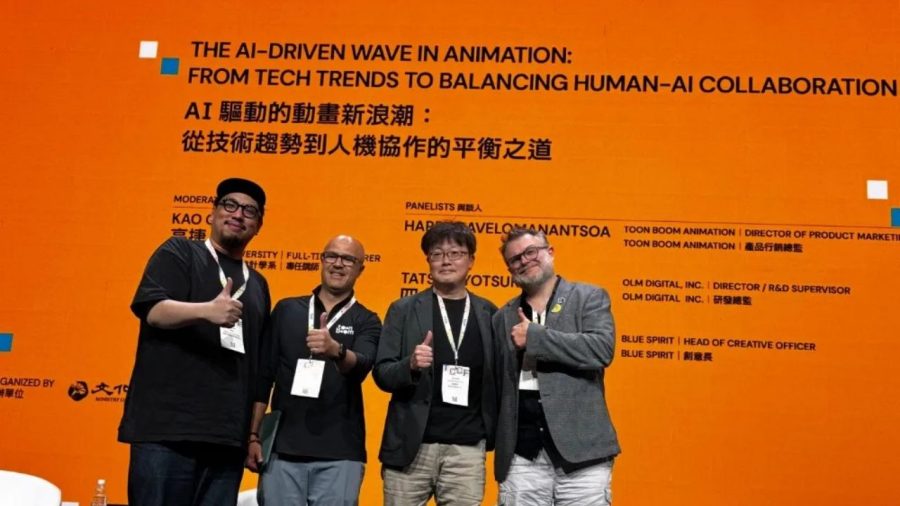
According to Variety, OLM Digital board director Yotsukura Tatsuo announced the tool at the Taiwan Creative Content Fest in Taipei. Developed through a 15-month research project called ANIMINS, the system aims to reduce repetitive work without disrupting established animation workflows.
The project operated under GENIAC, a generative AI initiative overseen by Japan’s Ministry of Economy, Trade and Industry, and concluded in February.
Unlike AI models that require large amounts of training data, OLM’s tool learns from three frames coloured by an artist. It takes about 90 seconds to learn a production’s line work and colour palette, then approximately 15 seconds to colour each remaining frame. More hand-painted examples can improve its accuracy.
“Strictly speaking, it isn’t generative AI,” Yotsukura said.
The system uses frames from the production itself, avoiding the need to train on unrelated works. It can also adapt when new characters or creatures appear. At the proof-of-concept stage, the tool has reduced the colouring workload by around 30 per cent, according to Yotsukura, although reviewers must still check every frame.

Canadian animation software company Toon Boom Animation is developing similar tools through its AI suite, Ember. Product marketing director Harry Ravelomanantsoa said the colouring tool’s beta phase was nearing completion, with an in-betweening tool expected to enter beta within weeks.
One Manila studio that tested the colouring tool reduced the time needed to paint a 90-second to two-minute scene from 15 hours to just two or three hours.
OLM, which employs around 600 people across Japan, Malaysia, Thailand and the United States, produces titles including “Pokémon”, “Beyblade”, “Hanakappa” and “The Apothecary Diaries”. The company is also experimenting with AI-assisted in-betweening, which creates intermediate frames between key poses to produce smoother movement.
Yotsukura believes AI could bring wider benefits to productions involving more than 100 staff members. OLM is exploring anime-specific AI agents with a startup partner from the GENIAC project. These tools could help new directors and production managers understand the creative decisions behind long-running series, as well as speed up approvals and licensing for secondary uses of existing titles.




However, he said the company was approaching these applications cautiously because they involve sensitive production and business information.
Yotsukura warned that AI demonstrations do not always reflect the demands of professional production. He compared the technology to Japan’s capsule-toy machines, known as “gacha”, where each attempt offers an uncertain result.
AI may achieve 80 per cent of the desired outcome relatively easily, he said, but improving it to 90 or 100 per cent can require much more effort. Professional animators also need precise control and the ability to correct results. Even tools that appear to preserve an image can alter its RGB colour values, a significant concern in an industry where colour consistency matters.
“The creative stays with the artist, and the mechanical time goes to AI, to Ember,” Ravelomanantsoa said.
Yotsukura broadly agreed, arguing that AI can only reproduce what it has learned. The ideas and images that move audiences still need human creativity.
He compared AI’s arrival to the adoption of 3D computer-generated imagery in anime, which took around two decades to become widely accepted. He expects AI to advance faster because its output quality is already relatively high.
Charles Beirnaert, chief creative officer of French animation studio Blue Spirit, said the company does not use AI on Netflix’s “Blue Eye Samurai”. He explained that Netflix projects require approval for intended AI use under the platform’s production guidelines.

For an Amazon series, however, the studio may use AI to preview characters and robots, provided the generated material does not appear in the final images.
Outside those projects, Blue Spirit is testing AI on a series being developed as a conventional computer-generated production. A team of around 20 people spent approximately three months creating a traditional pilot. Beirnaert said one person later recreated the work, from modelling and layout to animation, within days using AI. Although the animation was weaker than the original, the backgrounds were better.
“For me, AI is not meant to replace animators. The day every animator is replaced, I will change job and do something else,” Beirnaert said.
The two executives also differed on the technology’s financial benefits. Beirnaert estimated that AI might save €1 million on an €8 million production, potentially helping projects secure the funding needed to proceed. Yotsukura said OLM typically joins productions after budgets have been set, so it sees AI primarily as a way to expand creative possibilities rather than reduce costs.
He added that discussions about how many jobs AI might replace were giving way to questions about which new shots and creative approaches the technology could make possible.
Yotsukura said Japanese anime already had abundant creativity but could benefit from greater technological support. He argued that creative talent and technology must work together to move the industry forward.
“I think ‘not using AI’ is probably no longer an option from here on,” he said.