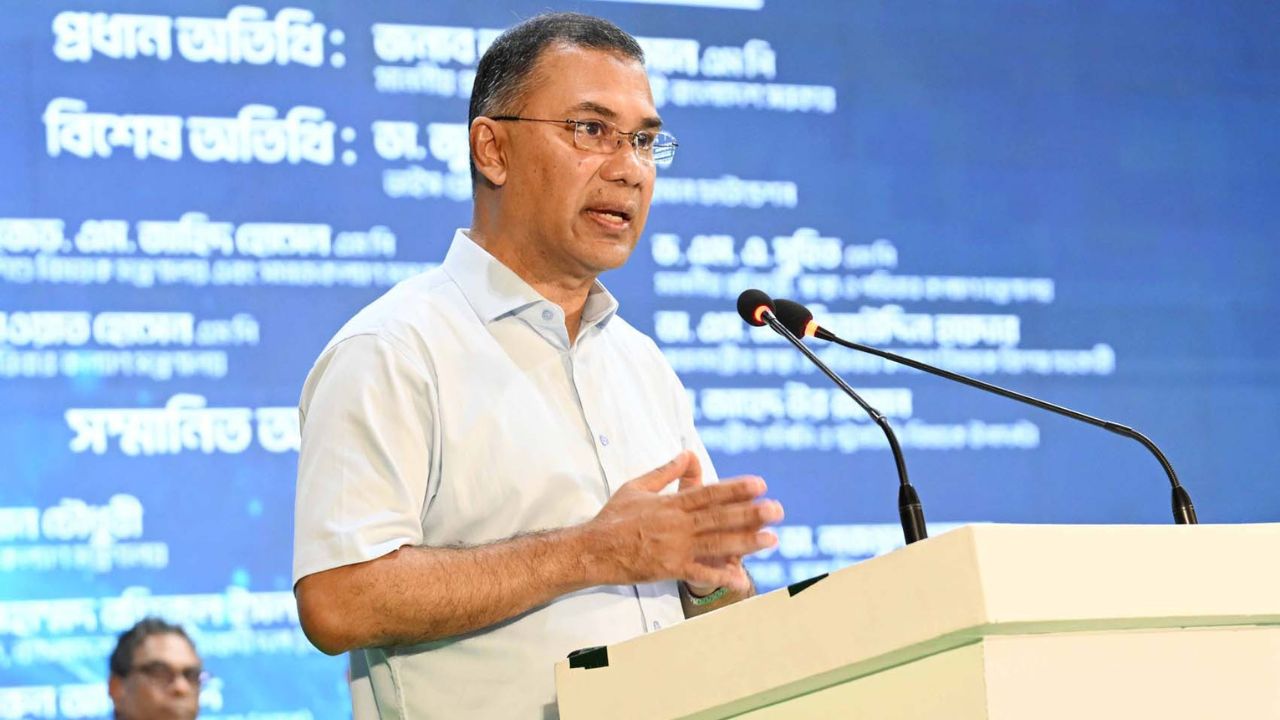



Prime Minister Tarique Rahman has described 5 August as a day of “historic victory” and the restoration of democratic rights, marking the second anniversary of student-led mass uprising that ended more than 15 years of fascist rule.
In a formal message issued on “July Mass Uprising Day,” the prime minister paid tribute to “freedom-loving people” and the martyrs whose sacrifices ended an era of autocracy.
A struggle against persecution
Reflecting on the decade and a half preceding the 2024 revolution, the prime minister noted that pro-democracy political parties, including BNP, and various dissidents endured “limitless persecution”.
He highlighted the suffering of former prime minister Khaleda Zia, who spent years in prison on what he termed “false cases” while leading the movement for democracy.
The prime minister’s message also recalled the horrors of “Ayna Ghor” – secret prisons established under the orders of the “fugitive autocrat” – where many were detained in total uncertainty.

He specifically mentioned that the whereabouts of several individuals, including former BNP lawmaker Ilias Ali and Commissioner Chowdhury Alam, remain unknown following their disappearance years ago.
During the previous regime, Tarique said constitutional and statutory bodies such as judiciary and the Election Commission were rendered “ineffective,” and the electoral process was reduced to a “farce”.
He mentioned that the country’s economy, education, and health sectors were systematically destroyed, turning the nation into a “client state”.
Tarique noted that the banking sector faced ruin as corruption, looting, and money laundering became “normalised” under a system of individual rule.


July uprising and its cost
The July uprising saw a historic coalition of students, farmers, labourers, journalists, and intellectuals taking to the streets.
The prime minister condemned the former government’s “desperate” attempts to suppress the movement, which included firing democracy-loving citizens from helicopters.
He lamented that even infants in their mothers’ arms were not spared from the “reckless” gunfire.
The message honoured the courage of martyrs such as Abu Sayeed in Rangpur, Wasim Akram in Chattogram, and Mugdho in Dhaka, who became “brave inspirations” for the nation.
According to the statement, at least 1,000 people were martyred in July-August movement, while at least 30,000 others were injured, many suffering permanent disabilities or loss of sight.
The prime minister described the events of 5 August 2024 as “unprecedented” in world history, noting the mass flight of the regime’s leadership.
Following the uprising, the former occupant of Gono Bhaban fled the country, followed by the flight or hiding of lawmakers, chief justice, chief khatib of Baitul Mukarram, and Cabinet ministers.
Repaying the debt to martyrs
Tarique emphasised that the nation is eternally indebted to the martyrs. He pledged to repay this debt by building a just, self-reliant, and humane Bangladesh that ensures political and economic empowerment, equality, and social justice.
Calling for the preservation of the national unity forged on the streets, he remarked that while “differences of opinion” are the beauty of democracy, they must never turn into enmity.
Tarique vowed that autocracy, fascism, and extremism would never again be allowed to take root, and the country would never again become a client state.
Drawing a parallel between the nation’s defining struggles, the prime minister concluded, “1971 was the war to achieve independence, and 2024 was the war to protect the independence of the country and its people”.
He affirmed that the nation would never forget the sacrifices of the martyrs of either era.