


Airfares from Dhaka to Saudi Arabia have surged by as much as Tk30,000 amid flight disruptions triggered by Houthi attacks, forcing stranded migrant workers to pay significantly more for alternative tickets as they race to return to their jobs before their visas expire.
One-way fares that ranged from Tk50,000 to Tk55,000 before the attacks have risen by Tk10,000 to Tk30,000, with travel agencies accused of exploiting passengers desperate to reach Saudi Arabia.
The increase has added to the financial burden on expatriate workers, who already pay comparatively high fares on Saudi routes.
As of Monday, 126 flights from Dhaka had been cancelled, leaving 19,377 passengers stranded. Many are now seeking alternative flights through Jeddah and Madinah, even at substantially higher prices.
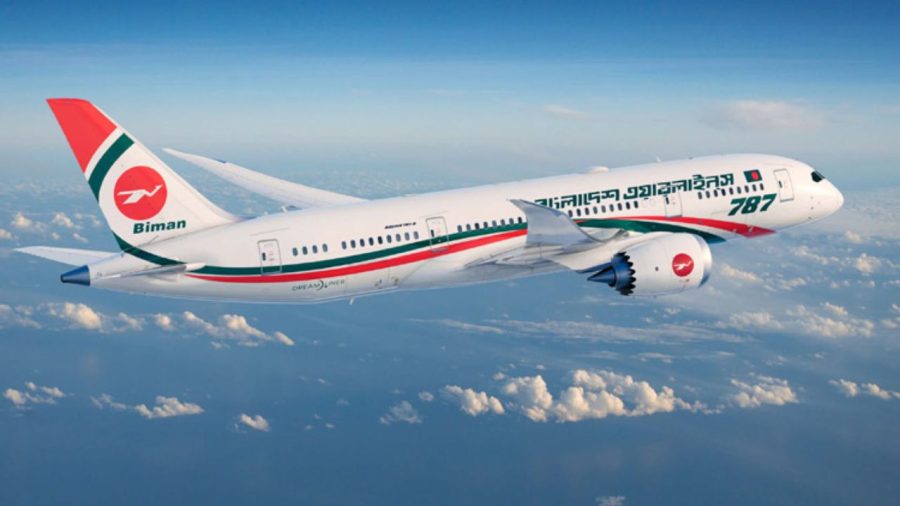
State-owned Biman Bangladesh Airlines is carrying affected passengers to Saudi Arabia via Jeddah and Madinah without additional charges. Private carrier US-Bangla Airlines is also accommodating some stranded passengers through Jeddah at no extra cost.
Foreign airlines, however, have not introduced similar arrangements, according to passengers. Emirates has suspended its Dhaka operations and is offering refunds.
Jasim Uddin, whose Qatar Airways flight was cancelled, said the airline had offered him a refund, but he found that tickets on alternative carriers were more expensive.
Atikul Islam, from Lalmai in Cumilla, also faces additional costs after his IndiGo flight was cancelled.

Another passenger, Ainuddin from Titas in Cumilla, expressed surprise that his IndiGo flight to Jeddah had been cancelled despite Jeddah remaining an alternative route for stranded travellers.
Online booking platforms show substantial variations in fares depending on the airline, destination and travel date.
On GoZayaan, Dhaka-Madinah fares for 29 October range from Tk58,922 to Tk64,595, depending on departure time. Emirates fares range from Tk69,880 to Tk72,845, while Oman Air tickets cost Tk76,671.
For Dhaka-Jeddah flights on 1 November, GoZayaan lists IndiGo at Tk54,919, Air India at Tk58,781, EgyptAir at Tk59,837, Qatar Airways at Tk64,814 and Gulf Air at Tk67,048.
Other listed fares include Oman Air at Tk69,972, flydubai at Tk72,248, Emirates at Tk74,051, Saudi Arabian Airlines at Tk78,871 and Ethiopian Airlines at Tk89,026. Another Air India option costs Tk90,901.




Fares are considerably higher on ShareTrip.
For 27 October, the platform lists a Dhaka-Madinah ticket on IndiGo at Tk80,165.
For 31 October, Air Arabia tickets are listed at Tk97,875 and Tk98,275, while Qatar Airways fares stand at Tk1,00,275, Oman Air at Tk1,03,882 and Emirates at Tk1,04,807.
Association of Travel Agents of Bangladesh (Atab) former president Manzur Murshed denied that traditional travel agencies were charging excessively, although he acknowledged that some operators might have increased fares.
He told TIMES that agencies were charging no more than Tk55,000 on various Saudi routes.
“A special situation is going on now. So perhaps some are charging slightly more. Once the war situation normalises, ticket prices will also return to normal,” he said.
Saudi-bound expatriate workers alleged that some agencies were collecting additional payments without issuing receipts.
Many passengers said they had little choice but to accept the higher fares because failing to return to Saudi Arabia on time could cost them their jobs.
Faruque Ahmed, who worked in marketing at Biman Bangladesh Airlines for nearly four decades, said airlines had a responsibility to assist stranded passengers beyond simply refunding their fares.
“In the past, during disasters, including the Iraq-Iran, Iraq-Kuwait and Libya wars, the state flag carrier acted out of a sense of responsibility towards passengers. In this regard, Biman did not think about profit. But foreign airlines do not think this way,” he told TIMES.
He said refunds alone were insufficient when passengers faced serious travel difficulties.
“The responsibility does not end simply by refunding the money. Making alternative arrangements for passengers in distress is also part of their responsibility.”
Ahmed urged the Civil Aviation Authority of Bangladesh (Caab) to strengthen its monitoring of airline operations and passenger services.
Caab directives allegedly ignored
Airlines are also facing allegations of failing to comply with a seven-point directive issued by Caab on 13 October to carriers operating from Hazrat Shahjalal International Airport.
The directive requires airlines to assist passengers with ticket rebooking and refunds, provide necessary services to stranded travellers and promptly communicate cancellations, delays and schedule changes.
Airlines were instructed to notify passengers through text messages, phone calls, emails, websites and social media, while providing clear information about revised schedules, bookings, refunds and alternative arrangements.
They were also directed to provide seating, drinking water and light refreshments to stranded passengers at the airport, with special attention to elderly travellers, children, people with disabilities and other vulnerable groups.
Passengers, however, alleged that airlines were failing to provide timely notifications or adequate assistance.
Moinuddin, a US-Bangla Airlines passenger, said he received a cancellation notification by text message only half an hour after arriving at the airport.
“After entering the airport, passengers of cancelled flights do not even receive courteous treatment, let alone water and food,” he said.