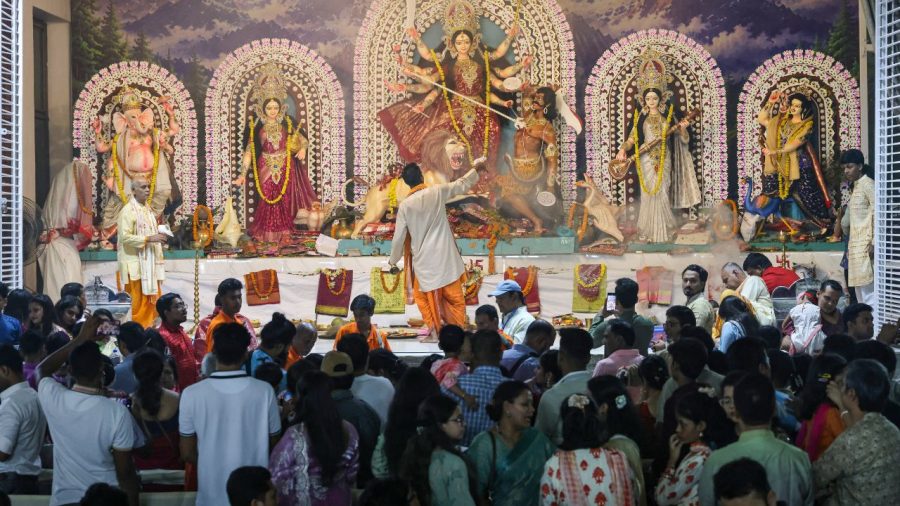



Festive gatherings at Dhaka’s temples gave way to preparations for the immersion of Durga idols on Wednesday, as devotees celebrated Bijoya Dashami with a mix of joy and sadness at the end of the Hindu community’s biggest religious festival.
Ankita Roy, a university student from Uttara, visited Dhakeshwari Temple in Old Dhaka with her family on Maha Navami on Tuesday.
“This year, the crowds are bigger and everyone seems more spirited. I am enjoying it more than last year,” she said.
For Amar Krishna of Noakhali, who has been volunteering at the temple since the festival began, the celebrations offered a sense of belonging far from home.
“I have been here for four days, but it does not feel as though I am away from my family. Everyone here is my family. People are helping one another, worshipping and celebrating together,” he said.

Across the capital, devotees visited temples with family members, friends and neighbours, while stalls selling food, clothing and cosmetics added to the festive atmosphere. At Ramna Kali Temple, a giant wheel and other amusement rides drew children, while long queues formed at Dhakeshwari Temple for prasad, or consecrated food.
Beyond religious rituals, Dhakeshwari Temple also hosted a free medical camp, a blood donation programme and initiatives to support disadvantaged families.
According to the Mohanagar Sarbajaneen Puja committee, Durga Puja is being celebrated at 33,851 mandaps across the country this year, including 258 in Dhaka city.
Dhakeshwari Temple, the capital’s largest Puja venue, has been serving prasad to an estimated 35,000 to 40,000 visitors daily, committee members said, excluding those who visit without collecting it.




Final rituals and immersion
Bijoya Dashami marks the conclusion of the five-day main festivities, with devotees preparing to bid farewell to the goddess through idol immersion.
According to Hindu belief, the immersion symbolises Goddess Durga’s return to her heavenly abode at Mount Kailash, with her anticipated return next autumn. The occasion also represents the triumph of good over evil and the need to overcome anger, hatred, greed and other destructive impulses to promote peace and brotherhood.
This year, Mahalaya, marking the beginning of the Devipaksha, fell on 9 October. The main festivities began with Maha Shashthi on 16 October, followed by Maha Saptami, Maha Ashtami and Maha Navami.
Preparations for Wednesday’s immersion include arranging vehicles to carry the idols, organising processions and coordinating security and crowd management.
Suvasish Kumar Biswas, general secretary of the Dhaka Metropolitan Sarbojanin Puja Committee, said the day’s programme would begin with a meeting with the president, followed by the inauguration of a blood donation programme and sindoor khela, a ritual in which married women apply vermilion to the goddess and one another.
Idols from different police station areas in Dhaka are expected to arrive from 11:30am. They will be lined up before the Bijoya procession to begin from the Palashi intersection, with the idols later to be immersed at Wiseghat on the Buriganga River.
Gopal Chandra Debnath, president of the committee, thanked the government for security arrangements during the festival.
“When this government came to power, we were uncertain about what might happen. But the security we received during Mahalaya dispelled our doubts. So far, we have not received reports of any major problems anywhere in the country,” he told TIMES.
He said he believed the number of Puja mandaps nationwide could reach 40,000 next year if the same level of security continued.
Traditional beliefs about the goddess’s journey
According to Hindu tradition, Goddess Durga arrived on Earth this year riding a horse, which is traditionally considered an inauspicious sign associated with instability and disorder.
Her return to Kailash, however, is associated with a boat, traditionally interpreted as a sign of a good harvest, alongside the possibility of heavy rainfall and flooding.
As devotees prepared for the final rituals, the celebrations reflected both the happiness of communal worship and the sadness of bidding farewell to the goddess until her return next year.