






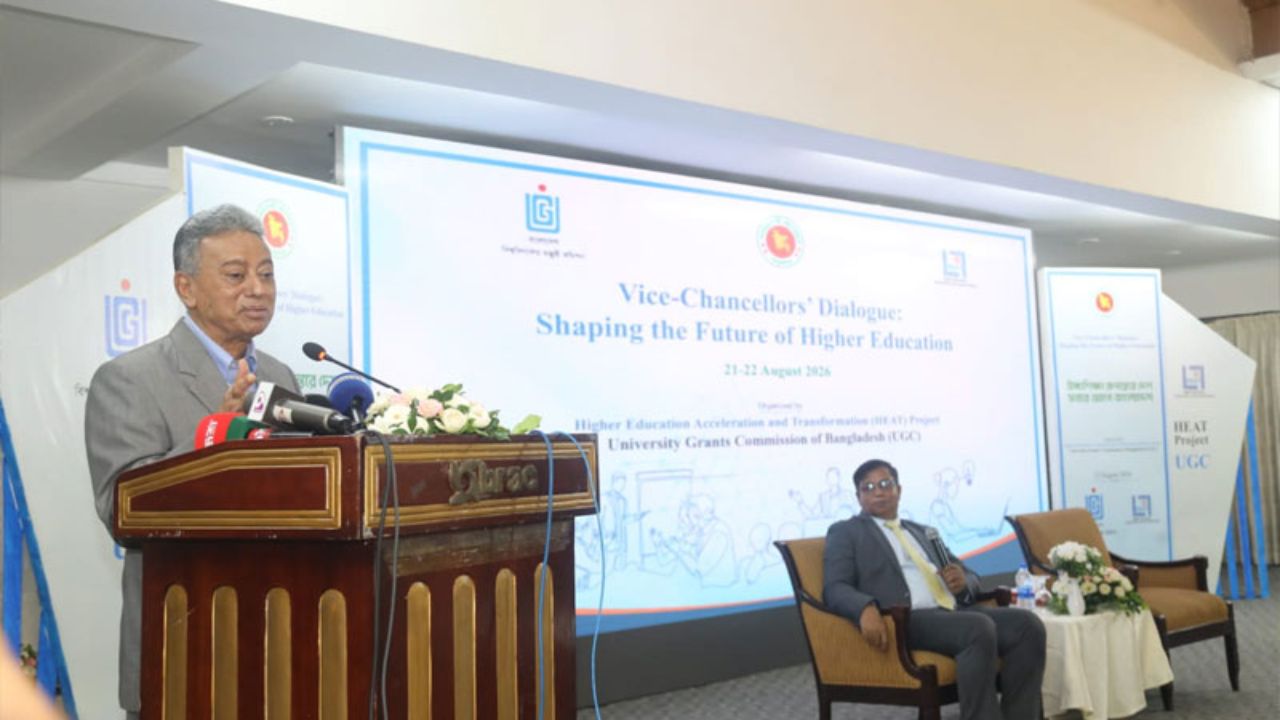
Finance Minister Amir Khosru Mahmud Chowdhury has advised that the economic conditions and needs of the local population should be considered before establishing any new university.
He stressed the importance of considering economic realities, population demand and academic requirements before setting up new institutions.
Speaking at a discussion programme on Friday, he said authorities must first determine who will teach, who will study and what areas of research and education the institution will focus on before approving a new university.
“A university cannot be established by opening only one or two departments or faculties,” he said, adding that any new institution must be fully prepared to operate with proper academic and research facilities.
The minister instead called for improving the quality of teaching and research at existing universities.
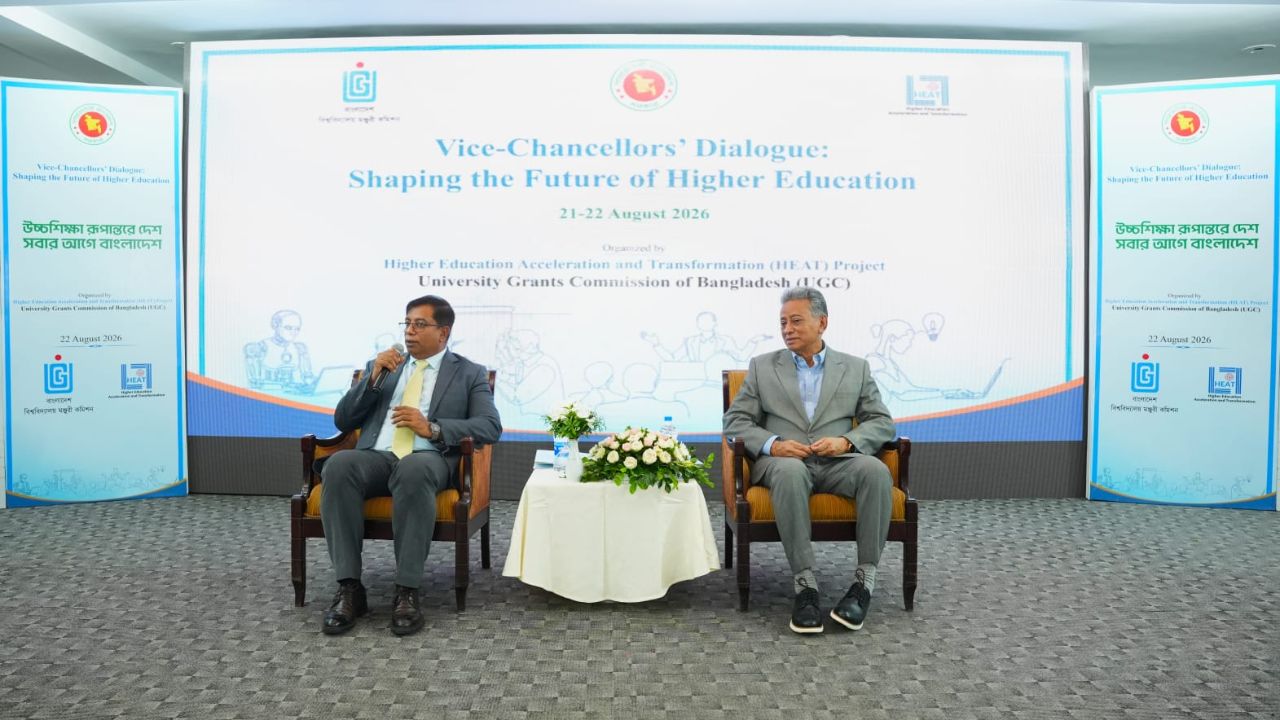
He made the remarks at a programme jointly organised by the University Grants Commission (UGC) and the Higher Education Acceleration and Transformation (HEAT) project implemented by the UGC.
Highlighting the importance of global ratings, Khosru said a decline in a country’s economic rating has a major negative impact internationally, while a fall in education ratings also damages the country’s image.
He said Bangladesh has so far failed to fully utilise industry-academia collaboration and stressed that strengthening the relationship is essential for achieving the goal of becoming a trillion-dollar economy.
The finance minister also said the education system needs to be aligned with job market demands and called for creating a research-friendly environment.
Vice-chancellors of public universities attended the first day of the two-day programme and raised various challenges faced by their institutions.
Prime Minister’s Education Adviser Mahadi Amin said the government wants to align education policies with public expectations and the prime minister’s vision.
He said education should not be limited to obtaining certificates but should focus on developing responsible citizens and improving employability to build a society based on justice, equality and good governance.
Acknowledging gaps in curriculum modernisation, Mahadi said steps were being taken to make education more practical and relevant. He added that authorities were considering introducing short courses alongside regular academic programmes to enhance students’ skills.
He also called for establishing innovation hubs at universities, developing research ecosystems based on local needs and introducing third-language courses at top universities.
UGC Chairman Professor Mamun Ahmed said initiatives were underway to transform higher education institutions into centres for producing skilled and responsible citizens.
He said the UGC plans to introduce third-language courses at at least 30 top universities across the country from early next year, prioritising languages based on migration patterns and demand in different countries.


