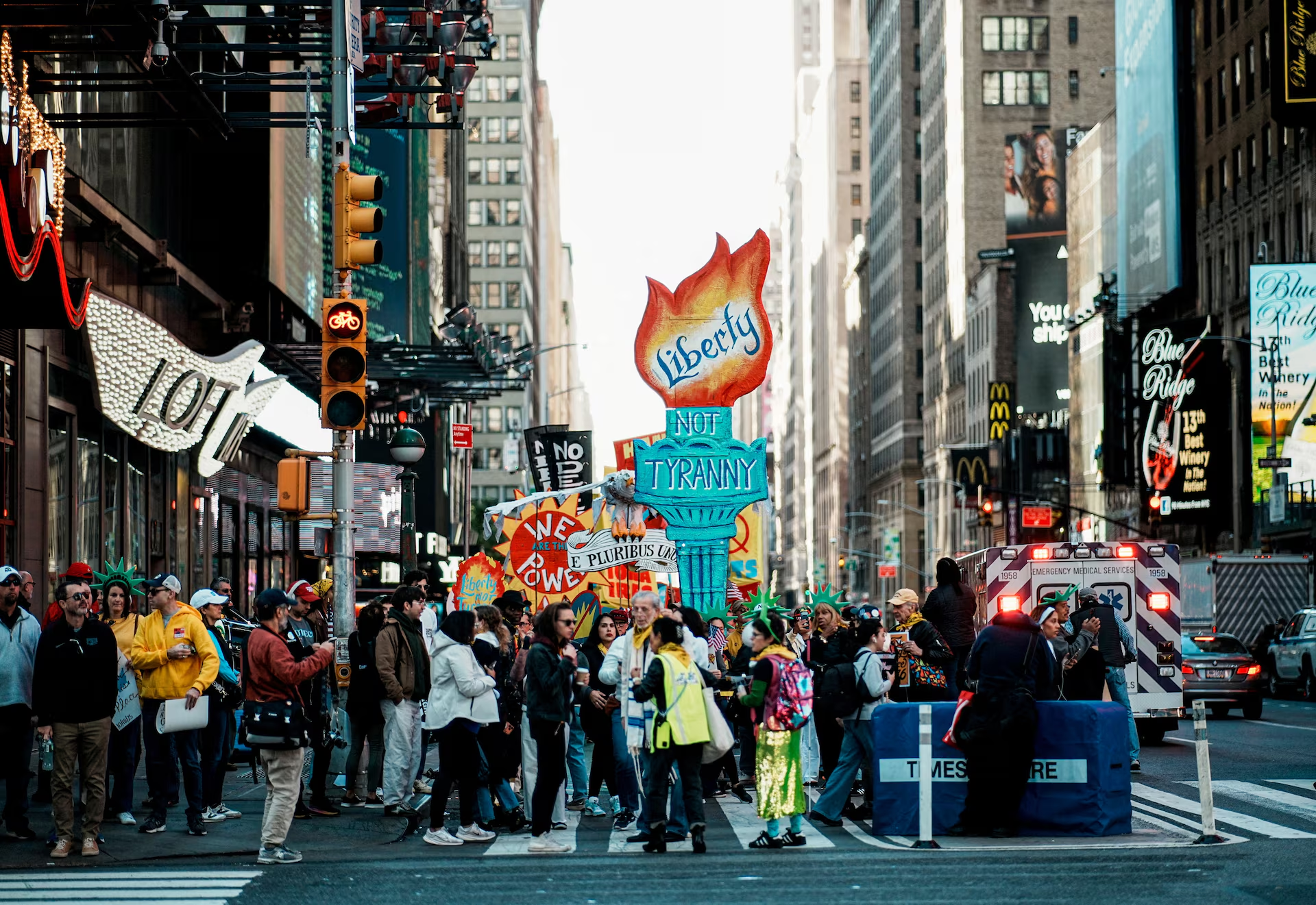
The chant began as a whisper in Washington DC, “No kings. No crowns. No thrones,” and by sundown, it had become the sound of a restless nation. On October 18, 2025, millions of people poured into the streets across all 50 states, waving homemade banners and shouting the same two words that now echo through American history: No Kings.
What started as a slogan of defiance has transformed into a movement of conscience. For many, this wasn’t just about Donald Trump’s second presidency; it was about a feeling that the Republic itself was slipping away. The protesters came from small towns and sprawling cities, from union halls and college campuses, from military families and federal offices. They marched not for party or power, but for principle. No leader, no matter how popular or powerful, should rise above the law.
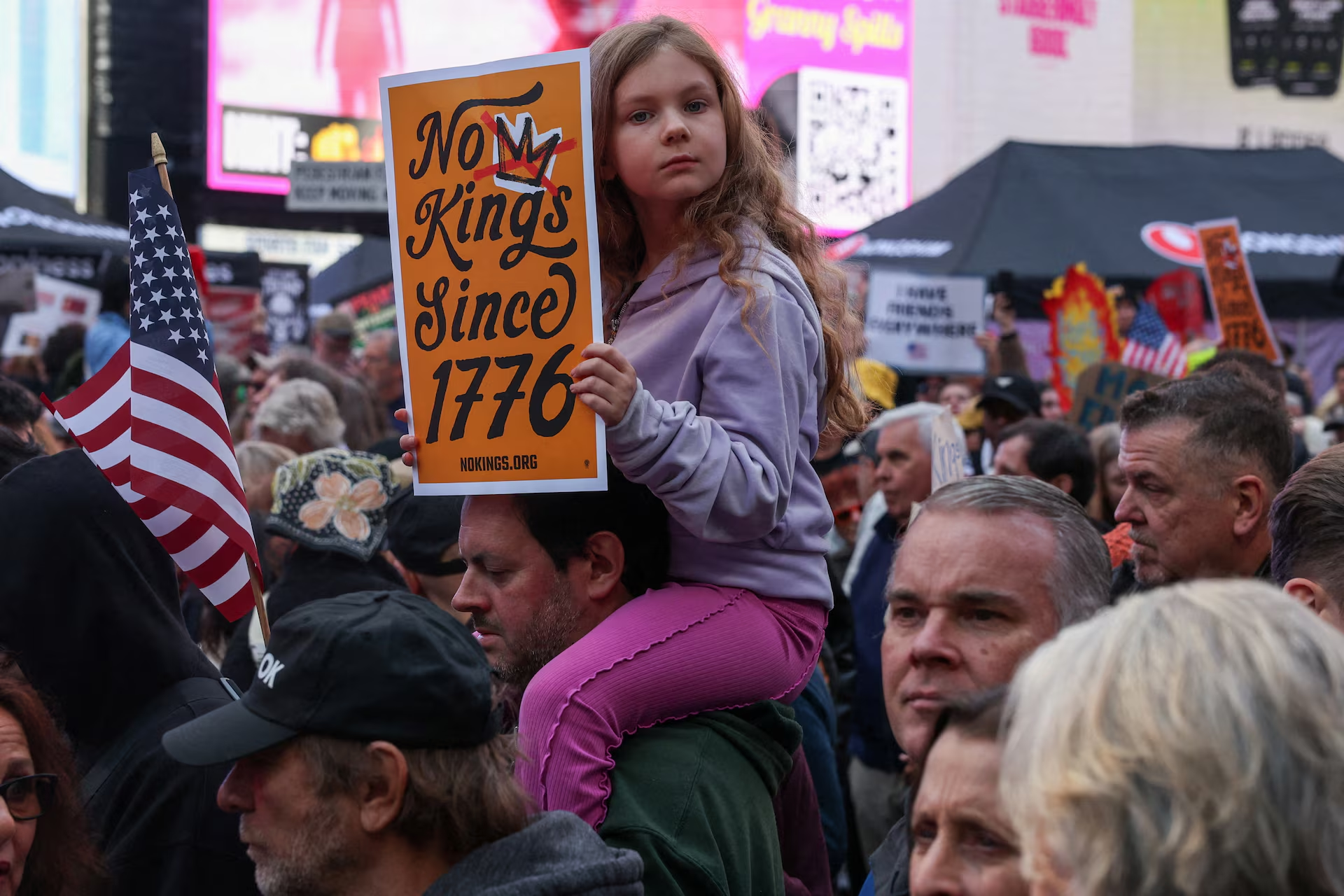
The message cut deeper than mere partisanship. America was founded in revolt against a monarchy, on a promise that no man would sit on a throne. Yet, to many, Trump’s defiance of courts, his use of federal troops for domestic enforcement and his attempt to stage a grand military parade timed with his own birthday felt like a coronation. The “No Kings” march became a collective reminder of what the country once swore never to become.

In San Francisco, fifty thousand people filled Market Street, chanting, drumming, waving signs that read “We The People > One Man.” In Portland, veterans in uniform stood shoulder to shoulder with teachers and students. Across the nation, from Miami’s humid boulevards to snow-dusted Minneapolis, the mood was defiant yet eerily calm. Despite the size, arrests were rare. The discipline was deliberate, a show of moral restraint to counter the image of chaos that Trump’s allies painted.




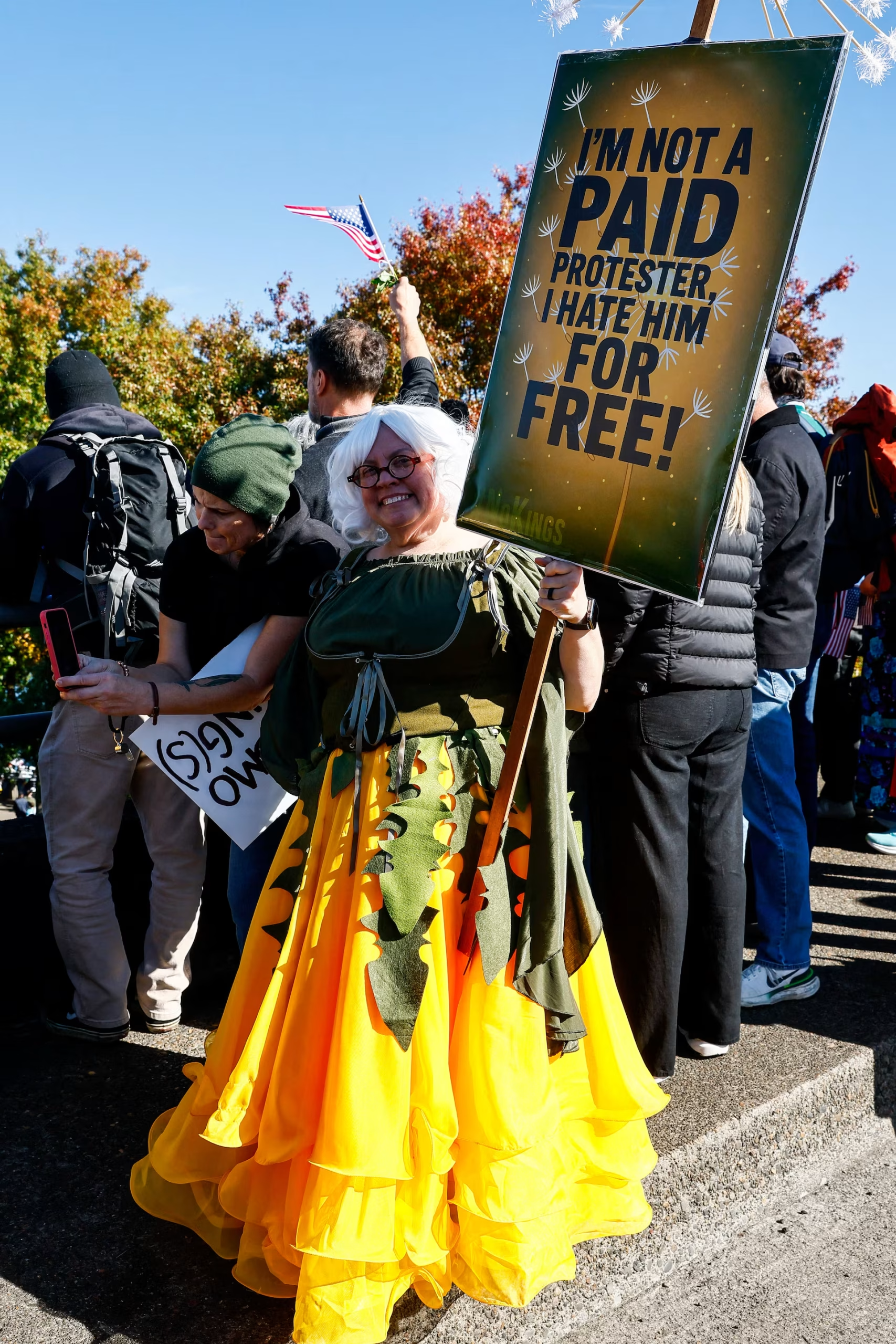
The administration, unsurprisingly, dismissed the protests as “coordinated hysteria.” But their sheer scale told a different story. With millions on the streets, roughly two per cent of the country, the protests marked one of the largest single-day political mobilisations in US history. Even abroad, the sight was impossible to ignore. Iran’s Supreme Leader mocked Trump on social media, writing, “Seven million chant against him.”
Still, the question remains: what happens after the march? Critics warn that moral fire without structure will fade. The protests, while massive, were loosely coordinated. Without a coherent plan or leadership, movements like this can burn bright and vanish fast. Yet others argue that this is its power: a decentralised roar that no single figure can own or silence.
Trump, for his part, responded with characteristic bravado. Trump shared an AI meme on social media. It was a mocked-up vision of the president flying a fighter jet emblazoned with “KING TRUMP” appearing to dump raw sewage on protesters.

The legacy of “No Kings” will depend on what comes next. If it dissolves into a single day of defiance, it will be remembered as catharsis, not change. But if it grows into a movement, it could mark a turning point in the struggle to restore balance in American democracy. Because in America, power is not inherited. It is lent. And it can always be taken back.