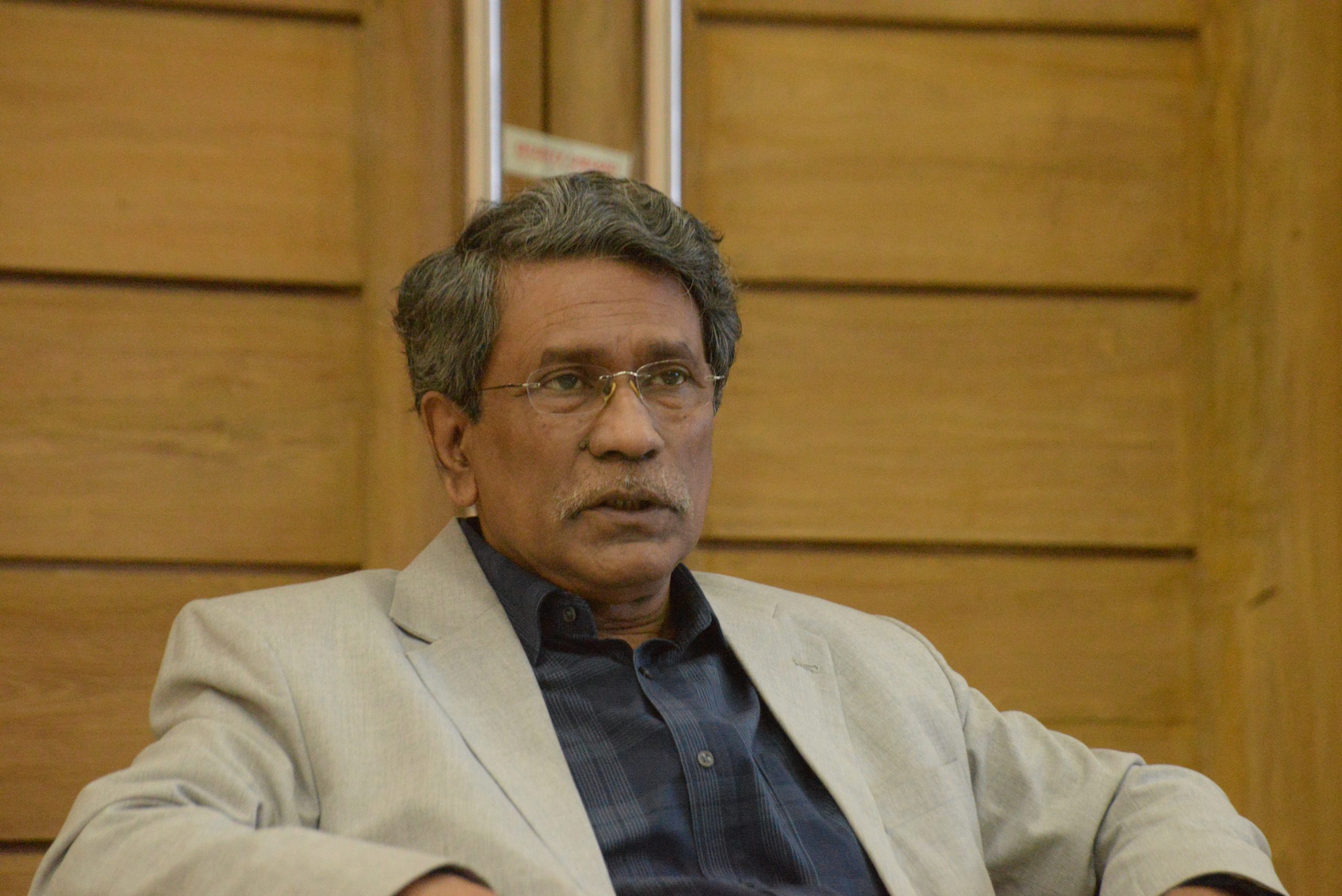



Professor Ali Riaz, vice-chairman of the National Consensus Commission, stated on Saturday that if Bangladesh fails to hold its national election in February, it will lead to internal instability and compromise national security.
He made the comments during a roundtable discussion titled “Political Consensus for Elections,” organised by Prothom Alo at its office in the city on Saturday afternoon.
Riaz further remarked, “I have repeatedly urged political parties to engage in dialogue. While they have responded positively, the process must eventually reach a conclusion. It cannot be an endless process.
“The election must be held. If it is not held by February, Bangladesh will not only face internal instability, but national security will also be jeopardised.”
He added, “We are holding this election to ensure certain structural reforms within the state. During my work with the Reform Commission, we saw that the crisis of the last 16 years was not just a 16-year crisis.
“The severity of this crisis was evident as a personality-driven autocracy had taken root. However, in terms of structure, we have reached this point through various stages.”

Riaz explained that if the existing structure is maintained with only minimal changes, the outcome of the election will not bring about any fundamental shifts.
“We seek a consolidated democracy, which we failed to achieve despite three attempts (in 1973, 1991, and 2009). If we cannot agree on structural changes, my concern is that even after another election, the situation will remain largely the same,” he said.
He also mentioned that the unity among political parties, established in the struggle against Sheikh Hasina’s personality-driven autocracy, has become fragmented, contributing to the differences now evident.




“If we can clarify our goals through this election, I believe we can move forward in this direction,” he added.
Path to consensus
Professor Riaz further discussed the progress of the National Consensus Commission, which began its work on February 15. He mentioned that over 30 political parties in Bangladesh have exchanged views on issues including the constitution, governance system, legal processes, judiciary, public administration, and police.
He expressed optimism about the willingness of parties to engage in dialogue. “I have always been an optimist. Some have suggested that the political leaders might throw chairs at each other, but I have countered that they want to change the political culture,” he said.
He also pointed out that, of the 84 issues discussed, consensus has been reached on many.
“However, not all issues are settled. There are still minor objections or differences on some points within the 64 areas where consensus has been reached. We did not include the note of dissent initially, but in the next phase, we see significant differences on several key issues,” he added.
Constitutional reforms
On the subject of constitutional changes, Professor Riaz noted that the current situation does not entirely align with the existing constitution.
“The government formed under Article 106 of the constitution is a case in point. This is not the position of the Commission, but my personal view. If we were strictly adhering to the constitution, would we be sitting here discussing these matters? Would the National Consensus Commission have been established? Would we be talking about reforms?” he asked.
He emphasised that political parties have provided six paths to finding a solution. “Our experts suggest two paths that go beyond the constitution.
“There is no disagreement about using ordinances or orders to address these, but there is a difference on constitutional matters, which involve restricting executive power, ensuring accountability, and addressing the fundamental aspirations of the people.
“We do not want another autocracy like Sheikh Hasina’s regime,” he said, adding, “We must find a way forward from this point.”
The roundtable was inaugurated by Prothom Alo Editor Matiur Rahman, with the session moderated by Executive Editor Sajjad Sharif.
Among those present were BNP Standing Committee Member Salahuddin Ahmed, Jamaat-e-Islami Central Committee Member Matiur Rahman Akand, Chief Coordinator of Ganasanghati Andolon Jonaid Saki, and National Citizen Party (NCP) Member Secretary Akhtar Hossain.
Other notable attendees included former adviser to the Caretaker Government and Executive Chairman of the NGO PPRC Hossain Zillur Rahman, CPD Senior Fellow Debapriya Bhattacharya, Ha-Meem Group Managing Director and CEO AK Azad, National Consensus Commission Member Badiul Alam Majumdar, Former Lieutenant General and Chairman of Osmani Center for Peace and Security Md Mahfuzur Rahman, The Daily Star Editor Mahfuz Anam, and Dhaka University Professor Samina Lutfar.