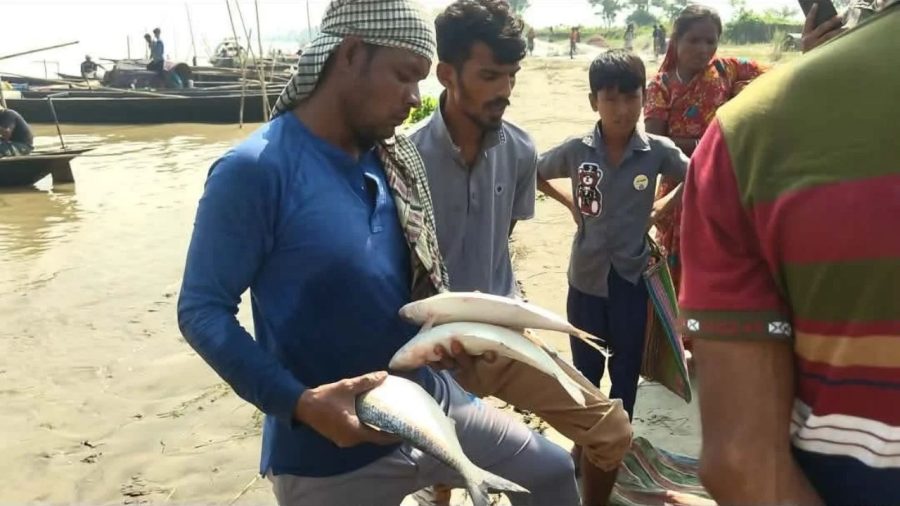



Despite a 22-day nationwide strict ban imposed by the government to safeguard the safe breeding and propagation of mother hilsa, illegal fishing and trading of mother hilsa are taking place openly across Rajbari district.
Hundreds of fishing boats are competing day and night in the Padma River, while temporary markets set up along the riverbanks openly sell the mother hilsa, raising grave concerns among local conscious groups regarding the enforcement of law and government initiatives.
Illegal catching and trading of mother hilsa are thriving at over 100 points along the river and riverside areas in the district. The affected areas include Kaualjani, Munsibazar, Betka, and Kalabagan in Goalanda Upazila; Mechhoghata, Kalitola, Mahadebpur, and Joukura in Sadar Upazila; Harinbarier Char and Ratandia in Kalukhali Upazila; and Habaspur and Bahadurpur in Pangsha Upazila.

Curious buyers crowd the riverbanks as soon as boats dock, and fresh mother hilsa are bought and sold openly on boats or along the shores in broad daylight.

Fishermen and local residents said that fishermen are taking to the river out of livelihood compulsions, driven by the non-receipt of government food assistance despite holding registration cards and heavy pressure to repay loan instalments.
Expressing regret, Md Rezaul Mondal, a fisherman from Daulatdia, said, “We respect the government ban. But many of us receive no government support. The small amount of rice provided is not enough to run a household, and on top of that, there is the pressure of loan instalments. So we are forced to go to the river.”





Other fishermen, including Anwar Mondal, Md Zia Sheikh, and Lalon, shared similar grievances, claiming that despite being listed cardholders, many have received no rice or food assistance for the past one or two years and are forced to risk their lives to fish to feed their families.
Conscious citizens and visitors warned that unabated poaching during the ban period poses a serious threat to hilsa production and breeding. Johurul Islam Halim, a visitor, expressed deep concern over the open catching and trading of fish, emphasising the need for stricter administrative surveillance alongside ensuring 100 per cent government assistance for genuine fishermen.
Lack of food aid
According to data from the District Fisheries Officer’s Office, Rajbari district has 14,102 registered fishermen, of whom 6,304 cardholders are engaged in hilsa fishing. However, due to allocation shortages, food aid rice is being provided to 5,592 registered cardholder fishermen this season, leaving 712 cardholder fishermen completely without food assistance.
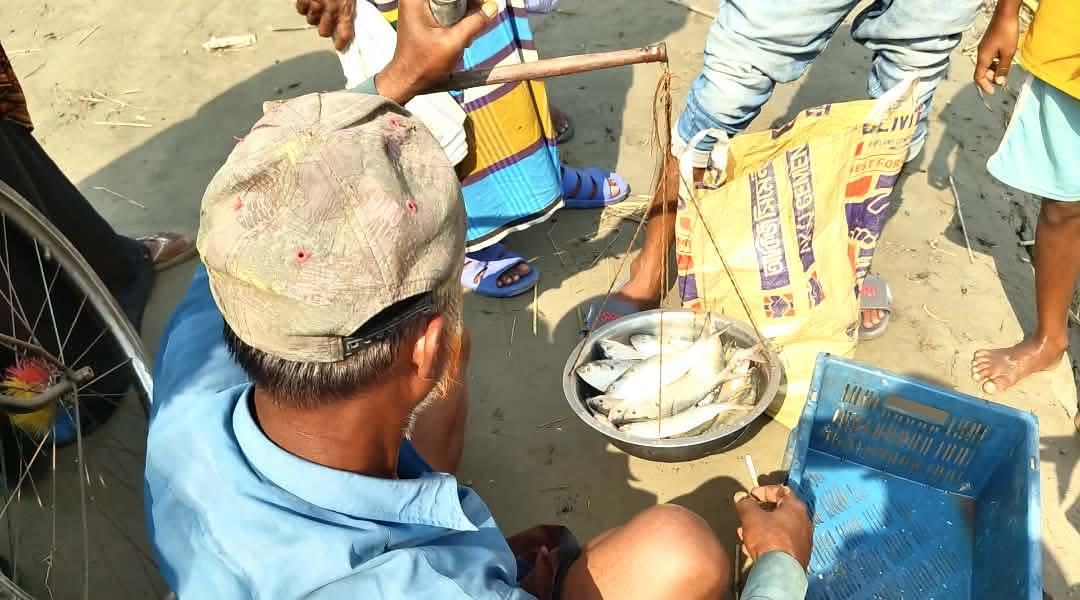
Detailing anti-poaching measures, District Fisheries Officer Md Mahbub Ul Haq said that regular daily drives are being conducted to protect mother hilsa breeding. Over the past 11 days, authorities conducted 39 drives and 7 mobile court operations in the Padma River in Rajbari, seizing 655,000 metres of current net and 142 kg of hilsa. In addition, 12 fishermen were sentenced to various jail terms, fines totalling Tk 84,000 were imposed, and regular cases were filed against 10 fishermen who were produced before the court.
Daulatdia River Police Officer-in-Charge (OC) Trinath Saha confirmed that regular operations are being conducted in coordination with the fisheries department.
Concerned stakeholders stressed that to protect national resources and ensure future hilsa yields, authorities must strengthen law enforcement while simultaneously prioritising the living standards and rehabilitation of fishermen.